🌿
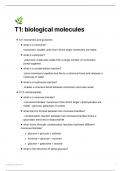
T1: biological molecules
3.1.1 monomers and polymers
what is a monomer?
monomers: smaller units from which larger molecules are made
what is a polymer?
-polymers: molecules made from a large number of monomers
joined together
what is a condensation reaction?
-joins monomers together and forms a chemical bond and releases a
molecule of water
what is a hydrolysis reaction?
-breaks a chemical bond between monomers and uses water
3.1.2 carbohydrates
what is a monosaccharide?
-monosaccharides: monomers from which larger carbohydrates are
made - glucose, galactose, fructose
what bond is formed between two monosaccharides?
-condensation reaction between two monosaccharides forms a
glycosidic bond and a disaccharide
what forms through condensation reactions between different
monosaccharides?
glucose + glucose = maltose
fructose + glucose = sucrose
glucose + galactose = lactose
what is the structure of alpha glucose?
T1: biological molecules 1
, what is the structure of beta glucose?
how are polysaccharides formed?
-polysaccharides are formed by the condensation of many glucose
units
what does condensation of a-glucose form?
condensation of a-glucose forms starch and glycogen
what does condensation of b-glucose form?
condensation of b-glucose forms cellulose
what are the features of starch?
amylose: coiled, 1-4 glycosidic bonds
amylopectin: coiled and branched, 1-4 and 1-6 glycosidic bonds
insoluble- doesnt affect water potential
found as a storage sugar in plants
can be quickly hydrolysed when energy is needed- enzymes break
it down faster as its branched
helical structure which makes it compact
what are the features of glycogen?
1-4 and 1-6 glycosidic bonds
insoluble storage sugar in animals + made by liver and muscle cells
highly branched= compact- lots can be stored
T1: biological molecules 2
T1: biological molecules
3.1.1 monomers and polymers
what is a monomer?
monomers: smaller units from which larger molecules are made
what is a polymer?
-polymers: molecules made from a large number of monomers
joined together
what is a condensation reaction?
-joins monomers together and forms a chemical bond and releases a
molecule of water
what is a hydrolysis reaction?
-breaks a chemical bond between monomers and uses water
3.1.2 carbohydrates
what is a monosaccharide?
-monosaccharides: monomers from which larger carbohydrates are
made - glucose, galactose, fructose
what bond is formed between two monosaccharides?
-condensation reaction between two monosaccharides forms a
glycosidic bond and a disaccharide
what forms through condensation reactions between different
monosaccharides?
glucose + glucose = maltose
fructose + glucose = sucrose
glucose + galactose = lactose
what is the structure of alpha glucose?
T1: biological molecules 1
, what is the structure of beta glucose?
how are polysaccharides formed?
-polysaccharides are formed by the condensation of many glucose
units
what does condensation of a-glucose form?
condensation of a-glucose forms starch and glycogen
what does condensation of b-glucose form?
condensation of b-glucose forms cellulose
what are the features of starch?
amylose: coiled, 1-4 glycosidic bonds
amylopectin: coiled and branched, 1-4 and 1-6 glycosidic bonds
insoluble- doesnt affect water potential
found as a storage sugar in plants
can be quickly hydrolysed when energy is needed- enzymes break
it down faster as its branched
helical structure which makes it compact
what are the features of glycogen?
1-4 and 1-6 glycosidic bonds
insoluble storage sugar in animals + made by liver and muscle cells
highly branched= compact- lots can be stored
T1: biological molecules 2