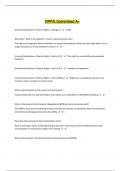
Q23-Q26 Adjusting Journal Entries Definition Matching
- Accrued Revenue: Revenue recorded, not received
- Prepaid Expense: record expiration of a prepaid account
- Unearned Revenue: revenue received in advanced of product/service
- Accrued Expense: recorded expenses, owed, but not paid
Q35-Q40 Completion
- Temporary Accounts: accounts that close at the end of each accounting period
- Permanent Accounts:accounts that carry their balances to the next period
- Adjusting Journal Entries: required at the end of a period.
- Accounting Cycle:steps to prep financial statements
- Income Summary: ONLY used in the closing process.
Factors in computing depreciation:
(1)Cost: includes all expenditures necessary to get the asset in place and ready for use.
(2)Salvage value:an estimate of the asset’s value@the end of its useful life.
(3)Useful life:the length of time it is productively used in a company’s operations; = new useful life - passed
(MACRS): Depreciation system required by federal income tax law; NOT acceptable - financial
Book Value = the asset’s total cost - accum. Depr.
OG $ - depreciated - sale $ = Gain/Loss on Sale
Book Value > selling $ ←→ Loss on sale of asset;
Book value < selling $ ←→ Gain on sale of asset;
Book value = selling $ ←→ No gain or loss recognized
STR8-LINE Depr.:charges the same amt of depreciation expense in each period of the asset’s useful life.
Units-of-production: depreciation based on units produced.
Double-declining: method in which depreciation expense for a period is determined by applying a constant depreciation rate
each period.
Q56-70 > Ch9 > M/C (Conceptual)
Current liabilities(or short-term liability): obligations due within one year.
Accounts payable:amounts owed for goods/services purchased on credit
Interest: difference between amt received from issuing note and amount paid.
- Payroll taxes employees and employers are required to pay: state, local, federal
- Times interest earned: divide income before interest expense and any income tax by interest expense
FICA taxes: SS and Medicare FUTA taxes: federal unemployment taxes & SUTA taxes: state unemploymen
Employer: pays half of FICA; withholds half of FICA
Pays unemployment taxes to the federal gov’t
Pays unemployment taxes to both state & federal gov’t
Employer responsibility:
- Provide each employee w annual report of wages subject to FICA and federal income tax (W-2)
- Filling forms 940 and 941
- Individual earnings records for each employee
Selling goods in advance (ticket sales); DR. → Cash; CR. → Unearned Revenue
Q71-85 > Ch10 > M/C
Callable bonds: bonds that have the options to be called, exercisable by the issuer
Coupon bonds: bonds that have interest coupons attached to their certificates, which holders bring to banks during interest
period.
Bond indenture: contract between bond issuers and holders that identity the right and obligations of both parties
- If issuer sells a bond on a date other than an interest payment date, the buyer will pay the issuer the purchase price + interest
accrued
- Discount on bonds payable is a contra liability
- Amortizing a bond discount allocates a part of the total discount to each interest period
- Bonds sold at premium: contract rate is above market rate; Bonds sold at discount: contract rate is below market rate
- Accrued Revenue: Revenue recorded, not received
- Prepaid Expense: record expiration of a prepaid account
- Unearned Revenue: revenue received in advanced of product/service
- Accrued Expense: recorded expenses, owed, but not paid
Q35-Q40 Completion
- Temporary Accounts: accounts that close at the end of each accounting period
- Permanent Accounts:accounts that carry their balances to the next period
- Adjusting Journal Entries: required at the end of a period.
- Accounting Cycle:steps to prep financial statements
- Income Summary: ONLY used in the closing process.
Factors in computing depreciation:
(1)Cost: includes all expenditures necessary to get the asset in place and ready for use.
(2)Salvage value:an estimate of the asset’s value@the end of its useful life.
(3)Useful life:the length of time it is productively used in a company’s operations; = new useful life - passed
(MACRS): Depreciation system required by federal income tax law; NOT acceptable - financial
Book Value = the asset’s total cost - accum. Depr.
OG $ - depreciated - sale $ = Gain/Loss on Sale
Book Value > selling $ ←→ Loss on sale of asset;
Book value < selling $ ←→ Gain on sale of asset;
Book value = selling $ ←→ No gain or loss recognized
STR8-LINE Depr.:charges the same amt of depreciation expense in each period of the asset’s useful life.
Units-of-production: depreciation based on units produced.
Double-declining: method in which depreciation expense for a period is determined by applying a constant depreciation rate
each period.
Q56-70 > Ch9 > M/C (Conceptual)
Current liabilities(or short-term liability): obligations due within one year.
Accounts payable:amounts owed for goods/services purchased on credit
Interest: difference between amt received from issuing note and amount paid.
- Payroll taxes employees and employers are required to pay: state, local, federal
- Times interest earned: divide income before interest expense and any income tax by interest expense
FICA taxes: SS and Medicare FUTA taxes: federal unemployment taxes & SUTA taxes: state unemploymen
Employer: pays half of FICA; withholds half of FICA
Pays unemployment taxes to the federal gov’t
Pays unemployment taxes to both state & federal gov’t
Employer responsibility:
- Provide each employee w annual report of wages subject to FICA and federal income tax (W-2)
- Filling forms 940 and 941
- Individual earnings records for each employee
Selling goods in advance (ticket sales); DR. → Cash; CR. → Unearned Revenue
Q71-85 > Ch10 > M/C
Callable bonds: bonds that have the options to be called, exercisable by the issuer
Coupon bonds: bonds that have interest coupons attached to their certificates, which holders bring to banks during interest
period.
Bond indenture: contract between bond issuers and holders that identity the right and obligations of both parties
- If issuer sells a bond on a date other than an interest payment date, the buyer will pay the issuer the purchase price + interest
accrued
- Discount on bonds payable is a contra liability
- Amortizing a bond discount allocates a part of the total discount to each interest period
- Bonds sold at premium: contract rate is above market rate; Bonds sold at discount: contract rate is below market rate