GDR in Depth
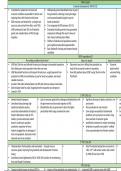
Economic developments 1949-61 (G)
Committed to replacement of social and Widespread general dissatisfaction due to poor
economic conditions responsible for fascism and living standards, rationing, housing shortages
replacing them with Marxist-Leninist state and increased taxation (largely to pay for
GDR economy was hindered by: no longer had border protection)
access to coal and steel from Ruhr; until 1950, 0.5m emigrated to FRG between 1951-53
USSR continued to take 25% of all industrial Everybody (including women) was guaranteed
goods; lost valuable labour to FRG through employment although this wasn’t always of
migration their choice/matching their skillset
Children of industrial and agricultural workers
given significant educational opportunities
Basic foodstuffs, housing and transport heavily
subsidised
USSR’s reparations (S)
Pre-existing conditions/aims/what? Impact on people Impact on economy
USSR lost 20m lives and suffered infrastructural damage so demanded reparations. Discontent rose due to falling living standards as a Economic
Each allied power took reparations from their own zone. result of the economic burden of reparations burden which
USSR dismantled factories and transport infrastructure, sought payments from Some felt positively about USSR ‘saving’ them from the worsened living
production in GDR and contributions to pay for Soviet occupation, and seized Third Reich conditions
valuable resources.
Around 1,500 entire industrial plants and 50% East German railway tracks taken
Stalin stripped what he could, imagining that the separation was temporary
Ceased in 1924
1st 5YP (1951-55)
Needed industrial progress Lack of consumer goods led to widespread dissatisfaction with Significant increases in lignite, electricity, iron Lac
Centralised state planning; high the government and increased migration to FRG and cement wid
industrial production quotas; Dissatisfaction due to government’s desire for higher Poor production of coal and steel gov
accelerated nationalisation of industry; productivity whilst wages remained the same Some targets exceeded but fundamental Sov
People’s Enterprises made up 75% problems such as pressure on workers, long sup
industry; private enterprises scaled hours and lack of consumer goods
down to small-scale, specialist Insufficient investment in modern technology
production; expansion of heavy Emphasis on quantity over quality = unlikely
industry struggled due to shortages of to be any penetration into Western markets
tech and equipment; impressive miner
Hennecke was to be emulated
2nd 5YP (1956-59)
‘Modernisation, Mechanisation and Automation’ – focused more on Only 9% industrial production was private in
consumer goods, improving living standards and development of nuclear 1961; 1/3rd craft workers under state control
energy by 1960 (6% rise from 1958)
Centralised control tightened by SED in 1958; 50% incentive for transforming
firms into People’s Enterprises
7YP (1959-65)
Targets included increase of almost 200% in Impact on living standards was undermined by Integrated GDR’s economy more with USSR
Economic developments 1949-61 (G)
Committed to replacement of social and Widespread general dissatisfaction due to poor
economic conditions responsible for fascism and living standards, rationing, housing shortages
replacing them with Marxist-Leninist state and increased taxation (largely to pay for
GDR economy was hindered by: no longer had border protection)
access to coal and steel from Ruhr; until 1950, 0.5m emigrated to FRG between 1951-53
USSR continued to take 25% of all industrial Everybody (including women) was guaranteed
goods; lost valuable labour to FRG through employment although this wasn’t always of
migration their choice/matching their skillset
Children of industrial and agricultural workers
given significant educational opportunities
Basic foodstuffs, housing and transport heavily
subsidised
USSR’s reparations (S)
Pre-existing conditions/aims/what? Impact on people Impact on economy
USSR lost 20m lives and suffered infrastructural damage so demanded reparations. Discontent rose due to falling living standards as a Economic
Each allied power took reparations from their own zone. result of the economic burden of reparations burden which
USSR dismantled factories and transport infrastructure, sought payments from Some felt positively about USSR ‘saving’ them from the worsened living
production in GDR and contributions to pay for Soviet occupation, and seized Third Reich conditions
valuable resources.
Around 1,500 entire industrial plants and 50% East German railway tracks taken
Stalin stripped what he could, imagining that the separation was temporary
Ceased in 1924
1st 5YP (1951-55)
Needed industrial progress Lack of consumer goods led to widespread dissatisfaction with Significant increases in lignite, electricity, iron Lac
Centralised state planning; high the government and increased migration to FRG and cement wid
industrial production quotas; Dissatisfaction due to government’s desire for higher Poor production of coal and steel gov
accelerated nationalisation of industry; productivity whilst wages remained the same Some targets exceeded but fundamental Sov
People’s Enterprises made up 75% problems such as pressure on workers, long sup
industry; private enterprises scaled hours and lack of consumer goods
down to small-scale, specialist Insufficient investment in modern technology
production; expansion of heavy Emphasis on quantity over quality = unlikely
industry struggled due to shortages of to be any penetration into Western markets
tech and equipment; impressive miner
Hennecke was to be emulated
2nd 5YP (1956-59)
‘Modernisation, Mechanisation and Automation’ – focused more on Only 9% industrial production was private in
consumer goods, improving living standards and development of nuclear 1961; 1/3rd craft workers under state control
energy by 1960 (6% rise from 1958)
Centralised control tightened by SED in 1958; 50% incentive for transforming
firms into People’s Enterprises
7YP (1959-65)
Targets included increase of almost 200% in Impact on living standards was undermined by Integrated GDR’s economy more with USSR