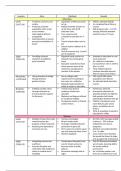
Leaders Aims Methods Results
Education
Lenin Transform economy and Liquidation of illiteracy points Millions attended Rabfaki
(1917-24) society set up 5m completed basic literacy
Producing a literate Rabfaki remedial schools set courses
population which could up for those who’d left High dropout rates – in 1921,
access modern education early average child had attended
technological skill and Free, universal and school for only 2.77 years
propaganda compulsory education for 7-
Adult education to ensure 17s
personal consolidation of Church schools taken over by
power gvt
Schools took in children of all
abilities
Lack of resources (e.g. 1 pencil
per 60 students)
Stalin Providing universal Deported many teachers to Standard of education in rural
(1924-53) education to legitimise isolated areas during great areas improved
party’s position terror No. children in education
Education extended to those increased from 14m in 1929 to
whose parents were of the 20m+ in 1931.
aristocracy, bourgeoisie or Most children failed to
enemies of the people continue education beyond
first two years of secondary
Khrushche Using education to bridge Set up colleges with 99% rural & 98% urban
v (1953-64) the gap between requirement of working for population were literate
genders/classes two years on a collective 2m attended adult education
Expanded opportunities for courses
adults to return to education
Brezhnev Instilling socialist values Turned many general Full literacy achieved
(1964-82) through education to academic schools into Demand for admission to
increase genuine support specialist specialist schools was high for
for the party Diplomas and degrees offered both genders but female
by vocational colleges participation declined with age
Compulsory exams on Marxist- Children of graduates were
Leninist theory more likely to gain school
places, sometimes due to
bribery
Third of population involved in
education by 1980s
Women
Lenin Abolition of laws that made Creches encouraged By 1926, 50% marriages ended
(1917-24) married women the Divorce made easier in divorce – 70% of these
property of their husbands No longer needed husband’s initiated by men due to
Reducing the dependency permission to get a job pregnancy
of women on men First country to enshrine equal Abortion outnumbered births
pay and maternity leave in law 3 to 1 in cities
Abortion legalised Gave women more freedom
but posed the threat of single
and unsupported motherhood
Stalin Integrating women into Closed down Zhenotdel (only Only 8% Komsomol members
(1924-53) workforce way for Soviet women to were female, lowering ability
Increase discipline and become active in public for female political
conformity with traditional sphere) prominence
values to combat social Komsomol meetings held at No. of female workers rose
instability night from 3m in 1928 to over 13m
, Raising status of marriage Gvt reserved 20% higher in 1940
and family education places for women in More women remained in
1929 collective farms than men
In industrial and service By 1940, over 40% engineering
sectors, top level of jobs students were female
reserved for men Significant gap between
In 1936, divorce made far average male and average
more difficult and abortion female wage
made illegal unless danger to Creche places for young
mother children doubled between
Maternity leave increased to 1928 and 1930
16 wks, job security
guaranteed for new mothers &
more money allocated for
creches
Khrushche Remove burden of childcare Abortion legalised in 1955 1960, women = 49% workforce
v (1953-64) from mothers to increase Campaign to increase birth By 1960’s, average woman had
their efficiency as workers rate six abortions in her lifetime
Increase birth rate due to lack of availability of
Encourage women’s place contraception
in workforce Birth rate slightly improved
80% women did unskilled and
low paid work
Brezhnev Prioritisation of stability Second female Politburo By late 1960’s, average woman
(1964-82) over advancement of member not appointed until had six abortions in her
women 1988 lifetime due to lack of
Two months maternity leave availability of contraception
provided Women made up 50%
workforce and 80% health
sector
Women almost exclusively
responsible for domestic work
Infant death rates incredibly
high
Social Security Policies
Lenin Full urban employment Introduction of NEP Many private businesses fired
(1917-24) Providing workers and Took houses off rich to rent to workers in order to take more
families with adequate the workers profit
housing More businesses failed due to
Promoting communism lack of support from gvt
through elements of Principle of allocating housing
housing according to wealth was
dropped in favour of
distribution according to rank
Wasn’t always enough housing
for all
Stalin Full urban employment Increased wages, honours and No. workers increased from
(1924-53) Providing workers and medals were provided as 11.6 to 27m from 1928-37
families with adequate incentives to stay in jobs Full employment achieved
housing Blocks of appts built to spare Harsh, drab life with limited
Promoting communism workers from huts/tents access to material benefits of
through elements of Communal kitchens used to full employment
housing promote communism Most workers had no running
water, electricity or central
heating
Only 6% rented housing with
Education
Lenin Transform economy and Liquidation of illiteracy points Millions attended Rabfaki
(1917-24) society set up 5m completed basic literacy
Producing a literate Rabfaki remedial schools set courses
population which could up for those who’d left High dropout rates – in 1921,
access modern education early average child had attended
technological skill and Free, universal and school for only 2.77 years
propaganda compulsory education for 7-
Adult education to ensure 17s
personal consolidation of Church schools taken over by
power gvt
Schools took in children of all
abilities
Lack of resources (e.g. 1 pencil
per 60 students)
Stalin Providing universal Deported many teachers to Standard of education in rural
(1924-53) education to legitimise isolated areas during great areas improved
party’s position terror No. children in education
Education extended to those increased from 14m in 1929 to
whose parents were of the 20m+ in 1931.
aristocracy, bourgeoisie or Most children failed to
enemies of the people continue education beyond
first two years of secondary
Khrushche Using education to bridge Set up colleges with 99% rural & 98% urban
v (1953-64) the gap between requirement of working for population were literate
genders/classes two years on a collective 2m attended adult education
Expanded opportunities for courses
adults to return to education
Brezhnev Instilling socialist values Turned many general Full literacy achieved
(1964-82) through education to academic schools into Demand for admission to
increase genuine support specialist specialist schools was high for
for the party Diplomas and degrees offered both genders but female
by vocational colleges participation declined with age
Compulsory exams on Marxist- Children of graduates were
Leninist theory more likely to gain school
places, sometimes due to
bribery
Third of population involved in
education by 1980s
Women
Lenin Abolition of laws that made Creches encouraged By 1926, 50% marriages ended
(1917-24) married women the Divorce made easier in divorce – 70% of these
property of their husbands No longer needed husband’s initiated by men due to
Reducing the dependency permission to get a job pregnancy
of women on men First country to enshrine equal Abortion outnumbered births
pay and maternity leave in law 3 to 1 in cities
Abortion legalised Gave women more freedom
but posed the threat of single
and unsupported motherhood
Stalin Integrating women into Closed down Zhenotdel (only Only 8% Komsomol members
(1924-53) workforce way for Soviet women to were female, lowering ability
Increase discipline and become active in public for female political
conformity with traditional sphere) prominence
values to combat social Komsomol meetings held at No. of female workers rose
instability night from 3m in 1928 to over 13m
, Raising status of marriage Gvt reserved 20% higher in 1940
and family education places for women in More women remained in
1929 collective farms than men
In industrial and service By 1940, over 40% engineering
sectors, top level of jobs students were female
reserved for men Significant gap between
In 1936, divorce made far average male and average
more difficult and abortion female wage
made illegal unless danger to Creche places for young
mother children doubled between
Maternity leave increased to 1928 and 1930
16 wks, job security
guaranteed for new mothers &
more money allocated for
creches
Khrushche Remove burden of childcare Abortion legalised in 1955 1960, women = 49% workforce
v (1953-64) from mothers to increase Campaign to increase birth By 1960’s, average woman had
their efficiency as workers rate six abortions in her lifetime
Increase birth rate due to lack of availability of
Encourage women’s place contraception
in workforce Birth rate slightly improved
80% women did unskilled and
low paid work
Brezhnev Prioritisation of stability Second female Politburo By late 1960’s, average woman
(1964-82) over advancement of member not appointed until had six abortions in her
women 1988 lifetime due to lack of
Two months maternity leave availability of contraception
provided Women made up 50%
workforce and 80% health
sector
Women almost exclusively
responsible for domestic work
Infant death rates incredibly
high
Social Security Policies
Lenin Full urban employment Introduction of NEP Many private businesses fired
(1917-24) Providing workers and Took houses off rich to rent to workers in order to take more
families with adequate the workers profit
housing More businesses failed due to
Promoting communism lack of support from gvt
through elements of Principle of allocating housing
housing according to wealth was
dropped in favour of
distribution according to rank
Wasn’t always enough housing
for all
Stalin Full urban employment Increased wages, honours and No. workers increased from
(1924-53) Providing workers and medals were provided as 11.6 to 27m from 1928-37
families with adequate incentives to stay in jobs Full employment achieved
housing Blocks of appts built to spare Harsh, drab life with limited
Promoting communism workers from huts/tents access to material benefits of
through elements of Communal kitchens used to full employment
housing promote communism Most workers had no running
water, electricity or central
heating
Only 6% rented housing with