Outline two criticisms of selecting pupils by ability (4 marks)
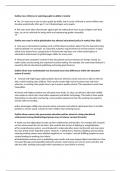
• The 11+ exam was a way to select pupils by ability, but it can be criticised as some children may
develop academically after age 11 so it disadvantages some pupils.
• The entry tests often discriminate against girls by making them have to get a higher mark than
boys, so can be criticised for being unfair and reproducing gender inequality.
??
Outline two ways in which globalisation has affected educational policy (4 marks) (May 2021)
• One way is international rankings such as PISA influence policies taken from the top performing
systems globally. For example, we raised the academic requirements for trainee teachers in 2012
which were derived from comparisons in Finland who had been one of the world leaders in
educational achievement in global league tables for many years.
• Many private companies involved in the educational services industry are foreign owned. So,
nation states are becoming less important in policy making. For example, the exam board Edexcel is
owned by the US educational publishing and testing giant Pearson.
Outline three ways marketisation has increased social class differences within the education
system (6 marks)
• Schools with high league table positions become selective and do not have to take on the less
able, mainly working class children. Their results remain high and so become more and more
selective, so working class pupils have to go to poorer quality schools. This reproduces social class
inequalities.
• Schools with higher positions are allocated more funds. So, they can afford to take their middle
class pupils on more trips, have better equipment and better technology. This leads to their pupils
doing better in education and having a more positive experience than the working class pupils in
schools with less funding.
• Also advantages middle class parents whose economic and cultural capital puts them in a better
position to choose ‘good’ schools for their children than working classes.
Outline three reasons why government education policies aimed at raising educational
achievement among disadvantaged groups may not always succeed (6 marks)
• Pupils may feel stigmatised to take up their entitlements and benefits. For example 20% of pupils
on free school meals do not use them, this could be due to fear of bullying or marginalisation.
• The comprehensive system was introduced to make education more meritocratic and overcome
the class divide of the tripartite system. However, it failed due to teachers labelling and streaming
meaning working classes were labelled negatively as ‘no hopers’ and self fulfilling prophecies were
created leading to working class failure.
• Marketisation policies such as publishing exam results and exam league tables have failed as it has
increased the gap and inequalities between schools. Good schools can now be more selective and
take less able, working class pupils which reproduces a class divide in schools.
, Item A
Since the 1980s, a major aim of government policy has been to increase parental choice in
education. There is now a wider range of school types, and league tables on school
performance are also publicly available. Increased parental choice has had many effects
on pupils’ experience of education.
Applying material from Item A, analyse two effects of increased parental choice on pupils’
experience of education. [10 marks]
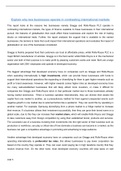
One way parents have increased choice is there is now a “wider range of school types”.
Parents have the choice to send their children to academies or free schools. The academies
act was passed in 2010 and now more than 2,000 academies have been opened. Academies
may increase pupils' experience of education as they have much greater freedom in terms
of curriculum, so can be tailored to meet a child's interests and more freedom on how to
allocate funds to give pupils the best experiences. New Right argues that academies
improve children's experience as they free schools from the ‘dead hand of the state’, which
cannot meet the pupils' needs. Free schools are also an option parents can choose for their
pupils, these are run by parents, teachers, charities and not controlled by local authorities.
These improve pupils' experience as they once again allow for more freedom and increased
standards. However, one criticism is that free schools do not improve all students'
experience of education. Allen found from her research in Sweden (20% of schools are free
schools), they only benefit highly educated families.
Another increased choice parents have is they now have access to “league tables on school
performance”. This can be argued to have made working classes pupils experience
education more negatively. Working class parents lack economic and cultural capital and so
are put in a worse position than middle class parents to choose ‘good’ schools for their
children. Gerwit found working class parents were disconnected-local choosers. They found
the system hard to understand and found the local school was the only realistic option. This
makes working class pupils experience negative as 90% of failing schools are in deprived
areas, so they may feel a lack of self confidence and self-esteem if they find themselves
constantly underachieving. Also, low schools on the league table are allocated less funding
so pupils will have a worse experience as they may go on less school trips, have less
technology to make use of and inadequate play equipment at break and lunch. However,
this can be criticised as the Government has now introduced policies such as Pupil premium
to give more money to pupils with deprived students. However, only 1 in 10 head teachers
said that this policy had significantly changed and improved the school.
• The 11+ exam was a way to select pupils by ability, but it can be criticised as some children may
develop academically after age 11 so it disadvantages some pupils.
• The entry tests often discriminate against girls by making them have to get a higher mark than
boys, so can be criticised for being unfair and reproducing gender inequality.
??
Outline two ways in which globalisation has affected educational policy (4 marks) (May 2021)
• One way is international rankings such as PISA influence policies taken from the top performing
systems globally. For example, we raised the academic requirements for trainee teachers in 2012
which were derived from comparisons in Finland who had been one of the world leaders in
educational achievement in global league tables for many years.
• Many private companies involved in the educational services industry are foreign owned. So,
nation states are becoming less important in policy making. For example, the exam board Edexcel is
owned by the US educational publishing and testing giant Pearson.
Outline three ways marketisation has increased social class differences within the education
system (6 marks)
• Schools with high league table positions become selective and do not have to take on the less
able, mainly working class children. Their results remain high and so become more and more
selective, so working class pupils have to go to poorer quality schools. This reproduces social class
inequalities.
• Schools with higher positions are allocated more funds. So, they can afford to take their middle
class pupils on more trips, have better equipment and better technology. This leads to their pupils
doing better in education and having a more positive experience than the working class pupils in
schools with less funding.
• Also advantages middle class parents whose economic and cultural capital puts them in a better
position to choose ‘good’ schools for their children than working classes.
Outline three reasons why government education policies aimed at raising educational
achievement among disadvantaged groups may not always succeed (6 marks)
• Pupils may feel stigmatised to take up their entitlements and benefits. For example 20% of pupils
on free school meals do not use them, this could be due to fear of bullying or marginalisation.
• The comprehensive system was introduced to make education more meritocratic and overcome
the class divide of the tripartite system. However, it failed due to teachers labelling and streaming
meaning working classes were labelled negatively as ‘no hopers’ and self fulfilling prophecies were
created leading to working class failure.
• Marketisation policies such as publishing exam results and exam league tables have failed as it has
increased the gap and inequalities between schools. Good schools can now be more selective and
take less able, working class pupils which reproduces a class divide in schools.
, Item A
Since the 1980s, a major aim of government policy has been to increase parental choice in
education. There is now a wider range of school types, and league tables on school
performance are also publicly available. Increased parental choice has had many effects
on pupils’ experience of education.
Applying material from Item A, analyse two effects of increased parental choice on pupils’
experience of education. [10 marks]
One way parents have increased choice is there is now a “wider range of school types”.
Parents have the choice to send their children to academies or free schools. The academies
act was passed in 2010 and now more than 2,000 academies have been opened. Academies
may increase pupils' experience of education as they have much greater freedom in terms
of curriculum, so can be tailored to meet a child's interests and more freedom on how to
allocate funds to give pupils the best experiences. New Right argues that academies
improve children's experience as they free schools from the ‘dead hand of the state’, which
cannot meet the pupils' needs. Free schools are also an option parents can choose for their
pupils, these are run by parents, teachers, charities and not controlled by local authorities.
These improve pupils' experience as they once again allow for more freedom and increased
standards. However, one criticism is that free schools do not improve all students'
experience of education. Allen found from her research in Sweden (20% of schools are free
schools), they only benefit highly educated families.
Another increased choice parents have is they now have access to “league tables on school
performance”. This can be argued to have made working classes pupils experience
education more negatively. Working class parents lack economic and cultural capital and so
are put in a worse position than middle class parents to choose ‘good’ schools for their
children. Gerwit found working class parents were disconnected-local choosers. They found
the system hard to understand and found the local school was the only realistic option. This
makes working class pupils experience negative as 90% of failing schools are in deprived
areas, so they may feel a lack of self confidence and self-esteem if they find themselves
constantly underachieving. Also, low schools on the league table are allocated less funding
so pupils will have a worse experience as they may go on less school trips, have less
technology to make use of and inadequate play equipment at break and lunch. However,
this can be criticised as the Government has now introduced policies such as Pupil premium
to give more money to pupils with deprived students. However, only 1 in 10 head teachers
said that this policy had significantly changed and improved the school.