Sonnet 104 Analysis
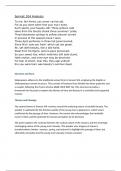
To me, fair friend, you never can be old,
For as you were when first your eye I eyed,
Such seems your beauty still. Three winters cold
Have from the forests shook three summers’ pride,
Three beauteous springs to yellow autumn turned
In process of the seasons have I seen,
Three April perfumes in three hot Junes burned,
Since first I saw you fresh, which yet are green.
Ah, yet doth beauty, like a dial-hand,
Steal from his figure, and no pace perceived;
So your sweet hue, which methinks still doth stand,
Hath motion, and mine eye may be deceived:
For fear of which, hear this, thou age unbred:
Ere you were born was beauty’s summer dead.
Structure and Form
Shakespeare adheres to the traditional sonnet form in Sonnet 104, employing the English or
Shakespearean sonnet structure. This consists of fourteen lines divided into three quatrains and
a couplet, following the rhyme scheme ABAB CDCD EFEF GG. This structure provides a
framework for the poet to explore the themes of time and beauty in a controlled and organized
manner.
Themes and Message
The central theme of Sonnet 104 revolves around the enduring nature of youthful beauty. The
speaker is captivated by the timeless quality of the young man's appearance, which seems
unaffected by the passage of time. However, the sonnet also acknowledges the inevitable
march of time and the potential for human perception to be deceived.
The poem explores the contrast between the cyclical nature of the seasons and the seemingly
unchanging nature of the young man's beauty. The speaker uses imagery of nature's
transformations (winter, summer, spring, and autumn) to highlight the passage of time, but
ultimately concludes that the young man's beauty remains constant.
To me, fair friend, you never can be old,
For as you were when first your eye I eyed,
Such seems your beauty still. Three winters cold
Have from the forests shook three summers’ pride,
Three beauteous springs to yellow autumn turned
In process of the seasons have I seen,
Three April perfumes in three hot Junes burned,
Since first I saw you fresh, which yet are green.
Ah, yet doth beauty, like a dial-hand,
Steal from his figure, and no pace perceived;
So your sweet hue, which methinks still doth stand,
Hath motion, and mine eye may be deceived:
For fear of which, hear this, thou age unbred:
Ere you were born was beauty’s summer dead.
Structure and Form
Shakespeare adheres to the traditional sonnet form in Sonnet 104, employing the English or
Shakespearean sonnet structure. This consists of fourteen lines divided into three quatrains and
a couplet, following the rhyme scheme ABAB CDCD EFEF GG. This structure provides a
framework for the poet to explore the themes of time and beauty in a controlled and organized
manner.
Themes and Message
The central theme of Sonnet 104 revolves around the enduring nature of youthful beauty. The
speaker is captivated by the timeless quality of the young man's appearance, which seems
unaffected by the passage of time. However, the sonnet also acknowledges the inevitable
march of time and the potential for human perception to be deceived.
The poem explores the contrast between the cyclical nature of the seasons and the seemingly
unchanging nature of the young man's beauty. The speaker uses imagery of nature's
transformations (winter, summer, spring, and autumn) to highlight the passage of time, but
ultimately concludes that the young man's beauty remains constant.