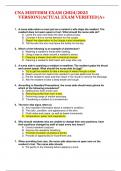
CNA MIDTERM EXAM (2024/2025
VERSION)|ACTUAL EXAM VERIFIED|A+
1. A nurse aide enters a room just as a resident’s wife slaps the resident. The
resident does not seem upset or hurt. What should the nurse aide do?
A. Leave the room and close the door to allow privacy.
B. Consider if this is normal behavior for this couple.
C. Report the observation to the charge nurse immediately
D. Tell the wife that she must leave the facility for the day.
2. Which of the following is an example of disinfection?
A. Washing a resident’s hands after toileting.
B. Using a wipe to clean around a resident’s stoma.
C. Cleaning a shower chair with a chemical cleaner.
D. Cleaning a resident’s bath basin with soap after use.
3. A nurse aide is assisting a resident at mealtime. The resident grabs his throat
and cannot speak. What should the nurse aide do first?
A. Try to get the resident to take a few sips of water through a straw.
B. Reach around from behind the resident to provide abdominal thrusts.
C. Pat the resident’s back and then reach in his mouth to remove the blockage.
D. Ask the resident to take a deep breath and cough.
4. According to Standard Precautions, the nurse aide should wear gloves for
which of the following procedures?
A. Getting linen from a linen cart.
B. Removing soiled linen from a bed.
C. Performing range of motion exercises.
D. Transfering a resident to a showerchair.
5. The term vital signs refers to.
A. Any important information about a resident’s condition.
B. The color, condition, and appearance of the skin.
C. Fluid intake and output, as well as bowel movements.
D. Temperature, pulse, and respirations.
6. Why should residents who are unable to change their own positions, have
their positions changed by staff at least every two hours?
A. Correct resident’s posture.
B. Improve the residents’ breathing.
C. Promote circulation at pressure points.
D. Provide an opportunity for incontinent care.
7. When providing foot care, the nurse aide observes an open sore on the
resident’s foot. The nurse aide should.
A. Pat gently to dry dressing before applying a sock.
, B. Stop the foot care immediately and ask the resident what happened.
C. Report the skin opening to the charge nurse as soon as possible.
D. Check the resident’s sock for any wound drainage.
8. A resident who is in isolation needs a temperature taken several times a day.
Where is the appropriate place for the thermometer to be kept?
A. At the nurses’ station.
B. On the isolation cart outside the resident’s room.
C. In the dirty utility room.
D. In the resident’s room.
9. When counting a resident’s pulse, the nurse aide should.
A. Notice if the rhythm of the heartbeat is regular.
B. Ask if the resident takes any heart medication.
C. Consider the time of day when the pulse is taken.
D. Multiply the rate by four if counted for 30 seconds.
10. A nurse aide is walking a resident using a gait belt. The resident tells the nurse
aide she feels dizzy. The nurse aide should.
A. Hold the gait belt tighter and ask the resident to rest for a minute.
B. Suggest the resident lean on the nurse aide for more support.
C. Guide the resident over to the handrail and ask to hold.
D. Ease the resident to the floor if a chair is not available.
11. While bathing a resident who is comatose, the nurse aide notices a reddened
area on the left hip. Once reported, the charge nurse is likely to request that
the nurse aide.
A. Massage the area using lotion.
B. Apply a dry protective dressing over the area.
C. Keep the resident positioned to avoid pressure on the hip.
D. Cleanse the hip using extra soap, then rinse and dry thoroughly.
12. The care plan requires that the resident be ambulated 100 feet twice a day at
10 a.m. and 2 p.m. When the nurse aide arrives to walk the resident at 10 a.m.,
the resident refuses. Which of the following is the best response by the nurse
aide?
A. “Maybe you can plan to walk a little further this afternoon.”
B. “The doctor ordered your walking exercise. You really need to try.”
C. You have the right to refuse. Do you want me to tell the nurse?”
D. “Would you prefer to walk a little later?”
13. A resident is choking. The first response by the nurse aide should be to.
A. Go find the charge nurse.
B. Get the suction machine.
C. Call emergency services (911).
D. Begin abdominal thrusts.
VERSION)|ACTUAL EXAM VERIFIED|A+
1. A nurse aide enters a room just as a resident’s wife slaps the resident. The
resident does not seem upset or hurt. What should the nurse aide do?
A. Leave the room and close the door to allow privacy.
B. Consider if this is normal behavior for this couple.
C. Report the observation to the charge nurse immediately
D. Tell the wife that she must leave the facility for the day.
2. Which of the following is an example of disinfection?
A. Washing a resident’s hands after toileting.
B. Using a wipe to clean around a resident’s stoma.
C. Cleaning a shower chair with a chemical cleaner.
D. Cleaning a resident’s bath basin with soap after use.
3. A nurse aide is assisting a resident at mealtime. The resident grabs his throat
and cannot speak. What should the nurse aide do first?
A. Try to get the resident to take a few sips of water through a straw.
B. Reach around from behind the resident to provide abdominal thrusts.
C. Pat the resident’s back and then reach in his mouth to remove the blockage.
D. Ask the resident to take a deep breath and cough.
4. According to Standard Precautions, the nurse aide should wear gloves for
which of the following procedures?
A. Getting linen from a linen cart.
B. Removing soiled linen from a bed.
C. Performing range of motion exercises.
D. Transfering a resident to a showerchair.
5. The term vital signs refers to.
A. Any important information about a resident’s condition.
B. The color, condition, and appearance of the skin.
C. Fluid intake and output, as well as bowel movements.
D. Temperature, pulse, and respirations.
6. Why should residents who are unable to change their own positions, have
their positions changed by staff at least every two hours?
A. Correct resident’s posture.
B. Improve the residents’ breathing.
C. Promote circulation at pressure points.
D. Provide an opportunity for incontinent care.
7. When providing foot care, the nurse aide observes an open sore on the
resident’s foot. The nurse aide should.
A. Pat gently to dry dressing before applying a sock.
, B. Stop the foot care immediately and ask the resident what happened.
C. Report the skin opening to the charge nurse as soon as possible.
D. Check the resident’s sock for any wound drainage.
8. A resident who is in isolation needs a temperature taken several times a day.
Where is the appropriate place for the thermometer to be kept?
A. At the nurses’ station.
B. On the isolation cart outside the resident’s room.
C. In the dirty utility room.
D. In the resident’s room.
9. When counting a resident’s pulse, the nurse aide should.
A. Notice if the rhythm of the heartbeat is regular.
B. Ask if the resident takes any heart medication.
C. Consider the time of day when the pulse is taken.
D. Multiply the rate by four if counted for 30 seconds.
10. A nurse aide is walking a resident using a gait belt. The resident tells the nurse
aide she feels dizzy. The nurse aide should.
A. Hold the gait belt tighter and ask the resident to rest for a minute.
B. Suggest the resident lean on the nurse aide for more support.
C. Guide the resident over to the handrail and ask to hold.
D. Ease the resident to the floor if a chair is not available.
11. While bathing a resident who is comatose, the nurse aide notices a reddened
area on the left hip. Once reported, the charge nurse is likely to request that
the nurse aide.
A. Massage the area using lotion.
B. Apply a dry protective dressing over the area.
C. Keep the resident positioned to avoid pressure on the hip.
D. Cleanse the hip using extra soap, then rinse and dry thoroughly.
12. The care plan requires that the resident be ambulated 100 feet twice a day at
10 a.m. and 2 p.m. When the nurse aide arrives to walk the resident at 10 a.m.,
the resident refuses. Which of the following is the best response by the nurse
aide?
A. “Maybe you can plan to walk a little further this afternoon.”
B. “The doctor ordered your walking exercise. You really need to try.”
C. You have the right to refuse. Do you want me to tell the nurse?”
D. “Would you prefer to walk a little later?”
13. A resident is choking. The first response by the nurse aide should be to.
A. Go find the charge nurse.
B. Get the suction machine.
C. Call emergency services (911).
D. Begin abdominal thrusts.