Weekly assignment 4
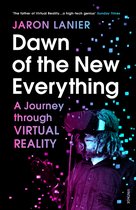
Read Lanier’s chapter. After careful reading answer the following questions. Bring your answers to
class and submit them in PeerGrade prior to class.
Question 1: On page 3 Lanier says that VR is ‘always chasing toward an ultimate destination that
probably can’t ever be reached’. In the pages that follows Lanier provides several arguments why he
believes VR will never become “better” than the human nervous system. Describe his line of
argumentation. [max 250 words]
By saying that VR will never exceed the human perception of reality, Lanier provides examples and
well-supported arguments. First of all, he mentions how evolution got humanity to where it is now,
therefore VR can only try to evolve along with us, but will never make actual reality expendable.
Lanier claims that “There will always be circumstances in which an illusion rendered by a layer of
media technology, no matter how refined, will be revealed to be a little clumsy in comparison to
unmediated reality.” By that, he implies that VR, after all, is still just a technology, which can
malfunction and can thus never be equal to the perception of reality by the human body in real life.
Secondly, Lanier writes about how the human mind develops along the technological developments,
therefore for technology to trick us is almost impossible. He then continues by stating that since VR
can not fully trick the human body and fake another reality, it can only portray the world differently
and remind people how precious the ‘real’ reality is.
Question 2: In his lecture ‘Playing with media and playing the senses’ Chiel Kattenbelt has discussed
how digital technologies, such as VR and AI, play with our senses in a particular way, and even ‘re-
define’ our senses. How does the installation you visited at IDFA DocLab play with the senses of the
visitor and what is the function of this particular sensorial experience in the context of the
installation and what the installation tries to communicate? [max 250 words]
I went to the Zikr, which was about the tribe with its own rituals and dances. The experience was
very immersing, as you start to believe that the people around you are indeed looking at you and are
waiting for you to participate. It plays with the senses as it provides a new environment for the
participants, gives them music instruments or just the ability to somehow interact with the world.
For example, when the Zikr experience would take you to a virtual place where you could see your
virtual hands along with other participants’ hands, then you would realize that there are more
people in this, and you all could interact together via a rope, that the VR experience has provided
you with. While a virtual person would be talking or explaining something in the middle of the room,
you, along with other participants around the virtual person, could make contact and reassure that
you are here with them. It was a very good thing that you could use a musical instrument or, in one
case, a flame, to participate in a virtual ritual, because that way you felt more like a part of it, that
you could actually contribute to your own experience.
Read Lanier’s chapter. After careful reading answer the following questions. Bring your answers to
class and submit them in PeerGrade prior to class.
Question 1: On page 3 Lanier says that VR is ‘always chasing toward an ultimate destination that
probably can’t ever be reached’. In the pages that follows Lanier provides several arguments why he
believes VR will never become “better” than the human nervous system. Describe his line of
argumentation. [max 250 words]
By saying that VR will never exceed the human perception of reality, Lanier provides examples and
well-supported arguments. First of all, he mentions how evolution got humanity to where it is now,
therefore VR can only try to evolve along with us, but will never make actual reality expendable.
Lanier claims that “There will always be circumstances in which an illusion rendered by a layer of
media technology, no matter how refined, will be revealed to be a little clumsy in comparison to
unmediated reality.” By that, he implies that VR, after all, is still just a technology, which can
malfunction and can thus never be equal to the perception of reality by the human body in real life.
Secondly, Lanier writes about how the human mind develops along the technological developments,
therefore for technology to trick us is almost impossible. He then continues by stating that since VR
can not fully trick the human body and fake another reality, it can only portray the world differently
and remind people how precious the ‘real’ reality is.
Question 2: In his lecture ‘Playing with media and playing the senses’ Chiel Kattenbelt has discussed
how digital technologies, such as VR and AI, play with our senses in a particular way, and even ‘re-
define’ our senses. How does the installation you visited at IDFA DocLab play with the senses of the
visitor and what is the function of this particular sensorial experience in the context of the
installation and what the installation tries to communicate? [max 250 words]
I went to the Zikr, which was about the tribe with its own rituals and dances. The experience was
very immersing, as you start to believe that the people around you are indeed looking at you and are
waiting for you to participate. It plays with the senses as it provides a new environment for the
participants, gives them music instruments or just the ability to somehow interact with the world.
For example, when the Zikr experience would take you to a virtual place where you could see your
virtual hands along with other participants’ hands, then you would realize that there are more
people in this, and you all could interact together via a rope, that the VR experience has provided
you with. While a virtual person would be talking or explaining something in the middle of the room,
you, along with other participants around the virtual person, could make contact and reassure that
you are here with them. It was a very good thing that you could use a musical instrument or, in one
case, a flame, to participate in a virtual ritual, because that way you felt more like a part of it, that
you could actually contribute to your own experience.