2/10/22
CRITICAL THINKING (PHI1025F)
PHI1025F 2022
1
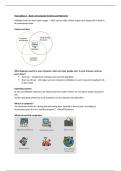
WHAT IS CRITICAL THINKING?
Critical thinking (CT) is the systematic evaluation or
formulation of beliefs by rational standards
! CT is systematic because it involves distinct methods.
! CT is used to assess (evaluate) beliefs and devise
(formulate) new ones.
! CT operates according to rational standards in that
beliefs are evaluated by how well they are supported
by reasons. Beliefs that are well-supported by reasons
are worth believing.
PHI1025F 2022
2
1
, 2/10/22
ARGUMENTS
An argument is an attempt to support, justify or defend a
conclusion by providing reasons for it.
An argument is NOT:
§ The use of aggressive
language or demeanour in an
attempt to shout down or
intimidate an opponent
• An attempt to ‘win at all
costs’
PHI1025F 2022
3
ARGUMENTS
A reason is a consideration that provides evidence that a belief is true, or
very likely to be true.
! Reasons are said to “support,” “justify,” or “prove” beliefs by providing
evidence for them.
An argument is an attempt to support/justify/prove a belief with a
set of reasons.
Every argument has two parts:
Conclusion: the belief being supported.
Premise(s): the reason(s) intended to support the conclusion. Each
reason is called a premise. Every argument has at least one
premise.
Good arguments succeed in the attempt to support their conclusion.
Some arguments fail as attempts to support their conclusion. The
are bad arguments—but they are still arguments.
PHI1025F 2022
4
2
CRITICAL THINKING (PHI1025F)
PHI1025F 2022
1
WHAT IS CRITICAL THINKING?
Critical thinking (CT) is the systematic evaluation or
formulation of beliefs by rational standards
! CT is systematic because it involves distinct methods.
! CT is used to assess (evaluate) beliefs and devise
(formulate) new ones.
! CT operates according to rational standards in that
beliefs are evaluated by how well they are supported
by reasons. Beliefs that are well-supported by reasons
are worth believing.
PHI1025F 2022
2
1
, 2/10/22
ARGUMENTS
An argument is an attempt to support, justify or defend a
conclusion by providing reasons for it.
An argument is NOT:
§ The use of aggressive
language or demeanour in an
attempt to shout down or
intimidate an opponent
• An attempt to ‘win at all
costs’
PHI1025F 2022
3
ARGUMENTS
A reason is a consideration that provides evidence that a belief is true, or
very likely to be true.
! Reasons are said to “support,” “justify,” or “prove” beliefs by providing
evidence for them.
An argument is an attempt to support/justify/prove a belief with a
set of reasons.
Every argument has two parts:
Conclusion: the belief being supported.
Premise(s): the reason(s) intended to support the conclusion. Each
reason is called a premise. Every argument has at least one
premise.
Good arguments succeed in the attempt to support their conclusion.
Some arguments fail as attempts to support their conclusion. The
are bad arguments—but they are still arguments.
PHI1025F 2022
4
2