NEWEST UPDATE FOR STRAIGHTERLINE
INTRODUCTION TO STATISTICS EXAM QUESTIONS
AND VERIFIED ANSWERS ALREADY GRADED A+ 2024
– 2025
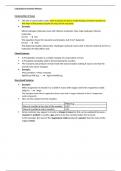
Lurking Variable
a variable that is not among the explanatory or response variables in a study, but could substantially
affect your interpretation of the relationship among those variables
Simpson's paradox
When a lurking variable causes you to rethink the direction of an association
Probability sampling plan
any sampling plan that relies on random selection (avoids bias).
Simple Random Sampling
Every member of the population has an equal probability of being selected for the sample
Cluster Sampling
Used when the population is naturally divided into groups. Take a random sample of clusters and use all
individuals within those clusters as the sample.
Stratified sampling
, Used when the population is naturally divided into sub-populations called stratum. Choose a simple
random sample from each stratum and use these together as the sample.
Multistage sampling
a probability sampling technique involving at least two stages: a random sample of clusters followed by
a random sample of people within the selected clusters
Observational study
values of the variable or variables of interest are recorded as they naturally occur; no interference
Sample surveys
a particular type of observational study in which individuals report variables' values themselves,
frequently by giving their opinions.
Experiment
researchers "take control" of the values of the explanatory variable because they want to see how
changes in the value of the explanatory variable affect the response variable
The Complement Rule
P(not A) = 1 - P(A)
useful for finding events of the type "at least one of..."
General Addition Rule
P(A or B) = P(A) + P(B) - P(A and B)
INTRODUCTION TO STATISTICS EXAM QUESTIONS
AND VERIFIED ANSWERS ALREADY GRADED A+ 2024
– 2025
Lurking Variable
a variable that is not among the explanatory or response variables in a study, but could substantially
affect your interpretation of the relationship among those variables
Simpson's paradox
When a lurking variable causes you to rethink the direction of an association
Probability sampling plan
any sampling plan that relies on random selection (avoids bias).
Simple Random Sampling
Every member of the population has an equal probability of being selected for the sample
Cluster Sampling
Used when the population is naturally divided into groups. Take a random sample of clusters and use all
individuals within those clusters as the sample.
Stratified sampling
, Used when the population is naturally divided into sub-populations called stratum. Choose a simple
random sample from each stratum and use these together as the sample.
Multistage sampling
a probability sampling technique involving at least two stages: a random sample of clusters followed by
a random sample of people within the selected clusters
Observational study
values of the variable or variables of interest are recorded as they naturally occur; no interference
Sample surveys
a particular type of observational study in which individuals report variables' values themselves,
frequently by giving their opinions.
Experiment
researchers "take control" of the values of the explanatory variable because they want to see how
changes in the value of the explanatory variable affect the response variable
The Complement Rule
P(not A) = 1 - P(A)
useful for finding events of the type "at least one of..."
General Addition Rule
P(A or B) = P(A) + P(B) - P(A and B)