ATI Nutrition Test
Questions and
Complete Solutions
Denning Muriithi [Date] [Course title]
, ATI Nutrition
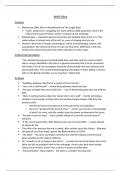
1.Simple carbs (glucose, fructose and galactose) are called Answer:
monosaccharides
2.simple carbs (sucrose, lactose, and maltose) are called Answer:
disaccharides
3.complex cards (starch, fiber, and glycogen) are called Answer:
polysaccharides
4.The amount of a particular nutrient that most healthy people in a similar
life-stage and sex will need to decrease the risk of chronic disease is
called-
Answer: recommended dietary allowances
5.the amount of a nutrient needed to meet basic requirements for half of
the people in a particular population is called Answer: estimated average
requirement
6.the amount of a nutrient that most people in a group or population
consume-
Answer: adequate intake
7.example sources of monosaccharides Answer: glucose
(corn syrup) fructose (fruits)
galactose (milk)
8.examples of sources of disaccharides Answer: sucrose
(table sugar) lactose (milk sugar)
maltose (malt sugar)
9.recommended fiber AI Answer: 25g/day for females and 38g/day for
males
10.complete vs incomplete proteins Answer: The main difference between
complete and incomplete proteins is that complete proteins contain all
essential amino acids your body requires daily, and incomplete proteins
only contain some essential amino acids.
Complete come from animal sources and soy. Incomplete sources come
from plants.
11.How much energy does protein provide Answer: 4cal/g
12.Examples of sources of lipids Answer: dark meat, poultry, dairy,
added oils (mar- garine, butter, shortening, oils, lard)
13.saturated vs unsaturated fats Answer: Both are lipids - saturated
have NO double bonds, are saturated with hydrogen, are animal
based, solid at room temperature unsaturated - have double bonds,
are plant based, liquid at room temperature
14.Which vitamins are water soluble Answer: C and B complex
2/
12
Questions and
Complete Solutions
Denning Muriithi [Date] [Course title]
, ATI Nutrition
1.Simple carbs (glucose, fructose and galactose) are called Answer:
monosaccharides
2.simple carbs (sucrose, lactose, and maltose) are called Answer:
disaccharides
3.complex cards (starch, fiber, and glycogen) are called Answer:
polysaccharides
4.The amount of a particular nutrient that most healthy people in a similar
life-stage and sex will need to decrease the risk of chronic disease is
called-
Answer: recommended dietary allowances
5.the amount of a nutrient needed to meet basic requirements for half of
the people in a particular population is called Answer: estimated average
requirement
6.the amount of a nutrient that most people in a group or population
consume-
Answer: adequate intake
7.example sources of monosaccharides Answer: glucose
(corn syrup) fructose (fruits)
galactose (milk)
8.examples of sources of disaccharides Answer: sucrose
(table sugar) lactose (milk sugar)
maltose (malt sugar)
9.recommended fiber AI Answer: 25g/day for females and 38g/day for
males
10.complete vs incomplete proteins Answer: The main difference between
complete and incomplete proteins is that complete proteins contain all
essential amino acids your body requires daily, and incomplete proteins
only contain some essential amino acids.
Complete come from animal sources and soy. Incomplete sources come
from plants.
11.How much energy does protein provide Answer: 4cal/g
12.Examples of sources of lipids Answer: dark meat, poultry, dairy,
added oils (mar- garine, butter, shortening, oils, lard)
13.saturated vs unsaturated fats Answer: Both are lipids - saturated
have NO double bonds, are saturated with hydrogen, are animal
based, solid at room temperature unsaturated - have double bonds,
are plant based, liquid at room temperature
14.Which vitamins are water soluble Answer: C and B complex
2/
12