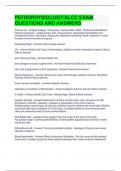
PATHOPHYSIOLOGY-SLCC EXAM
QUESTIONS AND ANSWERS
Anemia s/s - Answer-Fatigue, Tachypnea, Tachycardia, Pallor. Clinical manifestations:
Plasma expansion - watery blood, less viscous blood. Decreased hemoglobin and
hematocrit levels in the blood. Assess for anemia by checking inside of person's mouth
for pale colored mucosa and gums
Repairing bleed - Answer-Hemorrhage anemia
O2 - Answer-Sickle Cell Crisis, Hemorrhage, Aplastic Anemia, Hemolytic Anemia, Renal
Failure anemia
pain relieving drugs - Answer-Sickle cell
diet changes and iron supplements - Answer-Nutritional Deficiency Anemias
folic acid supplements or B12 injections - Answer-Pernicious Anemia
blood transfusion - Answer-Sickle Cell crisis, Hemorrhage, Aplastic Anemia, Hemolytic
Anemia, Renal Failure anemia
bone marrow transplant - Answer-Aplastic Anemia
Injections of synthetic erythropoietin - Answer-Aplastic Anemia, Renal Failure anemia
IV fluids - Answer-Sickle Cell Crisis, Hemorrhage, Renal Failure anemia.
Aplastic Anemia - Answer-Destruction of bone marrow stem cells. Anyone is at risk.
Symptoms: Infection, bleeding. Caused by exhaustion of the bone marrow.
Erythropoiesis cannot keep up with the constant need to replace red blood cells. Sickled
red blood cells have a lifespan of 10-20 days. Constant stress on bone marrow stem
cells can eventually lead to bone marrow failure.
Red Blood Cell - Answer-Carry oxygen from the lungs to the rest of the body.
Associated organ: Erythropoietin/Kidney. Erythropoietin signals bone marrow to make
red blood cells.
White Blood cell - Answer-Thymus/Lymphatic system - damage to thymus can cause
infection problems.
Blood dyscrasias - Answer-Blood component disorders. Can be cause by the primary
tumor but is usually caused by bone marrow damage from various cancer treatments
, Anemia - Answer-low red blood cell count caused by bleeding, malnutrition, cancer
treatments. Tumor may ulcerate or erode blood vessel - bleeding. Causes a decreased
delivery of oxygen to tissues and leads to patient fatigue and s/s of low oxygen (SOB,
sighing, etc.)
Leukopenia - Answer-Low white blood cell count caused by bone cancers or cancer
treatments. Low WBC's means cancer patients are prone to infections.
Thrombocytopenia - Answer-Low platelet count from bone cancers or cancer
treatments. Causes bleeding disorders which in turn leads to anemia.
RBC - Answer-3.6-5.4
Elevated RBC (polycythemia) - Answer-Cardiovascular disease, stress, polycythemia
vera, smokers, high altitude, hemoconcentration and dehydration, renal cell carcinoma
and other erythropoietin-producing neoplasms.
Decreased RBC (Anemia) - Answer-Anemias, hemolysis, Chronic renal failure,
Hemorrhage, failure of marrow production.
Hemoglobin - Answer-12-16.5
Hematocrit - Answer-37-50%
Disseminated Intravascular Coagulopathy - DIC - Answer-both massive blood clotting
(thrombi) and hemorrhage. It is always secondary to an underlying disorder. Body
overproduces many small blood clots throughout the body, depleting the body of clotting
factors and platelets. These small clots are dangerous and can interfere with the blood
supply to organs, causing dysfunction and failure. Massive bleeding can occur due to
the body's lack of clotting factor and platelets. Life-threatening and needs to be treated
promptly. Cytokine is released when the inflammatory response is triggered. Cytokine is
implicated as a causative agent in DIC
Trigger phase - Answer-Sepsis & septic shock, OB complications, Trauma, Blood
transfusions, hematologic disease, some cancers
S/S: Clotting phase - Answer-DVT, Renal failure, difficulty breathing, neurologic
changes, numbness, liver dysfunction.
Pertinent Lab Tests - Answer-Decreased platelet count and abnormal D-Dimer.
Hemorrhage phase - Answer-bleeding gums, blood oozing from an existing IV site, GI
bleeds, Petechiae, purpura, ecchymosis.
DIC Treatment - Answer-Life support, treat the underlying cause, give heparin, platelet
transfusion
QUESTIONS AND ANSWERS
Anemia s/s - Answer-Fatigue, Tachypnea, Tachycardia, Pallor. Clinical manifestations:
Plasma expansion - watery blood, less viscous blood. Decreased hemoglobin and
hematocrit levels in the blood. Assess for anemia by checking inside of person's mouth
for pale colored mucosa and gums
Repairing bleed - Answer-Hemorrhage anemia
O2 - Answer-Sickle Cell Crisis, Hemorrhage, Aplastic Anemia, Hemolytic Anemia, Renal
Failure anemia
pain relieving drugs - Answer-Sickle cell
diet changes and iron supplements - Answer-Nutritional Deficiency Anemias
folic acid supplements or B12 injections - Answer-Pernicious Anemia
blood transfusion - Answer-Sickle Cell crisis, Hemorrhage, Aplastic Anemia, Hemolytic
Anemia, Renal Failure anemia
bone marrow transplant - Answer-Aplastic Anemia
Injections of synthetic erythropoietin - Answer-Aplastic Anemia, Renal Failure anemia
IV fluids - Answer-Sickle Cell Crisis, Hemorrhage, Renal Failure anemia.
Aplastic Anemia - Answer-Destruction of bone marrow stem cells. Anyone is at risk.
Symptoms: Infection, bleeding. Caused by exhaustion of the bone marrow.
Erythropoiesis cannot keep up with the constant need to replace red blood cells. Sickled
red blood cells have a lifespan of 10-20 days. Constant stress on bone marrow stem
cells can eventually lead to bone marrow failure.
Red Blood Cell - Answer-Carry oxygen from the lungs to the rest of the body.
Associated organ: Erythropoietin/Kidney. Erythropoietin signals bone marrow to make
red blood cells.
White Blood cell - Answer-Thymus/Lymphatic system - damage to thymus can cause
infection problems.
Blood dyscrasias - Answer-Blood component disorders. Can be cause by the primary
tumor but is usually caused by bone marrow damage from various cancer treatments
, Anemia - Answer-low red blood cell count caused by bleeding, malnutrition, cancer
treatments. Tumor may ulcerate or erode blood vessel - bleeding. Causes a decreased
delivery of oxygen to tissues and leads to patient fatigue and s/s of low oxygen (SOB,
sighing, etc.)
Leukopenia - Answer-Low white blood cell count caused by bone cancers or cancer
treatments. Low WBC's means cancer patients are prone to infections.
Thrombocytopenia - Answer-Low platelet count from bone cancers or cancer
treatments. Causes bleeding disorders which in turn leads to anemia.
RBC - Answer-3.6-5.4
Elevated RBC (polycythemia) - Answer-Cardiovascular disease, stress, polycythemia
vera, smokers, high altitude, hemoconcentration and dehydration, renal cell carcinoma
and other erythropoietin-producing neoplasms.
Decreased RBC (Anemia) - Answer-Anemias, hemolysis, Chronic renal failure,
Hemorrhage, failure of marrow production.
Hemoglobin - Answer-12-16.5
Hematocrit - Answer-37-50%
Disseminated Intravascular Coagulopathy - DIC - Answer-both massive blood clotting
(thrombi) and hemorrhage. It is always secondary to an underlying disorder. Body
overproduces many small blood clots throughout the body, depleting the body of clotting
factors and platelets. These small clots are dangerous and can interfere with the blood
supply to organs, causing dysfunction and failure. Massive bleeding can occur due to
the body's lack of clotting factor and platelets. Life-threatening and needs to be treated
promptly. Cytokine is released when the inflammatory response is triggered. Cytokine is
implicated as a causative agent in DIC
Trigger phase - Answer-Sepsis & septic shock, OB complications, Trauma, Blood
transfusions, hematologic disease, some cancers
S/S: Clotting phase - Answer-DVT, Renal failure, difficulty breathing, neurologic
changes, numbness, liver dysfunction.
Pertinent Lab Tests - Answer-Decreased platelet count and abnormal D-Dimer.
Hemorrhage phase - Answer-bleeding gums, blood oozing from an existing IV site, GI
bleeds, Petechiae, purpura, ecchymosis.
DIC Treatment - Answer-Life support, treat the underlying cause, give heparin, platelet
transfusion