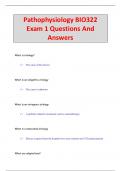
Pathophysiology BIO322
Exam 1 Questions And
Answers
What is etiology?
✓~ The cause of the disease
What is an idiopathic etiology
✓~ The cause is unknown
What is an iatrogenic etiology
✓~ A problem related to treatment (such as chemotherapy)
What is a nosocomial etiology
✓~ Disease acquired from the hospital (two most common are UTI and pneumonia
What are adaptations?
, ✓~ Cellular responses our body goes through when stresses trigger it
What is cellular adaptation?
✓~ the cell's response to escape and protect itself from injury. An example would be
guitar fingertips
What is reversible cell injury
✓~ An early or mild stage of cell injury when the functional and morphological
changes can reverse if the stimulus is removed
What is irreversible cell injury
✓~ the cell has gone past the point of no return
= cells die (apoptosis or necrosis)
Apoptosis vs necrosis
✓~ Apoptosis: self-breaks down and all the intracellular contents that are harmful are
safely disposed of. Function is to protect neighboring cells
, Necrosis: Cell explodes and falls apart, releasing all the dangerous intracellular
contents (free radicals and enzymes) that destroy neighboring cells
What are the four types of necrosis and what organs do they affect?
✓~ Coagulative necrosis: Found in the heart, kidney, spleen, and skin
Liquefactive necrosis: Found in the brain and GI tract (liquifies the tissue)
Caseous necrosis: Associated with a tuberculosis infection of the lung
Fat necrosis: Occurs in breasts, pancreas (most common) and liver
Dry vs wet gangrene
✓~ Dry - ischemia of tissue, looks mummified. External, coagulative necrosis
Wet - superimposed infection of dry gangrene. Internal, liquefactive necrosis
What is atrophy and an example
✓~ A decrease in cell size, such as wearing a cast for a few months and not using
those muscles
What is hypertrophy
Exam 1 Questions And
Answers
What is etiology?
✓~ The cause of the disease
What is an idiopathic etiology
✓~ The cause is unknown
What is an iatrogenic etiology
✓~ A problem related to treatment (such as chemotherapy)
What is a nosocomial etiology
✓~ Disease acquired from the hospital (two most common are UTI and pneumonia
What are adaptations?
, ✓~ Cellular responses our body goes through when stresses trigger it
What is cellular adaptation?
✓~ the cell's response to escape and protect itself from injury. An example would be
guitar fingertips
What is reversible cell injury
✓~ An early or mild stage of cell injury when the functional and morphological
changes can reverse if the stimulus is removed
What is irreversible cell injury
✓~ the cell has gone past the point of no return
= cells die (apoptosis or necrosis)
Apoptosis vs necrosis
✓~ Apoptosis: self-breaks down and all the intracellular contents that are harmful are
safely disposed of. Function is to protect neighboring cells
, Necrosis: Cell explodes and falls apart, releasing all the dangerous intracellular
contents (free radicals and enzymes) that destroy neighboring cells
What are the four types of necrosis and what organs do they affect?
✓~ Coagulative necrosis: Found in the heart, kidney, spleen, and skin
Liquefactive necrosis: Found in the brain and GI tract (liquifies the tissue)
Caseous necrosis: Associated with a tuberculosis infection of the lung
Fat necrosis: Occurs in breasts, pancreas (most common) and liver
Dry vs wet gangrene
✓~ Dry - ischemia of tissue, looks mummified. External, coagulative necrosis
Wet - superimposed infection of dry gangrene. Internal, liquefactive necrosis
What is atrophy and an example
✓~ A decrease in cell size, such as wearing a cast for a few months and not using
those muscles
What is hypertrophy