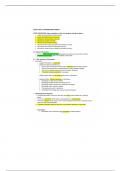
STUDY UNIT 3: INFORMATION POVERTY
STUDY OBJECTIVE: Upon completion of this unit students should be able to:
explain what information poverty means;
explain the different forms of poverty;
discuss the various levels of poverty;
discuss the causes of poverty;
discuss how to measure poverty;
discuss the three main approaches to information poverty;
discuss the main causes of information poverty;
discuss the moral concerns related to information poverty.
3.1 General introduction
For us to define information poverty adequately we need to know what the concepts
Information and Poverty refer to in insolation of each other.
3.1.1 The meaning of Information:
Information
o Legally "information" is indefinable.
o Dictionaries define information as:
"The process of making comments and/or informing someone else" (Oxford)
"Fact or facts derived from a material object or entity" (Readers Digest)
"The facts or material required to solve a problem" (Debons)
"That which reduces uncertainty" (Lancaster)
o Wellish (Sanz,1994) cite 39 definitions of the term “information”
o Machlup (1983) - different meanings of information:
Something one did not know before
Something that affects what one already knows
Something useful in some way to the person receiving it
Something used in decision making
The meaning of words in sentences
Something that changes what a person believes/respects
Etymological development
o The word information comes from the Latin word forma, which means form, shape or
figure.
o The noun is informatio, which means a representation or understanding.
o The verb is informo, which means “I form” and the infinitive of this word is informare, which
means to make a representation.
o Therefore information serves to give form or to place the recipient in a new state
o Information:
Information can be defined as data processed to create meaning.
, Peter Drucker “data endowed with relevance and purpose”
Is linked to a living organism (human being) and does not exist separately from a
carrier.
It is embodied in a life cycle.
Information is a judgement, by an individual or groups, that given data resolves
questions, disclose or reveals distinctions or enables new action – Information thus
exists in the eye of the beholder, the same data can become nonsense to one
person and gold to another (Spiegler, 2003)
3.1.2 The meaning of poverty
What is the meaning of the terms “poverty” and “poor”?
Generally speaking, these terms are used in different ways and contexts. They are primarily
used to indicate the economic and social status of people. People who earn a low income are
poor and live in poor areas.
Poverty has the added connotation of pity, inferiority and subservience.
Poverty is furthermore the direct opposite of wealth. Wealth is generally linked to concepts
such as abundance, status and high quality.
In some dictionaries poverty is described as follows: “The state of one with insufficient
resources” (Webster Online, 2002). “The lacking of material possessions; having little or no
means to support oneself; needy, lack of means of subsistence” (Webster's New Twentieth
Century Dictionary of the English Language, 1977:1400, 1411). “An insufficiency of the
material necessities of life” (Encyclopaedia Britannica 1969, vol. 18:392). As early as the 19th
century, poverty was associated with the pressure to obtain basic means of survival.(NB NB)
Based on these definitions, the most common and generally accepted description used
internationally for poverty is “that condition of life where the majority of people lack sufficient
resources to supply their basic needs for survival”. Poverty furthermore does not only refer to
the presence or absence of resources; it is also expressed in the inability to produce these
resources.
3.1.2.1 Different forms of poverty
Although poverty is a fairly standard term for that condition of life in which the majority of
people do not have sufficient resources to provide for their basic survival needs, it can be
expressed in different ways.
a) Absolute poverty
According to the United Nations report on poverty (1998 Report on overcoming human
poverty), absolute poverty is the condition in which an individual, family or group of people
have no or very few resources for supplying their daily needs.
In other words, it indicates a specific degree of poverty.
Beisner (1995) explains that absolute poverty among others indicates people who do not
have jobs or are unable to work. Lacking any form of income, such people are completely
dependent on others for their daily needs.
STUDY OBJECTIVE: Upon completion of this unit students should be able to:
explain what information poverty means;
explain the different forms of poverty;
discuss the various levels of poverty;
discuss the causes of poverty;
discuss how to measure poverty;
discuss the three main approaches to information poverty;
discuss the main causes of information poverty;
discuss the moral concerns related to information poverty.
3.1 General introduction
For us to define information poverty adequately we need to know what the concepts
Information and Poverty refer to in insolation of each other.
3.1.1 The meaning of Information:
Information
o Legally "information" is indefinable.
o Dictionaries define information as:
"The process of making comments and/or informing someone else" (Oxford)
"Fact or facts derived from a material object or entity" (Readers Digest)
"The facts or material required to solve a problem" (Debons)
"That which reduces uncertainty" (Lancaster)
o Wellish (Sanz,1994) cite 39 definitions of the term “information”
o Machlup (1983) - different meanings of information:
Something one did not know before
Something that affects what one already knows
Something useful in some way to the person receiving it
Something used in decision making
The meaning of words in sentences
Something that changes what a person believes/respects
Etymological development
o The word information comes from the Latin word forma, which means form, shape or
figure.
o The noun is informatio, which means a representation or understanding.
o The verb is informo, which means “I form” and the infinitive of this word is informare, which
means to make a representation.
o Therefore information serves to give form or to place the recipient in a new state
o Information:
Information can be defined as data processed to create meaning.
, Peter Drucker “data endowed with relevance and purpose”
Is linked to a living organism (human being) and does not exist separately from a
carrier.
It is embodied in a life cycle.
Information is a judgement, by an individual or groups, that given data resolves
questions, disclose or reveals distinctions or enables new action – Information thus
exists in the eye of the beholder, the same data can become nonsense to one
person and gold to another (Spiegler, 2003)
3.1.2 The meaning of poverty
What is the meaning of the terms “poverty” and “poor”?
Generally speaking, these terms are used in different ways and contexts. They are primarily
used to indicate the economic and social status of people. People who earn a low income are
poor and live in poor areas.
Poverty has the added connotation of pity, inferiority and subservience.
Poverty is furthermore the direct opposite of wealth. Wealth is generally linked to concepts
such as abundance, status and high quality.
In some dictionaries poverty is described as follows: “The state of one with insufficient
resources” (Webster Online, 2002). “The lacking of material possessions; having little or no
means to support oneself; needy, lack of means of subsistence” (Webster's New Twentieth
Century Dictionary of the English Language, 1977:1400, 1411). “An insufficiency of the
material necessities of life” (Encyclopaedia Britannica 1969, vol. 18:392). As early as the 19th
century, poverty was associated with the pressure to obtain basic means of survival.(NB NB)
Based on these definitions, the most common and generally accepted description used
internationally for poverty is “that condition of life where the majority of people lack sufficient
resources to supply their basic needs for survival”. Poverty furthermore does not only refer to
the presence or absence of resources; it is also expressed in the inability to produce these
resources.
3.1.2.1 Different forms of poverty
Although poverty is a fairly standard term for that condition of life in which the majority of
people do not have sufficient resources to provide for their basic survival needs, it can be
expressed in different ways.
a) Absolute poverty
According to the United Nations report on poverty (1998 Report on overcoming human
poverty), absolute poverty is the condition in which an individual, family or group of people
have no or very few resources for supplying their daily needs.
In other words, it indicates a specific degree of poverty.
Beisner (1995) explains that absolute poverty among others indicates people who do not
have jobs or are unable to work. Lacking any form of income, such people are completely
dependent on others for their daily needs.