
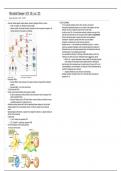
Microbial Disease I (Ch. 26, Lec. 22)
Monday, December 7, 2020 3:02 PM
• Immunity: defense against invading disease, caused by pathogen infection or cancer. ACTIVE LEARNING
○ Innate: non-specific. Ex. Stomach acid kills invaders. • To be successful, pathogens need to infect, reproduce, and spread.
○ Adaptive: specific to particular infections. Develops over time in response to exposure. Ex. • Host-parasite relationships depend on: the virulence of the organism, the host's
defenses, and the # of organisms present in/on the host (dose).
Vaccine leading to the production of antibodies.
• Is anthrax a virus? No, it is a toxin protein emitted by a bacteria; one copy of that
toxin that do the same job over and over again, attack multiple times (exotoxins).
• Which of the following does not require the presence of living bacteria?
Intoxications-- exposure to just the protein toxin can cause disease.
• Intoxication: it produces toxin in food; toxins are eaten and…
• Bacteria need iron. -> host microbiota use Enteroabctin to get iron. -> immune
system can sequester Enterobactin, which will prevent bacteria from getting iron.
• Salmonella has it own alt to getting essential metals. Gut inflammation curbs host
microbiota growth-- favors bacteria growth instead.
•
• If you prevented the activity of IL-22 during a Salmonella infection, which of the
following do you think would occur? Salmonella would be less likely to persist.
○ Block IL-22 -> reduces inflammation, making it harder for Salmonella to persist
(must compete w/ other bacteria that are growing from less inflammation).
• Herd immunity: will be maintained even if a small minority of the pop (<20%) is not
vaccinated(allergic, not recommended, etc). Main point is that unvaccinated ppl can
benefit from widespread use of vaccines.
○ Antigenic shift/drift can pose a threat to vaccine efficacy.
• Antibiotic resistance: AR gene is there, but it's conc INCs when entire pop has
it(selection for it).
• Leukocytes: WBCs.
○ Granular WBCs: contain granules full of useful chemicals. Ex. Basophil full of histamine
granules.
○ Agranular WBCs: T cell, B cell, and NK cell.
• T cells: directly kill APCs.
• B cells: mass-produce antibodies when exposed to antigen.
○ B cells can develop into memory B cells, which stick around to make re-exposure to the
same Ag quicker/stronger.
○ Normal for antibody conc to DEC after infection; memory B cells are still present to ramp
up antibody expression if re-exposure occurs.
• Antibodies: proteins produced by B cells that specifically(certain epitopes on Ag that match
antibody receptor) bind to and inactivate invader. If more bind, greater immune response
occurs.
• Epitope(antigenic determinant): a segment of an antigen that interacts w/ a specific antibody to
elicit an immune response.
• Lymphocytes:
○ TH cell: T helper cell; expresses CD4.
○ CTL: Cytotoxic T Lymphocyte; expresses CD8.
• Cell-cell interactions involve making antibody:
•
Monday, December 7, 2020 3:02 PM
• Immunity: defense against invading disease, caused by pathogen infection or cancer. ACTIVE LEARNING
○ Innate: non-specific. Ex. Stomach acid kills invaders. • To be successful, pathogens need to infect, reproduce, and spread.
○ Adaptive: specific to particular infections. Develops over time in response to exposure. Ex. • Host-parasite relationships depend on: the virulence of the organism, the host's
defenses, and the # of organisms present in/on the host (dose).
Vaccine leading to the production of antibodies.
• Is anthrax a virus? No, it is a toxin protein emitted by a bacteria; one copy of that
toxin that do the same job over and over again, attack multiple times (exotoxins).
• Which of the following does not require the presence of living bacteria?
Intoxications-- exposure to just the protein toxin can cause disease.
• Intoxication: it produces toxin in food; toxins are eaten and…
• Bacteria need iron. -> host microbiota use Enteroabctin to get iron. -> immune
system can sequester Enterobactin, which will prevent bacteria from getting iron.
• Salmonella has it own alt to getting essential metals. Gut inflammation curbs host
microbiota growth-- favors bacteria growth instead.
•
• If you prevented the activity of IL-22 during a Salmonella infection, which of the
following do you think would occur? Salmonella would be less likely to persist.
○ Block IL-22 -> reduces inflammation, making it harder for Salmonella to persist
(must compete w/ other bacteria that are growing from less inflammation).
• Herd immunity: will be maintained even if a small minority of the pop (<20%) is not
vaccinated(allergic, not recommended, etc). Main point is that unvaccinated ppl can
benefit from widespread use of vaccines.
○ Antigenic shift/drift can pose a threat to vaccine efficacy.
• Antibiotic resistance: AR gene is there, but it's conc INCs when entire pop has
it(selection for it).
• Leukocytes: WBCs.
○ Granular WBCs: contain granules full of useful chemicals. Ex. Basophil full of histamine
granules.
○ Agranular WBCs: T cell, B cell, and NK cell.
• T cells: directly kill APCs.
• B cells: mass-produce antibodies when exposed to antigen.
○ B cells can develop into memory B cells, which stick around to make re-exposure to the
same Ag quicker/stronger.
○ Normal for antibody conc to DEC after infection; memory B cells are still present to ramp
up antibody expression if re-exposure occurs.
• Antibodies: proteins produced by B cells that specifically(certain epitopes on Ag that match
antibody receptor) bind to and inactivate invader. If more bind, greater immune response
occurs.
• Epitope(antigenic determinant): a segment of an antigen that interacts w/ a specific antibody to
elicit an immune response.
• Lymphocytes:
○ TH cell: T helper cell; expresses CD4.
○ CTL: Cytotoxic T Lymphocyte; expresses CD8.
• Cell-cell interactions involve making antibody:
•


