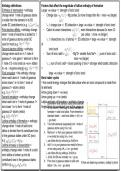
Enthalpy definitions: Factors that affect the magnitude of lattice enthalpy of formation
Enthalpy of atomisation = enthalpy Larger -ve value = ↑ strength of ionic bond
change when 1 mole of gaseous atoms - Charge size - - Mg carries 2x more charge than Na ∴ more -ve (larger)
is made from the element in its SS
under SC (endothermic) e.g. ⤷ ↑ charge size = ↑ ES attraction = large -ve value = ↑ strength of ionic bond
First electron affinity = enthalpy change - Cation to anion interactions - - more interactions because 2x more Cl-
when 1 mole of electrons is added to 1 per cation ∴ more -ve (larger)
mole of gaseous atoms under SC ⤷ ↑ interactions (no. of atoms) = ↑ ES attraction = large -ve value = ↑ strength
(exo for most) e.g. of
Second electron affinity = enthalpy ionic bond
change when each ion in 1 mole of - Sum of ionic radii’s - - Mg^2+ smaller than Na^+ ∴ ↓ sum of ionic radii ∴
gaseous 1- ions gains 1 electron to form more -ve (larger)
1 mole of 2- ions (endo as -ve e- added ⤷ ↓ sum of ionic radii = closer packing of ions = stronger electrostatic attraction
to -ve ∴ requires energy) e.g. =
First ionisation = the enthalpy change large -ve value = ↑ strength of ionic bond
when each atom in 1 mole of gaseous Born haber cycles
atoms loses 1 e- to form 1 mole of = the overall energy changes that take place when an ionic compound is made from
gaseous 1+ atoms (endo) its elements
e.g. Arrow going down = -ve (exo)
Second ionisation = enthalpy change Arrow going up = +ve (endo)
when each ion in 1 mole of gaseous 1+ Lattice enthalpyinoftheir
1. Elements formation
standard=states
enthalpy change when 1 mole of solid ionic lattice is
and balanced
ions loses 1 e- to form 1 mole of formed
2. Atfrom its constituent
the bottom ions
= final stage in theenthalpy
of lattice gaseousof states under SC (exo)
gaseous 2+ atoms (endo) formation = solid ionic lattice. From elements in
e.g. standard states → solid ionic lattice = ∆H f (-ve
Lattice enthalpy of formation = enthalpy ∴ go down)
3. Turn both elements (separately) into 1 mole of
change when 1 mole of solid ionic
gaseous atoms using ∆Hat (+ve)
lattice is formed from its constituent ions 4. Remove 1 e- from your gaseous metal to form
in the gaseous states under SC (exo) a +ve metal ion using ∆H1stIE (+ve)
e.g. ⤷ can follow this by removing a 2nd/3rd e-
Lattice enthalpy of dissociation = 5. Add 1 e- to your gaseous non-metal to form a -
enthalpy change when 1 mole of a solid ve ion using using ∆H1stEA (-ve∴ go down)
⤷ can follow this by adding a 2nd/3rd e-
ionic lattice is broken up into its
⤷ 2nd & 3rd EA are normally +ve ∴ go up
constituent ions in the gaseous states 6. From ions in gaseous states to solid ionic If there are balancing numbers, multiply by them
(endo) e.g. lattice = ∆Hlatt (-ve ∴ go down)
, Factors affecting lattice enthalpy Standard enthalpy of solution
Theoretical = the enthalpy change when 1 mole of an ionic compound is dissolved in
- Perfectly symmetrical water to produce an infinitely dilute solution of aq ions (under SC)
- Even charge distribution E.g. 1 mole of NaCl(s) → Na+(aq) + Cl-(aq)
- No covalent character (perfectly touching no This happens in two steps:
overlap) When an ionic solid dissolves in aq solution:
Experimental (measured/actual) lattice energy 1. ΔHLED - Lattice breaks down into gaseous ions
- Calculated from experimental values - Opposite of ΔHLEF (opposite sign, endo = +ve)
Agreement - ΔHLED = -ΔHLEF
Nearer the actual is to the theoretical = more Standard enthalpy of lattice dissociation (ΔH LED)
perfect ionic character - ‘agreement’ = enthalpy change when 1 mole of an ionic compound is broken up into its
Further away = ↑ covalent constituent ions (under SC)
↑ covalent character if anion is large & highly NaCl(s) → Na+(g) + Cl-(g)
charged 1. ΔHhyd - Gaseous atoms become hydrated by water
- Large charge & size of anion = more easily - Always exothermic
polarised Standard enthalpy of hydration (ΔHhyd)
↑ covalent character if cation is small & highly = the enthalpy change when 1 mole of isolated gaseous ions is dissolved in
charged water, converting it to 1 mole of aq ions (under SC)
- Polarising power = ability of a cation to Na+(g) → Na+(aq)
attract electrons Cl-(g) → Cl-(aq)
- ↑ charge density = ↑ polarising power = ↑ Factors affecting hydration enthalpy:
polarisation of the anion - Charge density (ionic radius & charge)
Exp-theo = % difference - Smaller ionic radii = ↑ charge density = stronger ion-dipole attractions
Theo between water and the ions in solution = more energy released when
Covalency in bonding they are hydrated
- Caused by the polarisation of the anion by - Large ionic charges = ↑ charge density = stronger ion-dipole
the cation attractions between water and the ions in solution = more energy
- ∴ distortion of e- density in anion (↑ e- near released when they are hydrated
cation)
- ∴ some e- density exists between the 2 ions
- ∴ a degree of covalency
If ∆Hlatt is large & -ve (more exo) = stronger ionic
If there’s a bigger difference between exp & theo =
more covalent character
Enthalpy of atomisation = enthalpy Larger -ve value = ↑ strength of ionic bond
change when 1 mole of gaseous atoms - Charge size - - Mg carries 2x more charge than Na ∴ more -ve (larger)
is made from the element in its SS
under SC (endothermic) e.g. ⤷ ↑ charge size = ↑ ES attraction = large -ve value = ↑ strength of ionic bond
First electron affinity = enthalpy change - Cation to anion interactions - - more interactions because 2x more Cl-
when 1 mole of electrons is added to 1 per cation ∴ more -ve (larger)
mole of gaseous atoms under SC ⤷ ↑ interactions (no. of atoms) = ↑ ES attraction = large -ve value = ↑ strength
(exo for most) e.g. of
Second electron affinity = enthalpy ionic bond
change when each ion in 1 mole of - Sum of ionic radii’s - - Mg^2+ smaller than Na^+ ∴ ↓ sum of ionic radii ∴
gaseous 1- ions gains 1 electron to form more -ve (larger)
1 mole of 2- ions (endo as -ve e- added ⤷ ↓ sum of ionic radii = closer packing of ions = stronger electrostatic attraction
to -ve ∴ requires energy) e.g. =
First ionisation = the enthalpy change large -ve value = ↑ strength of ionic bond
when each atom in 1 mole of gaseous Born haber cycles
atoms loses 1 e- to form 1 mole of = the overall energy changes that take place when an ionic compound is made from
gaseous 1+ atoms (endo) its elements
e.g. Arrow going down = -ve (exo)
Second ionisation = enthalpy change Arrow going up = +ve (endo)
when each ion in 1 mole of gaseous 1+ Lattice enthalpyinoftheir
1. Elements formation
standard=states
enthalpy change when 1 mole of solid ionic lattice is
and balanced
ions loses 1 e- to form 1 mole of formed
2. Atfrom its constituent
the bottom ions
= final stage in theenthalpy
of lattice gaseousof states under SC (exo)
gaseous 2+ atoms (endo) formation = solid ionic lattice. From elements in
e.g. standard states → solid ionic lattice = ∆H f (-ve
Lattice enthalpy of formation = enthalpy ∴ go down)
3. Turn both elements (separately) into 1 mole of
change when 1 mole of solid ionic
gaseous atoms using ∆Hat (+ve)
lattice is formed from its constituent ions 4. Remove 1 e- from your gaseous metal to form
in the gaseous states under SC (exo) a +ve metal ion using ∆H1stIE (+ve)
e.g. ⤷ can follow this by removing a 2nd/3rd e-
Lattice enthalpy of dissociation = 5. Add 1 e- to your gaseous non-metal to form a -
enthalpy change when 1 mole of a solid ve ion using using ∆H1stEA (-ve∴ go down)
⤷ can follow this by adding a 2nd/3rd e-
ionic lattice is broken up into its
⤷ 2nd & 3rd EA are normally +ve ∴ go up
constituent ions in the gaseous states 6. From ions in gaseous states to solid ionic If there are balancing numbers, multiply by them
(endo) e.g. lattice = ∆Hlatt (-ve ∴ go down)
, Factors affecting lattice enthalpy Standard enthalpy of solution
Theoretical = the enthalpy change when 1 mole of an ionic compound is dissolved in
- Perfectly symmetrical water to produce an infinitely dilute solution of aq ions (under SC)
- Even charge distribution E.g. 1 mole of NaCl(s) → Na+(aq) + Cl-(aq)
- No covalent character (perfectly touching no This happens in two steps:
overlap) When an ionic solid dissolves in aq solution:
Experimental (measured/actual) lattice energy 1. ΔHLED - Lattice breaks down into gaseous ions
- Calculated from experimental values - Opposite of ΔHLEF (opposite sign, endo = +ve)
Agreement - ΔHLED = -ΔHLEF
Nearer the actual is to the theoretical = more Standard enthalpy of lattice dissociation (ΔH LED)
perfect ionic character - ‘agreement’ = enthalpy change when 1 mole of an ionic compound is broken up into its
Further away = ↑ covalent constituent ions (under SC)
↑ covalent character if anion is large & highly NaCl(s) → Na+(g) + Cl-(g)
charged 1. ΔHhyd - Gaseous atoms become hydrated by water
- Large charge & size of anion = more easily - Always exothermic
polarised Standard enthalpy of hydration (ΔHhyd)
↑ covalent character if cation is small & highly = the enthalpy change when 1 mole of isolated gaseous ions is dissolved in
charged water, converting it to 1 mole of aq ions (under SC)
- Polarising power = ability of a cation to Na+(g) → Na+(aq)
attract electrons Cl-(g) → Cl-(aq)
- ↑ charge density = ↑ polarising power = ↑ Factors affecting hydration enthalpy:
polarisation of the anion - Charge density (ionic radius & charge)
Exp-theo = % difference - Smaller ionic radii = ↑ charge density = stronger ion-dipole attractions
Theo between water and the ions in solution = more energy released when
Covalency in bonding they are hydrated
- Caused by the polarisation of the anion by - Large ionic charges = ↑ charge density = stronger ion-dipole
the cation attractions between water and the ions in solution = more energy
- ∴ distortion of e- density in anion (↑ e- near released when they are hydrated
cation)
- ∴ some e- density exists between the 2 ions
- ∴ a degree of covalency
If ∆Hlatt is large & -ve (more exo) = stronger ionic
If there’s a bigger difference between exp & theo =
more covalent character