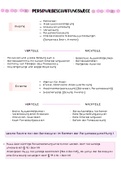
APPLICABLE LAW – ROME I
- Party autonomy
- Protected categories
- Predictability
Main principles
- Correction mechanism: most closely connected
- Exclusion of renvoi (art. 20)
- Universal application (art. 2)
- Contracts concluded from 17/12/2009 (art. 28)
- Amended contracts need a certain intensity in change (Nikiforidis)
- All EU MS (except Denmark) + Ireland + UK (assimilated law)
- Contractual obligations in civil and commercial matters (art. 1.1)
Scope of
- Exceptions (⇒ national PIL applies to excluded matters)
application
- General exceptions (art. 13)
- Corporate law exception (only contractual elements relating to life and death issues)
- Arbitration
- Choice of court agreements (Brussels Ia has rules on applicable law)
! No matrix per se, but:
- Protected categories (art. 5-8)
Matrix - Choice of law (art. 3)
- Absence of choice (art. 4)
- Partial/complete override of applicable law
Protect Carriage - Choice of law is limited to a list of connecting factors
ed and
catego insurance
ries Consumer - Choice of law is unlimited, but: corrective role for mandatory rules of the default law
(art. 5- s (art. 6) - Any EU court with jurisdiction under Brussels Ia or as a result of residual PIL will apply Rome I to the
8) protected categories
- Carve-outs
- Supply of services exclusively outside the consumer’s habitual residence
- Contract of carriage
- Rights in rem and tenancy (restrictive interpretation: Sharewood)
- ⇒ ! You can have a consumer under Brussels Ia but not under Rome I !
- Connecting factor (habitual residence) is looked at in the beginning, change doesn’t impact the application
of the consumer title (Khalifeh v. Blom Bank)
- Exhaustive provision: it’s applicable even if the applicable law under art. 4 would be more favourable (VK v.
N1 Interactive Ltd)
- Lex contractus = lex voluntatis, but: default test = the chosen law cannot deprive the consumer of
protection that would be granted by provisions which cannot be derogated from by the virtue of law
- Party autonomy
- Protected categories
- Predictability
Main principles
- Correction mechanism: most closely connected
- Exclusion of renvoi (art. 20)
- Universal application (art. 2)
- Contracts concluded from 17/12/2009 (art. 28)
- Amended contracts need a certain intensity in change (Nikiforidis)
- All EU MS (except Denmark) + Ireland + UK (assimilated law)
- Contractual obligations in civil and commercial matters (art. 1.1)
Scope of
- Exceptions (⇒ national PIL applies to excluded matters)
application
- General exceptions (art. 13)
- Corporate law exception (only contractual elements relating to life and death issues)
- Arbitration
- Choice of court agreements (Brussels Ia has rules on applicable law)
! No matrix per se, but:
- Protected categories (art. 5-8)
Matrix - Choice of law (art. 3)
- Absence of choice (art. 4)
- Partial/complete override of applicable law
Protect Carriage - Choice of law is limited to a list of connecting factors
ed and
catego insurance
ries Consumer - Choice of law is unlimited, but: corrective role for mandatory rules of the default law
(art. 5- s (art. 6) - Any EU court with jurisdiction under Brussels Ia or as a result of residual PIL will apply Rome I to the
8) protected categories
- Carve-outs
- Supply of services exclusively outside the consumer’s habitual residence
- Contract of carriage
- Rights in rem and tenancy (restrictive interpretation: Sharewood)
- ⇒ ! You can have a consumer under Brussels Ia but not under Rome I !
- Connecting factor (habitual residence) is looked at in the beginning, change doesn’t impact the application
of the consumer title (Khalifeh v. Blom Bank)
- Exhaustive provision: it’s applicable even if the applicable law under art. 4 would be more favourable (VK v.
N1 Interactive Ltd)
- Lex contractus = lex voluntatis, but: default test = the chosen law cannot deprive the consumer of
protection that would be granted by provisions which cannot be derogated from by the virtue of law