ECT
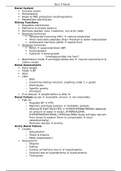
Electroconvulsive Therapy correct answers Psychiatrists may use electroconvulsive
therapy (ECT) to treat depression in select groups, such as clients who do not respond
to antidepressants or those who experience intolerable side effects at therapeutic doses
(particularly true for older adults).
Electroconvulsive Therapy What it does/ how it works correct answers What it does:
Causes a generalized seizure- which is masked by the muscle relaxant. May only see
eyelids or carpopedal spasms
·
Clients usually receive a series of six to 15 treatments scheduled three times a week.
Generally, a minimum of six treatments are needed to see sustained improvement in
depressive symptoms. Maximum benefit is achieved in 12 to 15 treatments.
Application of electrical current to brain
Produces generalized seizure
· Client responds more quickly than to meds
· Safe for highly suicidal, medically weak & psychotic clients
· Safe for children, adolescents, pregnancy
· Often treatment of choice for older clients
· Not curative
Electroconvulsive Therapy Nursing considerations correct answers • Obtain consent
• Keep NPO for at least 4 hrs before treatment
• Remove contact lenses, jewelry, hairpins & dentures
• Have client void just prior to treatment
· The client receives nothing by mouth (is NPO) after midnight, removes any fingernail
polish, and voids just before the procedure. An intravenous line is started for the
administration of medication.
· Initially, the client receives a short-acting anesthetic so that he or she is not awake
during the procedure.
· Next, he or she receives a muscle relaxant/paralytic, usually succinylcholine, which
relaxes all muscles to reduce greatly the outward signs of the seizure (e.g., clonic-tonic
muscle contractions).
· Electrodes are placed on the client's head: one on either side (bilateral) or both on one
side (unilateral). The electrical stimulation is delivered, which causes seizure activity in
the brain that is monitored by an electroencephalogram (EEG).
· client receives oxygen and is assisted to breathe with an Ambu bag. He or she
generally begins to awaken after a few minutes. Vital signs are monitored, and the client
Electroconvulsive Therapy correct answers Psychiatrists may use electroconvulsive
therapy (ECT) to treat depression in select groups, such as clients who do not respond
to antidepressants or those who experience intolerable side effects at therapeutic doses
(particularly true for older adults).
Electroconvulsive Therapy What it does/ how it works correct answers What it does:
Causes a generalized seizure- which is masked by the muscle relaxant. May only see
eyelids or carpopedal spasms
·
Clients usually receive a series of six to 15 treatments scheduled three times a week.
Generally, a minimum of six treatments are needed to see sustained improvement in
depressive symptoms. Maximum benefit is achieved in 12 to 15 treatments.
Application of electrical current to brain
Produces generalized seizure
· Client responds more quickly than to meds
· Safe for highly suicidal, medically weak & psychotic clients
· Safe for children, adolescents, pregnancy
· Often treatment of choice for older clients
· Not curative
Electroconvulsive Therapy Nursing considerations correct answers • Obtain consent
• Keep NPO for at least 4 hrs before treatment
• Remove contact lenses, jewelry, hairpins & dentures
• Have client void just prior to treatment
· The client receives nothing by mouth (is NPO) after midnight, removes any fingernail
polish, and voids just before the procedure. An intravenous line is started for the
administration of medication.
· Initially, the client receives a short-acting anesthetic so that he or she is not awake
during the procedure.
· Next, he or she receives a muscle relaxant/paralytic, usually succinylcholine, which
relaxes all muscles to reduce greatly the outward signs of the seizure (e.g., clonic-tonic
muscle contractions).
· Electrodes are placed on the client's head: one on either side (bilateral) or both on one
side (unilateral). The electrical stimulation is delivered, which causes seizure activity in
the brain that is monitored by an electroencephalogram (EEG).
· client receives oxygen and is assisted to breathe with an Ambu bag. He or she
generally begins to awaken after a few minutes. Vital signs are monitored, and the client