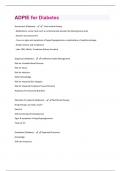
ADPIE for Diabetes Questions and Answers Solved 100%
Assessment (Diabetes) - - Past medical history - Medications: some meds such as corticosteroids elevate the blood glucose level - Head-to-toe assessment - Focus on signs and symptoms of hyper/hypoglycemia, complications of capillary damage - Dietary history and compliance - Labs: CBG, HbA1c, Creatinine (kidney function) Diagnoses (Diabetes) - Ineffective Health Management Risk for Unstable Blood Glucose Risk for Injury Risk for Infection Deficit Knowledge Risk for Impaired Skin Integrity Risk for Impaired Peripheral Tissue Perfusion Readiness for Enhanced Nutrition Education for patients (diabetes) - Nutritional therapy Drug therapy: po meds, insulin Exercise Self-monitoring of blood glucose Signs & symptoms of hypo/hyperglycemia "Rule of 15" Evaluation (Diabetes) - Expected Outcomes Knowledge Self-care measuresBalanced diet and activity Stable, safe, and healthy blood glucose levels No injuries Implementation - Nursing Interventions (Diabetes) - Health Promotion Screening and education for those at risk Obesity: High risk for type 2 Education for patient and caregiver Planning - overarching goals (Diabetes) - Maintain normal blood glucose levels without hypo/hyperglycemia emergencies Promote well-being Prevent and minimize complications Patient to actively participate in management: monitoring, medications, diet, exercise, lifestyle
Written for
- Institution
- ADPIE for Diabetes
- Course
- ADPIE for Diabetes
Document information
- Uploaded on
- July 27, 2024
- Number of pages
- 2
- Written in
- 2023/2024
- Type
- Exam (elaborations)
- Contains
- Questions & answers
Subjects

Also available in package deal