Chapter 7
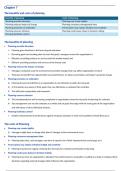
The benefits and costs of planning
Benefits of planning Costs of planning
Planning provides direction Planning may create rigidity
Planning reduces impact of change Planning consumes management time
Planning promotes co-ordination Formal plans may replace intuition and creativity
Planning ensures cohesion Planning could cause relays in decision making
Planning facilitates control
The benefits of planning
Planning provides Direction
Planning gives direction in the form of goals and plans
By having goals and creating plans to reach the goals, managers ensure the organisation is
Effective- providing products or services that the market wants) and
Efficient- providing products and services at the lowest cost)
Planning reduces the impact of change
Managers constantly scan the environment to predict changes that may affect organisation in future
They plan to benefit from opportunities and avoid threats, to reduce uncertainty, and impact caused by change
Planning promotes co-ordination
Planning focuses all activities in an organisation in one direction to attain the set goals
If all members are aware of their goals, they can effectively co-ordinate their activities
This will foster cooperation and teamwork
Planning ensures cohesion
The interdependence and increasing complexity in organisations show the necessity of planning for cohesion
Top management can see the company as a whole and set goals that align with the main goals of the organisation
and with those of all its individual sections.
Planning facilitates control
Enables measurement of performance against set goals and plans in order to fix problems should they occur
The costs of Planning
Planning may create rigidity
Managers might have to change their plans if changes in the environment occur
Planning consumes management time
Planning takes time, and managers may have to spend a lot of their important time and energy on it
Formal plans may replace intuition/insight and creativity
Planning may become regular, reducing the necessity for creativity and intuition in planning
Planning could cause delays in decision-making
Planning may move an organization's attention from performance to evaluation, resulting in a delay in making critical
decisions regarding external changes which influence the organisation.
, Managerial goals and plans
Defined as a specific achievement to be achieved in the future
Goals are influenced by the organization's mission, business environment, management values, and experience
Planning involves determining and developing plans to achieve goals
The nature of goals
Goals are the starting point of the planning process, and flow directly from the mission statement
The focus of goals differ because different goals affect different parts of the organisation
Goals may be short, intermediate or long
Goals may be publicly stated or not
The importance of goals
Goals provide guidance and agreement
Clearly formulated goals facilitate effective resource distribution.
Goals facilitate effective planning
Goals can inspire and motivate employees
Goals provide a basis for effective evaluation of employee and organisation performance
Criteria for effective goals
S Specific
M Measurable
A Attainable
R Relevant
T Time-bound
Specific- relates to the time frame of the goal and the specific outcomes of that goal
Measurable- It's created in a way that makes it possible to judge the result accurately. Managers must see whether the
goals are met when they compare real results with predicted outcomes
Attainable- realistic in the face of challenge. Managers can delegate responsibility to someone in the organisation.
Relevant- individual goals should be compatible and consistent with other departments’ goals
Time-bound- means it has a specific time limit to give attention to the sense of urgency associated with them
A goal-setting technique
Management by objectives (MBO)- technique to achieve the integration of individual and organisational goals
MBO is a system by which managers and employees define goals in every department
Process:
The benefits and costs of planning
Benefits of planning Costs of planning
Planning provides direction Planning may create rigidity
Planning reduces impact of change Planning consumes management time
Planning promotes co-ordination Formal plans may replace intuition and creativity
Planning ensures cohesion Planning could cause relays in decision making
Planning facilitates control
The benefits of planning
Planning provides Direction
Planning gives direction in the form of goals and plans
By having goals and creating plans to reach the goals, managers ensure the organisation is
Effective- providing products or services that the market wants) and
Efficient- providing products and services at the lowest cost)
Planning reduces the impact of change
Managers constantly scan the environment to predict changes that may affect organisation in future
They plan to benefit from opportunities and avoid threats, to reduce uncertainty, and impact caused by change
Planning promotes co-ordination
Planning focuses all activities in an organisation in one direction to attain the set goals
If all members are aware of their goals, they can effectively co-ordinate their activities
This will foster cooperation and teamwork
Planning ensures cohesion
The interdependence and increasing complexity in organisations show the necessity of planning for cohesion
Top management can see the company as a whole and set goals that align with the main goals of the organisation
and with those of all its individual sections.
Planning facilitates control
Enables measurement of performance against set goals and plans in order to fix problems should they occur
The costs of Planning
Planning may create rigidity
Managers might have to change their plans if changes in the environment occur
Planning consumes management time
Planning takes time, and managers may have to spend a lot of their important time and energy on it
Formal plans may replace intuition/insight and creativity
Planning may become regular, reducing the necessity for creativity and intuition in planning
Planning could cause delays in decision-making
Planning may move an organization's attention from performance to evaluation, resulting in a delay in making critical
decisions regarding external changes which influence the organisation.
, Managerial goals and plans
Defined as a specific achievement to be achieved in the future
Goals are influenced by the organization's mission, business environment, management values, and experience
Planning involves determining and developing plans to achieve goals
The nature of goals
Goals are the starting point of the planning process, and flow directly from the mission statement
The focus of goals differ because different goals affect different parts of the organisation
Goals may be short, intermediate or long
Goals may be publicly stated or not
The importance of goals
Goals provide guidance and agreement
Clearly formulated goals facilitate effective resource distribution.
Goals facilitate effective planning
Goals can inspire and motivate employees
Goals provide a basis for effective evaluation of employee and organisation performance
Criteria for effective goals
S Specific
M Measurable
A Attainable
R Relevant
T Time-bound
Specific- relates to the time frame of the goal and the specific outcomes of that goal
Measurable- It's created in a way that makes it possible to judge the result accurately. Managers must see whether the
goals are met when they compare real results with predicted outcomes
Attainable- realistic in the face of challenge. Managers can delegate responsibility to someone in the organisation.
Relevant- individual goals should be compatible and consistent with other departments’ goals
Time-bound- means it has a specific time limit to give attention to the sense of urgency associated with them
A goal-setting technique
Management by objectives (MBO)- technique to achieve the integration of individual and organisational goals
MBO is a system by which managers and employees define goals in every department
Process: