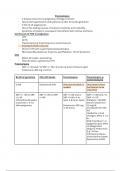
Preeclampsia
-
A
disease
exclusive
to
pregnancy,
etiology
unknown
-
New-onset
hypertension
and
proteinuria
after
20
weeks
gestation
-
5-10%
of
all
pregnancies
-
One
of
the
leading
causes
of
maternal
mortality
and
morbidity
-
Syndrome
of
systemic
vasospasm
that
affects
both
mother
and
fetus
Continuum
of
HTN
in
pregnancy
-
HTN
-
GHTN
-
Preeclampsia
&
Preeclampsia
w
severe
features
-
Eclampsia
(had
a
seizure)
-
Chronic
HTN
with
superimposed
preeclampsia
-
H
emolysis
E
levated
L
iver
Enzymes,
L
ow
P
latelets=
HELLP
Syndrome
HTN
-
Before
20
weeks=
preexisting
-
After
20
weeks=
gestational
HTN
Preeclampsia
-
SBP
>/=
140
and
/
or
DBP
>/=
90
x
2
times
at
least
4-6
hours
apart
-
Proteinuria:
300
mg
in
24
hrs
B4
20
W
gestation
After
20
Weeks
Preeclampsia
Preeclampsia
w severe
features
CHTN
Gestational
HTN
Only
one
elevation
is needed
Only
need
to
have one
feature
to
be classified
SBP
>/=
140
or
DBP >/=
90
HTN
before
20
weeks or
persists
>
3
mo after
pregnancy
SBP
>/=140
or
DBP >/=90
SBP
>/=140
and
or DBP
>/=90
x
2
at least
4-6
hours
apart
Proteinuria:
300
mg in
24
hours
SBP
>/=
160
and
/
or DBP
>/=
110 Platelets
<
100,000 Serum
Creatinine
> 1.2
mg/dL Increased
LDH,
AST, ALT
Headache,
visual changes,
DTR’s
3
+
or 4+
RUQ
"heartburn”,
or epigastric
pain
often misdiagnosed Oliguria;
Proteinuria 5
g
/
24
hrs Pulmonary
edema Intra-Uterine
Growth Restriction
(IUGR) Risks
Factors
for
Preeclampsia
-
Prior
history
of
preeclampsia,
multifetal
gestations,
chronic
HTN,
pregestational
diabetes,
SLE,
OSA,
Nullip,
GM,
high
BMI,
AMA,
Thrombophilia,
IVF
Theory
of
Etiology
-
Spiral
Artery
-
Initial
trigger
may
be
failure
of
trophoblast
to
effectively
change
spiral
arteries,
poor
implantation
-
With
essential
vasospasm,
there
is
decreased
placental
perfusion
-
Red
things
are
toxins
→
they
cause
endothelial
damage
-
1.
Vasoconstriction
-
2.
Endothelial
damage
Eclampsia
-
Preeclampsia
with
seizures
not
attributable
to
other
causes
-
Periods
of
hypoxia
for
mother
and
fetus
-
Risk
of
aspiration
-
Other
risks:
CVA,
cerebral
edema,
anoxia,
coma,
maternal
death
-
Eclamptic
seizures
may
occur
before,
during,
or
after
delivery
(20-23
w,
2
w
PP,
during
delivery)
-
Late
postpartum
eclampsia=
48
hrs
to
6
weeks
-
All
about
PREVENTING
seizures
Vasospasm
+
Endotoxins
→
Symptoms
Brain
Headache,
change
LOC
Eyes
Visual
changes
(spots,
blurring)
Lungs
Pulmonary
edema,
fluid
Kidneys
Proteinuria:
can
be
caused
by
endothelial
-
A
disease
exclusive
to
pregnancy,
etiology
unknown
-
New-onset
hypertension
and
proteinuria
after
20
weeks
gestation
-
5-10%
of
all
pregnancies
-
One
of
the
leading
causes
of
maternal
mortality
and
morbidity
-
Syndrome
of
systemic
vasospasm
that
affects
both
mother
and
fetus
Continuum
of
HTN
in
pregnancy
-
HTN
-
GHTN
-
Preeclampsia
&
Preeclampsia
w
severe
features
-
Eclampsia
(had
a
seizure)
-
Chronic
HTN
with
superimposed
preeclampsia
-
H
emolysis
E
levated
L
iver
Enzymes,
L
ow
P
latelets=
HELLP
Syndrome
HTN
-
Before
20
weeks=
preexisting
-
After
20
weeks=
gestational
HTN
Preeclampsia
-
SBP
>/=
140
and
/
or
DBP
>/=
90
x
2
times
at
least
4-6
hours
apart
-
Proteinuria:
300
mg
in
24
hrs
B4
20
W
gestation
After
20
Weeks
Preeclampsia
Preeclampsia
w severe
features
CHTN
Gestational
HTN
Only
one
elevation
is needed
Only
need
to
have one
feature
to
be classified
SBP
>/=
140
or
DBP >/=
90
HTN
before
20
weeks or
persists
>
3
mo after
pregnancy
SBP
>/=140
or
DBP >/=90
SBP
>/=140
and
or DBP
>/=90
x
2
at least
4-6
hours
apart
Proteinuria:
300
mg in
24
hours
SBP
>/=
160
and
/
or DBP
>/=
110 Platelets
<
100,000 Serum
Creatinine
> 1.2
mg/dL Increased
LDH,
AST, ALT
Headache,
visual changes,
DTR’s
3
+
or 4+
RUQ
"heartburn”,
or epigastric
pain
often misdiagnosed Oliguria;
Proteinuria 5
g
/
24
hrs Pulmonary
edema Intra-Uterine
Growth Restriction
(IUGR) Risks
Factors
for
Preeclampsia
-
Prior
history
of
preeclampsia,
multifetal
gestations,
chronic
HTN,
pregestational
diabetes,
SLE,
OSA,
Nullip,
GM,
high
BMI,
AMA,
Thrombophilia,
IVF
Theory
of
Etiology
-
Spiral
Artery
-
Initial
trigger
may
be
failure
of
trophoblast
to
effectively
change
spiral
arteries,
poor
implantation
-
With
essential
vasospasm,
there
is
decreased
placental
perfusion
-
Red
things
are
toxins
→
they
cause
endothelial
damage
-
1.
Vasoconstriction
-
2.
Endothelial
damage
Eclampsia
-
Preeclampsia
with
seizures
not
attributable
to
other
causes
-
Periods
of
hypoxia
for
mother
and
fetus
-
Risk
of
aspiration
-
Other
risks:
CVA,
cerebral
edema,
anoxia,
coma,
maternal
death
-
Eclamptic
seizures
may
occur
before,
during,
or
after
delivery
(20-23
w,
2
w
PP,
during
delivery)
-
Late
postpartum
eclampsia=
48
hrs
to
6
weeks
-
All
about
PREVENTING
seizures
Vasospasm
+
Endotoxins
→
Symptoms
Brain
Headache,
change
LOC
Eyes
Visual
changes
(spots,
blurring)
Lungs
Pulmonary
edema,
fluid
Kidneys
Proteinuria:
can
be
caused
by
endothelial