Comedy Comparison practice essay 3
'Comedic literature only represents marriage in negative ways.' To what extent do you agree with
this view?
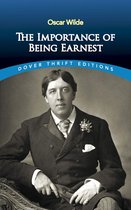
Arguably, the superficiality of the marriages in The Importance of Being Earnest together
with the ignored voices of the wives in Mrs Sisyphus and Tam o’Shanter establish compelling
grounds to advocate the view that comedic literature only represents marriage in negative ways.
Nevertheless, the extent to which the relationships are merely stereotypical, and therefore a source
of comedy, must be considered in relation to the poems, while the absurdity of the world created by
Wilde in Earnest in addition to the farcical imagery of The Flea suggests that the negative portrayals
on the surface should perhaps not be taken seriously.
Functioning as the rebellious advocate for bachelorhood in Earnest, Algernon, certainly
succeeds in reducing the importance of marriage in a Christian society which would have considered
the institution preeminent. Wilde employs the epigram ‘Divorces are made in heaven’ to invert the
social norm, subsequently satirising the audience’s view of marriage as something beneficial, and
ironically, implying that marriage is made in hell. While epigrams can probably dismissed as
intentionally absurd, Lady Bracknell’s utterance ‘(marriage) is hardly a matter that (a girl) could be
allowed to arrange for herself’ is undoubtedly more critical of marriage. It is quite a negative
portrayal given that we would expect marriage to be synonymous with love and companionship, yet
Wilde suggests here through the outspoken Lady Bracknell that marriage is borne out of necessity as
a tool of social mobility rather than freewill. Arranged marriages have been a grim reality in the
history of comedic literature, with parents often acting as obstacles to true love in a typical comedy,
so Wilde upholds what can thus be seen as a traditionally negative portrayal of marriage, at least
from a modern perspective. Above all, it is the superficiality of the reasons for marriage in Earnest
that make the unions seem so negative. Gwendolen declares that her ‘ideal has always been to love
some one of the name of Ernest’; it is not only sickeningly anti-feminist, but it is also a revealing
insight into her motivations for marrying Jack, which are true also of Cecily. There is no allusion to
genuine love for Jack’s personality, and the fact that this ‘ideal’ is not changed or ‘unified’ by the end
of the play – the use of the exclamative in Gwendolen’s utterance ‘My own Ernest!’ demonstrates
how she still cares for nothing more than Jack’s name – strongly supports the view that comedic
literature only represents marriage in negative ways.
Further evaluation of the comic resolution seems only to strengthen the credibility of this
view. Wilde suggests that marriage is a reward for immoral behaviour as Jack and Algernon gain
their chosen partners even though they have lied throughout the play. It is not difficult for a modern
audience to see beneath the falseness of the ending as although Jack apparently finds out that for
‘all his life he has been speaking nothing but the truth’, we would see this as incorrect as he still lied
in intention if not in actuality; Jack and Algernon’s false claim that their names were ‘Ernest’ brought
about the play’s central disunity, and it is too convenient, too unbelievable to accept that this was
their names all along. As a result, it could be argued that the two characters are undeserving of
reward, so their marriages represent how the institution is treated almost farcically in Earnest. From
an alternative perspective, the play can be seen as an effort to reverse Algernon’s disorderly views
about marriage, as his union to Cecily would suggest that he no longer believes ‘Divorces are made
in heaven’. According to the Essential Movement, comedy rests on a transition from disunity to
'Comedic literature only represents marriage in negative ways.' To what extent do you agree with
this view?
Arguably, the superficiality of the marriages in The Importance of Being Earnest together
with the ignored voices of the wives in Mrs Sisyphus and Tam o’Shanter establish compelling
grounds to advocate the view that comedic literature only represents marriage in negative ways.
Nevertheless, the extent to which the relationships are merely stereotypical, and therefore a source
of comedy, must be considered in relation to the poems, while the absurdity of the world created by
Wilde in Earnest in addition to the farcical imagery of The Flea suggests that the negative portrayals
on the surface should perhaps not be taken seriously.
Functioning as the rebellious advocate for bachelorhood in Earnest, Algernon, certainly
succeeds in reducing the importance of marriage in a Christian society which would have considered
the institution preeminent. Wilde employs the epigram ‘Divorces are made in heaven’ to invert the
social norm, subsequently satirising the audience’s view of marriage as something beneficial, and
ironically, implying that marriage is made in hell. While epigrams can probably dismissed as
intentionally absurd, Lady Bracknell’s utterance ‘(marriage) is hardly a matter that (a girl) could be
allowed to arrange for herself’ is undoubtedly more critical of marriage. It is quite a negative
portrayal given that we would expect marriage to be synonymous with love and companionship, yet
Wilde suggests here through the outspoken Lady Bracknell that marriage is borne out of necessity as
a tool of social mobility rather than freewill. Arranged marriages have been a grim reality in the
history of comedic literature, with parents often acting as obstacles to true love in a typical comedy,
so Wilde upholds what can thus be seen as a traditionally negative portrayal of marriage, at least
from a modern perspective. Above all, it is the superficiality of the reasons for marriage in Earnest
that make the unions seem so negative. Gwendolen declares that her ‘ideal has always been to love
some one of the name of Ernest’; it is not only sickeningly anti-feminist, but it is also a revealing
insight into her motivations for marrying Jack, which are true also of Cecily. There is no allusion to
genuine love for Jack’s personality, and the fact that this ‘ideal’ is not changed or ‘unified’ by the end
of the play – the use of the exclamative in Gwendolen’s utterance ‘My own Ernest!’ demonstrates
how she still cares for nothing more than Jack’s name – strongly supports the view that comedic
literature only represents marriage in negative ways.
Further evaluation of the comic resolution seems only to strengthen the credibility of this
view. Wilde suggests that marriage is a reward for immoral behaviour as Jack and Algernon gain
their chosen partners even though they have lied throughout the play. It is not difficult for a modern
audience to see beneath the falseness of the ending as although Jack apparently finds out that for
‘all his life he has been speaking nothing but the truth’, we would see this as incorrect as he still lied
in intention if not in actuality; Jack and Algernon’s false claim that their names were ‘Ernest’ brought
about the play’s central disunity, and it is too convenient, too unbelievable to accept that this was
their names all along. As a result, it could be argued that the two characters are undeserving of
reward, so their marriages represent how the institution is treated almost farcically in Earnest. From
an alternative perspective, the play can be seen as an effort to reverse Algernon’s disorderly views
about marriage, as his union to Cecily would suggest that he no longer believes ‘Divorces are made
in heaven’. According to the Essential Movement, comedy rests on a transition from disunity to