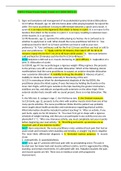
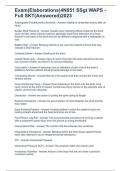
NSG 456 Exam IV With C omp lete Solution Extrinsic Stress response - ANSWER *endorphins and stress hormones released *pupils dilate *arterioles dilate *heart and BP increase *blood sugar increases (as a result of increased cortisol) *blood to flow to skeletal muscles increases *breathing rate increases *digestion stops *urine output decreases Systemic Inflammatory Response Syndrome (SIRS) - ANSWER *protective (intrinsic) inflammatory response *characterized by a robust systemic inflammatory response *usually induced by major body insult (injury) -infectious (sepsis) -noninfectious (anaphylaxis, SLE) Criteria to Identify SIRS - ANSWER two or more of the following *temp >101 or <96.8 *tachycardia (HR >90) *tachypnea (RR >20 or PaCO2 <32 mmHg) *WBC count ->12k cells -<4000 cells >10% immature WBC (aka "bands", neutrophils) NOT HELPFUL IN DIAGNOSIS SEPSIS Shock definition - ANSWER a clinical syndrome that results from inadequate tissue perfusion, creating an imbalance between the delivery of oxygen and nutrients needed to support cellular function Shock - ANSWER *shock is initially reversible, but must be recognized and treated immediately to prevent irreversible organ dysfunction *all body systems are affected *hypoperfusion of the tissues *hypermetabolism *SIRS Does shock mean low blood pressure? - ANSWER It can depend on the type of shock. Most shock is hypotensive, but it can be hypertensive (cardiogenic). Steps of Shock - ANSWER 1. Inadequate perfusion - not enough oxygen gets to cells 2. Cells forced to switch to anaerobic respiration 3. Lactic acid builds up -> metabolic acidosis 4. Vasoconstriction -> venous pooling 5. endothelial damage -cell membrane dysfunction and loss of sodium-potassium pump -decrease in vascular oncotic pressure -increased 3rd spacing from intravascular space -efflux of potassium -influx of sodium and water many organ cells die = ORGAN DEATH Compensatory Mechanisms of Shock - ANSWER Clinical Findings in Stages of Shock - ANSWER Compensatory Stage of Shock - ANSWER *SNS stimulation *body shunts blood to only core organs *tissue perfusion becomes inadequate *acidosis occurs due to anaerobic metabolism *RR increases due to acidosis *confusion may occur Progressive Stage of Shock - ANSWER *BP and MAP decrease *all organs suffer from hypoperfusion *vasoconstriction continues *mental status further deteriorate s *decrease in pulmonary blood flow causes further hypoxemia *inadequate perfusion of heart leads to dysrhythmias and ischemia *MAP falls below 70 *GFR cannot be maintained *function of liver, GI, and blood all impaired *disseminated intravascular coagulation (DIC) may occur as cause or complication of shock
Exam (elaborations)
NSG 456 Exam IV With Complete Solution
Rating
Sold
-
Pages
50
Grade
A+
Uploaded on
15-07-2024
Written in
2023/2024
NSG 456 Exam IV With Complete Solution...
Institution
NSG 456
Course
NSG 456
Content preview
Written for
- Institution
- NSG 456
- Course
- NSG 456
Document information
- Uploaded on
- July 15, 2024
- Number of pages
- 50
- Written in
- 2023/2024
- Type
- Exam (elaborations)
- Contains
- Questions & answers
Subjects
- nsg 456 exam iv
-
nsg 456 exam iv with complete solution
-
systemic inflammatory response syndrome sirs
-
irreversible stage of shock
$12.49
Get access to the full document:
100% satisfaction guarantee
Immediately available after payment
Both online and in PDF
No strings attached

Also available in package deal
Package deal
NSG 456 BUNDLED EXAMS WITH SOLUTION
6
2024
$ 72.44
More info