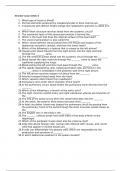
REVIEW QUIZ WEEK 8
1. What type of tissue is blood?
2. Formed elements produced by megakaryocytes in bone marrow are ________.
3. A leukocyte with distinct bright orange-red cytoplasmic granules is called a(n)
________.
4. Which heart structure receives blood from the systemic circuit?
5. The outermost layer of the serous pericardium is termed the ________.
6. Which is the layer that lines the internal surface of the heart wall?
7. The visceral pericardium is also called the ________.
8. Which vessel delivers venous blood from the tissues and organs of the
abdominal and pelvic cavities, and from the lower limbs?
9. Which of the following is a feature that is unique to the left atrium?
10.Oxygen-poor blood travels from the right atrium into the right ventricle
through the ________ valve.
11.The left ventricle pumps blood into the systemic circuit through the ________.
12.Blood leaves the right ventricle through the ________ valve to reach the
capillaries supplying the lungs.
13.Blood exiting the left ventricle must pass through the ________ valve.
14.The rapidly depolarizing cells, called pacemaker cells, are found in the
________, which is embedded in the posterior wall of the right atrium.
15.The left atrium receives oxygen-rich blood from the ________.
16.Arteries transport blood away from the heart.
17.Which vessels collect blood from capillaries?
18.Pulmonary veins enter which chamber of the heart?
19.In the pulmonary circuit, blood enters the pulmonary trunk directly from the
________.
20.Which of the following is a branch of the aortic arch?
21.The right common carotid artery and right subclavian arteries are branches of
the ________.
22.The end of the aorta occurs when the vessel bifurcates into the ________.
23.At the ankle, the anterior tibial artery becomes (the) ________.
24.In fetal circulation, blood may bypass the pulmonary circuit by passing from
the pulmonary trunk to the aorta through the short muscular vessel known as
the ________.
25.The longest vein in the body is the ________.
26.The ________ collects lymph from both sides of the body inferior to the
diaphragm.
27.Which of the lymphatic trunks drain into the cisterna chyli?
28.Cells that attack foreign cells, normal cells infected with viruses, and cancer
cells that appear in normal tissues are ________.
29.B cells can differentiate into plasma cells, which are responsible for the
production and secretion of ________.
30.In which abdominal quadrant is the spleen located?
1. What type of tissue is blood?
2. Formed elements produced by megakaryocytes in bone marrow are ________.
3. A leukocyte with distinct bright orange-red cytoplasmic granules is called a(n)
________.
4. Which heart structure receives blood from the systemic circuit?
5. The outermost layer of the serous pericardium is termed the ________.
6. Which is the layer that lines the internal surface of the heart wall?
7. The visceral pericardium is also called the ________.
8. Which vessel delivers venous blood from the tissues and organs of the
abdominal and pelvic cavities, and from the lower limbs?
9. Which of the following is a feature that is unique to the left atrium?
10.Oxygen-poor blood travels from the right atrium into the right ventricle
through the ________ valve.
11.The left ventricle pumps blood into the systemic circuit through the ________.
12.Blood leaves the right ventricle through the ________ valve to reach the
capillaries supplying the lungs.
13.Blood exiting the left ventricle must pass through the ________ valve.
14.The rapidly depolarizing cells, called pacemaker cells, are found in the
________, which is embedded in the posterior wall of the right atrium.
15.The left atrium receives oxygen-rich blood from the ________.
16.Arteries transport blood away from the heart.
17.Which vessels collect blood from capillaries?
18.Pulmonary veins enter which chamber of the heart?
19.In the pulmonary circuit, blood enters the pulmonary trunk directly from the
________.
20.Which of the following is a branch of the aortic arch?
21.The right common carotid artery and right subclavian arteries are branches of
the ________.
22.The end of the aorta occurs when the vessel bifurcates into the ________.
23.At the ankle, the anterior tibial artery becomes (the) ________.
24.In fetal circulation, blood may bypass the pulmonary circuit by passing from
the pulmonary trunk to the aorta through the short muscular vessel known as
the ________.
25.The longest vein in the body is the ________.
26.The ________ collects lymph from both sides of the body inferior to the
diaphragm.
27.Which of the lymphatic trunks drain into the cisterna chyli?
28.Cells that attack foreign cells, normal cells infected with viruses, and cancer
cells that appear in normal tissues are ________.
29.B cells can differentiate into plasma cells, which are responsible for the
production and secretion of ________.
30.In which abdominal quadrant is the spleen located?