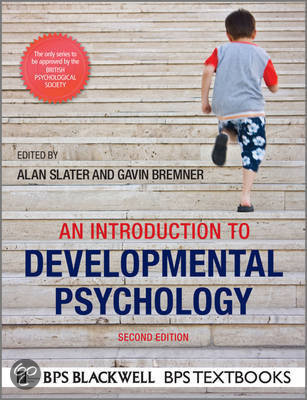
An introduction to developmental
psychology
geschreven door:
KaatjeM
De Marktplaats voor het Kopen en Verkopen van je Samenvattingen
Op Stuvia vind je het grootste aanbod aan samenvattingen en collegeaantekeningen. De
documenten zijn geschreven door jouw medestudenten, specifiek voor jouw opleiding!
www.stuvia.com
Dit document is auteursrechtelijk beschermd, het verspreiden van dit document is strafbaar.
, Stuvia.com - De Marktplaats voor het Kopen en Verkopen van je Samenvattingen
Ontwikkelingspsychologie 1
Hoofdstuk 1: The scope and methods of developmental psychology
Ontwikkelingspsychologie
de discipline die de veranderingen over tijd in het denken, gedrag, beredeneren en functioneren van
een persoon probeert te beschrijven en uit te leggen. Deze veranderingen zijn te wijden aan
invloeden uit het milieu en aan biologische en individuele invloeden.
Rijping
de aspecten van de ontwikkeling die hoofdzakelijk genetisch bepaald zijn (aangeboren)
Een pasgeborene kan bijna niks en kan nauwelijks communiceren. Een kind van 18-24 maanden
daarentegen, heeft relaties gevormd, heeft zich vocaal ontwikkeld en kent al veel van de wereld. De
meeste van deze ontwikkelingen hebben niks te maken met ontwikkeling, maar met rijping.
Volkswaarheden
ideeën over de ontwikkeling die niet gebaseerd zijn op wetenschappelijk onderzoek
Er zijn verschillende volkswaarheden, bijvoorbeeld over straffen/belonen:
1. Een kind moet af en toe gestraft worden, wil het zich kunnen ontwikkelen tot een goede
burger.
2. Een kind is van nature goed, dus straffen kan alleen maar schadelijk zijn.
Paradigma
een theoretisch of filosofisch raamwerk in een wetenschappelijke discipline
Dit document is auteursrechtelijk beschermd, het verspreiden van dit document is strafbaar.
psychology
geschreven door:
KaatjeM
De Marktplaats voor het Kopen en Verkopen van je Samenvattingen
Op Stuvia vind je het grootste aanbod aan samenvattingen en collegeaantekeningen. De
documenten zijn geschreven door jouw medestudenten, specifiek voor jouw opleiding!
www.stuvia.com
Dit document is auteursrechtelijk beschermd, het verspreiden van dit document is strafbaar.
, Stuvia.com - De Marktplaats voor het Kopen en Verkopen van je Samenvattingen
Ontwikkelingspsychologie 1
Hoofdstuk 1: The scope and methods of developmental psychology
Ontwikkelingspsychologie
de discipline die de veranderingen over tijd in het denken, gedrag, beredeneren en functioneren van
een persoon probeert te beschrijven en uit te leggen. Deze veranderingen zijn te wijden aan
invloeden uit het milieu en aan biologische en individuele invloeden.
Rijping
de aspecten van de ontwikkeling die hoofdzakelijk genetisch bepaald zijn (aangeboren)
Een pasgeborene kan bijna niks en kan nauwelijks communiceren. Een kind van 18-24 maanden
daarentegen, heeft relaties gevormd, heeft zich vocaal ontwikkeld en kent al veel van de wereld. De
meeste van deze ontwikkelingen hebben niks te maken met ontwikkeling, maar met rijping.
Volkswaarheden
ideeën over de ontwikkeling die niet gebaseerd zijn op wetenschappelijk onderzoek
Er zijn verschillende volkswaarheden, bijvoorbeeld over straffen/belonen:
1. Een kind moet af en toe gestraft worden, wil het zich kunnen ontwikkelen tot een goede
burger.
2. Een kind is van nature goed, dus straffen kan alleen maar schadelijk zijn.
Paradigma
een theoretisch of filosofisch raamwerk in een wetenschappelijke discipline
Dit document is auteursrechtelijk beschermd, het verspreiden van dit document is strafbaar.