B260 Exam #2
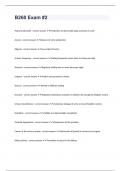
Polyuria (Diuresis) - correct answer ✔✔Production of abnormally large amounts of urine
Anuria - correct answer ✔✔Absence of urine production
Oliguria - correct answer ✔✔Low output of urine
Urinary Frequency - correct answer ✔✔Voiding frequently (more than 4-6 times per day)
Nocturia - correct answer ✔✔Regularly voiding two or more times per night
Urgency - correct answer ✔✔Sudden strong need to urinate
Dysuria - correct answer ✔✔Painful or difficult voiding
Enuresis - correct answer ✔✔Repeated involuntary urination in children old enough for bladder control
Urinary incontinence - correct answer ✔✔Involuntary leakage of urine or loss of bladder control
Retention - correct answer ✔✔Inability to empty bladder completely
Prostatic hyperplasia - correct answer ✔✔Enlargement of the prostate
Cancer of the urinary system - correct answer ✔✔Abnormal cell growth in urinary tract organs
Kidney Stones - correct answer ✔✔Formation of calculi in the kidney Renal failure - correct answer ✔✔Kidney function is insufficient or absent
Urinary Tract Infecion - correct answer ✔✔A bacterial, viral, or fungal infection that occurs in the urinary tract
Neurogenic bladder - correct answer ✔✔Impaired neurological function that can interfere with the normal mechanisms of urinary elimination
Flatulence - correct answer ✔✔Excessive gas(flatus) in the intestines
Bowel Incontinence - correct answer ✔✔Inability to control the passage of feces and gas
Impaction - correct answer ✔✔Accumulation of dry fecal contents in the bowel that cannot be expelled
Obstruction - correct answer ✔✔Blockage in the bowel that prevents or restricts the passage of fecal material
What conditions have direct impact on fluid and electrolyte balance - correct answer ✔✔Acute renal failure and chronic renal failure
Clients at risk for urinary incontinence - correct answer ✔✔those with disability, family history, older age, parkinson disease, genetic conditions, and women
Clients at risk for urinary retention - correct answer ✔✔older clients and men
Clients at risk for diarrhea - correct answer ✔✔young children and older adults
Clients at risk for constipation - correct answer ✔✔young children, older adults, disabilitys, immobility, or chronic diseases such as MS or diabetes
Polyuria (Diuresis) - correct answer ✔✔Production of abnormally large amounts of urine
Anuria - correct answer ✔✔Absence of urine production
Oliguria - correct answer ✔✔Low output of urine
Urinary Frequency - correct answer ✔✔Voiding frequently (more than 4-6 times per day)
Nocturia - correct answer ✔✔Regularly voiding two or more times per night
Urgency - correct answer ✔✔Sudden strong need to urinate
Dysuria - correct answer ✔✔Painful or difficult voiding
Enuresis - correct answer ✔✔Repeated involuntary urination in children old enough for bladder control
Urinary incontinence - correct answer ✔✔Involuntary leakage of urine or loss of bladder control
Retention - correct answer ✔✔Inability to empty bladder completely
Prostatic hyperplasia - correct answer ✔✔Enlargement of the prostate
Cancer of the urinary system - correct answer ✔✔Abnormal cell growth in urinary tract organs
Kidney Stones - correct answer ✔✔Formation of calculi in the kidney Renal failure - correct answer ✔✔Kidney function is insufficient or absent
Urinary Tract Infecion - correct answer ✔✔A bacterial, viral, or fungal infection that occurs in the urinary tract
Neurogenic bladder - correct answer ✔✔Impaired neurological function that can interfere with the normal mechanisms of urinary elimination
Flatulence - correct answer ✔✔Excessive gas(flatus) in the intestines
Bowel Incontinence - correct answer ✔✔Inability to control the passage of feces and gas
Impaction - correct answer ✔✔Accumulation of dry fecal contents in the bowel that cannot be expelled
Obstruction - correct answer ✔✔Blockage in the bowel that prevents or restricts the passage of fecal material
What conditions have direct impact on fluid and electrolyte balance - correct answer ✔✔Acute renal failure and chronic renal failure
Clients at risk for urinary incontinence - correct answer ✔✔those with disability, family history, older age, parkinson disease, genetic conditions, and women
Clients at risk for urinary retention - correct answer ✔✔older clients and men
Clients at risk for diarrhea - correct answer ✔✔young children and older adults
Clients at risk for constipation - correct answer ✔✔young children, older adults, disabilitys, immobility, or chronic diseases such as MS or diabetes