ANXIETY /OCD
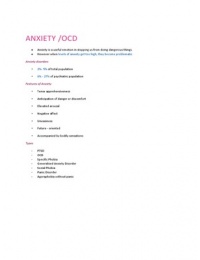
Anxiety is a useful emotion in stopping us from doing dangerous things.
However when levels of anxiety get too high, they become problematic.
Anxiety disorders
• 2%- 5% of total population
• 6% - 27% of psychiatric population
Features of Anxiety:
• Tense apprehensiveness
• Anticipation of danger or discomfort
• Elevated arousal
• Negative affect
• Uneasiness
• Future - oriented
• Accompanied by bodily sensations
Types
- PTSD
- OCD
- Specific Phobia
- Generalised Anxiety Disorder
- Social Phobia
- Panic Disorder
- Agoraphobia without panic
, MODEL OF ANXIETY:
Vulnerability
Hypervigilant
Global scanning
Behavioural Inhibition perceptual enhancement Focused attention
Interpretation
Probable harm
Benign
Anxiety Safe
Escape Avoid Cope Block
Genetic/biological vulnerability
But doesn’t explain different types of anxiety disorder
GENERALISED ANXIETY DISORDER
- Most pervasive anxiety disorder
- Ongoing excessive worry
- 2.1% general population
- Chronic - 80% report feeling anxious their whole lives
- Onset in childhood/adolescence
OBSESSIVE COMPULSIVE DISORDER
Obsessions
- Recurrent and persistent thoughts images, or impulses, that are experienced some time during the
disturbance, as intrusive and inappropriate, and cause marked anxiety or distress.
- Not excessive worries about real life problems
- Attempt to ignore, suppress or neutralise
- Recognise as product of own mind
- Rachman (2003): most common obsessions :
1) Aggressive actions (thoughts of harming/harm coming to family)
2) Sexual acts (fear of inappropriate acts/gestures)
3) Blasphemous acts (sacrilegious gestures in holy places)
Compulsions
- Repetitive behaviours or mental acts person feels driven to perform
- In response to obsession or rules which must be applied rigidly
Anxiety is a useful emotion in stopping us from doing dangerous things.
However when levels of anxiety get too high, they become problematic.
Anxiety disorders
• 2%- 5% of total population
• 6% - 27% of psychiatric population
Features of Anxiety:
• Tense apprehensiveness
• Anticipation of danger or discomfort
• Elevated arousal
• Negative affect
• Uneasiness
• Future - oriented
• Accompanied by bodily sensations
Types
- PTSD
- OCD
- Specific Phobia
- Generalised Anxiety Disorder
- Social Phobia
- Panic Disorder
- Agoraphobia without panic
, MODEL OF ANXIETY:
Vulnerability
Hypervigilant
Global scanning
Behavioural Inhibition perceptual enhancement Focused attention
Interpretation
Probable harm
Benign
Anxiety Safe
Escape Avoid Cope Block
Genetic/biological vulnerability
But doesn’t explain different types of anxiety disorder
GENERALISED ANXIETY DISORDER
- Most pervasive anxiety disorder
- Ongoing excessive worry
- 2.1% general population
- Chronic - 80% report feeling anxious their whole lives
- Onset in childhood/adolescence
OBSESSIVE COMPULSIVE DISORDER
Obsessions
- Recurrent and persistent thoughts images, or impulses, that are experienced some time during the
disturbance, as intrusive and inappropriate, and cause marked anxiety or distress.
- Not excessive worries about real life problems
- Attempt to ignore, suppress or neutralise
- Recognise as product of own mind
- Rachman (2003): most common obsessions :
1) Aggressive actions (thoughts of harming/harm coming to family)
2) Sexual acts (fear of inappropriate acts/gestures)
3) Blasphemous acts (sacrilegious gestures in holy places)
Compulsions
- Repetitive behaviours or mental acts person feels driven to perform
- In response to obsession or rules which must be applied rigidly