Dominique van Schagen LMP
Leadership: mobilizing people HC 1
Methods of statistics:
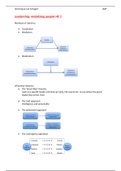
• Correlation
• Mediation
• Moderation
Influential theories:
• The ‘Great Man’ theories
Look at a specific leader and look up traits, life events etc. to see where the great
leadership comes from
• The trait approach
Intelligence and personality
• The behavioral approach
• The contingency approach
, Dominique van Schagen LMP
Situational favorability:
1. Task structure
2. Leader position power
3. Quality of leader-member relations
Task-oriented leadership preferred in highly (un)favorable situations
Relation-oriented leadership preferred at moderate levels of situational favorability
Job maturity: subordinate’s job-related ability, skills, and knowledge
Psychological maturity: the self-confidence and self-respect of the subordinate
• New approaches
o LMX: leader-member exchange theory
In-group members have high-quality relationships with their leader, high
latitude for negotiating work roles; rare use of formal power or authority
Out-group members have low-quality with their leader, little latitude for
negotiating their work roles; leader relies on formal power and authority
o Transformational leadership
Interplay between leaders and followers in which each raises the other to
higher levels of ethics, morality and motivation.
o Authentic leadership
leading with integrity and genuineness and not projecting an artificial persona
Four dimensions:
• Self-awareness: understanding of strengths and weaknesses, and
multifaceted nature of the self
• Relational transparency: presenting one’s authentic self
• Balanced processing: showing that you objectively analyzed all
relevant data before making a decision
• Internalized moral perspective: self-regulation that is guided by
internal moral standards and values vs. group, organizational, and
societal pressures
o Charismatic leadership
a personal attribute of a leader that almost hypnotizes followers and compels
them to identify with and emulate the leader
Characteristics of charismatic leaders:
• Vision and articulation: Has a vision that proposes a future better than
a status quo.
• Personal risk: Willing to take on high personal risk and self-sacrifice
• Sensitive to followers’ needs: Communicates high expectations and
expressing optimism and confidence in followers
Leadership: mobilizing people HC 1
Methods of statistics:
• Correlation
• Mediation
• Moderation
Influential theories:
• The ‘Great Man’ theories
Look at a specific leader and look up traits, life events etc. to see where the great
leadership comes from
• The trait approach
Intelligence and personality
• The behavioral approach
• The contingency approach
, Dominique van Schagen LMP
Situational favorability:
1. Task structure
2. Leader position power
3. Quality of leader-member relations
Task-oriented leadership preferred in highly (un)favorable situations
Relation-oriented leadership preferred at moderate levels of situational favorability
Job maturity: subordinate’s job-related ability, skills, and knowledge
Psychological maturity: the self-confidence and self-respect of the subordinate
• New approaches
o LMX: leader-member exchange theory
In-group members have high-quality relationships with their leader, high
latitude for negotiating work roles; rare use of formal power or authority
Out-group members have low-quality with their leader, little latitude for
negotiating their work roles; leader relies on formal power and authority
o Transformational leadership
Interplay between leaders and followers in which each raises the other to
higher levels of ethics, morality and motivation.
o Authentic leadership
leading with integrity and genuineness and not projecting an artificial persona
Four dimensions:
• Self-awareness: understanding of strengths and weaknesses, and
multifaceted nature of the self
• Relational transparency: presenting one’s authentic self
• Balanced processing: showing that you objectively analyzed all
relevant data before making a decision
• Internalized moral perspective: self-regulation that is guided by
internal moral standards and values vs. group, organizational, and
societal pressures
o Charismatic leadership
a personal attribute of a leader that almost hypnotizes followers and compels
them to identify with and emulate the leader
Characteristics of charismatic leaders:
• Vision and articulation: Has a vision that proposes a future better than
a status quo.
• Personal risk: Willing to take on high personal risk and self-sacrifice
• Sensitive to followers’ needs: Communicates high expectations and
expressing optimism and confidence in followers