Contents Page
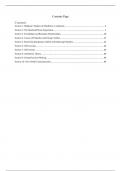
Contents
Section 1: Milgram’s Studies of Obedience to Authority ....................................................................... 2
Section 2: The Stanford Prison Experiment ............................................................................................ 7
Section 3: Friendships and Romantic Relationships ............................................................................. 10
Section 4: Causes of Prejudice and Group Conflict .............................................................................. 17
Section 5: Resolving Intergroup Conflict and Reducing Prejudice ...................................................... 21
Section 6: Self-concept ......................................................................................................................... 24
Section 7: Self-esteem........................................................................................................................... 29
Section 8: Attribution Theory ............................................................................................................... 33
Section 9: Group Decision-Making ...................................................................................................... 39
Section 10: Non-Verbal Communication .............................................................................................. 45
, Section 1: Milgram’s Studies of Obedience to Authority
Background and Aims of Research:
• Milgram was a Jew
• His family had fled Nazi persecution
• As a result, he was interested in the Holocaust
• He was additionally intrigued by Solomon Asch’s study on conformity (Asch, 1951)
but wanted to use more meaningful procedures than Asch’s line-length judgements
• Explored the underlying psychological mechanisms behind destructive obedience
Sample:
• Participants responded to advertisements in newspapers to take part in research on
learning and punishment at Yale
• The original study consisted of 40 participants
• Including later studies, nearly 1,000 participants took part in his study
• The sample of participants was diverse
• Consisted of a broad range of occupations and ages
• The sample was still male-dominated
Basic Procedure:
• Participants were told to arrive at a lab
• They were then introduced to another participant (a confederate)
• Both ‘participants’ then select a stick to decide who the learner was and who the
teacher was (the draw was rigged, and the real participant was always the teacher)
• The learner was placed in a separate room from the teacher
• They communicated via an intercom system
• The teacher read out word pairs to the learner
• The learner had to recall the word pairs
• If they recalled the word pairs incorrectly, the teacher punished the learner with an
electric shock
• ‘Shock generator’ machine- based on the ‘aggression machine’ invented by Buss
(1961)
• The teacher would increase the intensity of the shock upon each error (15v increase
each time, rising from 15v to 450v)
• If the teacher/ real participant became reluctant to continue, then the researcher placed
in the room used a script to prompt them to continue:
o ‘Please continue’ or ‘please go on’
o ‘The experiment requires that you continue’
o ‘It is absolutely essential that you continue’
o ‘You have no other choice, you must go on’
,Basic Findings:
• Students, behavioural scientists and laypersons were asked to predict what they
thought the outcome of the study would be
o All groups said that nobody would continue to administer shocks once the
learner began to protest
• In the pilot study conducted by Milgram where the teacher did not receive oral
feedback from the learner, all participants administered the highest level of electric
shock (450v)
• Mean voltage where participants began to disobey = 360v
• 65% of participants never disobeyed the study and went to 450v
• No participants stopped before 300v
Variations of Milgram’s (1963) Original Study:
• If the participant was asked to set the shock level themselves, the mean volt level
chosen was 50v
• If two experimenters stood and argued in the room with the teacher, no participant
continued
• If the location of the study was changed from a university laboratory to a run-down
office block, 48% of the participants were fully obedient
• If the teacher had to push the learner’s hand down onto the shock plate, 30% of
participants were obedient
• If the experimenter gave instructions and prompts to the teacher via telephone, 20.5%
of participants were obedient.
Early Explanations:
1) Relic of its Time?
• Burger (2009)
o Replicated the study
o 18 men and 22 women were tested
o 65% of the male participants agreed to administer increasing shocks
o 73% of the female participants followed the orders of the experimenter
o The group was ethnically diverse with 54.2% white, 18.6% Asian,
12.9% Hispanic, 8.6% Indian-Asian and 4.3% African-American.
o The sample also had an unusually high level of education, 22.9% had
some college qualifications, 40% had Bachelor’s degrees and 20% had
Master’s degrees.
o Results therefore indicate Milgram’s findings are not a relic of their
time.
• Moreover:
o Miranda et al. (1981)
▪ Replicated the study in Spain with students
▪ Over 90% of participants were obedient to 450v
, o Schurz (1985)
▪ Replicated the study in Austria with the general population
▪ 80% of participants were obedient to the 450v max shock level
o Meeus and Raaijmakers (1986)
▪ Replicated the study in Holland with the general population
▪ 92% of participants were obedient to 450v
2) The Agentic State:
• Individuals enter a state that allows them to become an instrument of authority
• Individuals no longer view themselves as being responsible for their actions
• They are no longer fully autonomous and almost enter an altered state of
consciousness
• Any actions performed in this state have no long-term consequences for self-
concept
• Milgram (1974) argued that participants entered this state when administering
the electric shocks
o Societies tend to require unthinking obedience to authority
o E.g., obedience is often rewarded in school
• Activation of an agentic state is highly dependent on perceived legitimate
authority
o Bickman (1974)
o Uniform adds to the legitimacy of authority
o Individuals are more likely to obey if they believe an authority figure is
giving instructions
o An experimenter approached members of the public dressed in three
different ways- a guard, a milkman and a civilian wearing smart
clothing.
o The experimenter asked members of the public for change for a
parking meter
o No uniform (33% obedience), milkman uniform (57% obedience) and
guard uniform (89% obedience)
o The findings demonstrate the importance of perceived legitimate
authority in the activation of an agentic state.
3) The Agentic Shift:
• Two opposing sets of demands:
o The external authority- the authority of the authority figure
o The internal authority- the authority of our conscience
• An agentic shift can only be achieved if an internally obedient individual shifts
towards an externally obedient profile and views themselves as acting as an
agent for an authority figure
• Perceived legitimate authority aids this shift.
Contents
Section 1: Milgram’s Studies of Obedience to Authority ....................................................................... 2
Section 2: The Stanford Prison Experiment ............................................................................................ 7
Section 3: Friendships and Romantic Relationships ............................................................................. 10
Section 4: Causes of Prejudice and Group Conflict .............................................................................. 17
Section 5: Resolving Intergroup Conflict and Reducing Prejudice ...................................................... 21
Section 6: Self-concept ......................................................................................................................... 24
Section 7: Self-esteem........................................................................................................................... 29
Section 8: Attribution Theory ............................................................................................................... 33
Section 9: Group Decision-Making ...................................................................................................... 39
Section 10: Non-Verbal Communication .............................................................................................. 45
, Section 1: Milgram’s Studies of Obedience to Authority
Background and Aims of Research:
• Milgram was a Jew
• His family had fled Nazi persecution
• As a result, he was interested in the Holocaust
• He was additionally intrigued by Solomon Asch’s study on conformity (Asch, 1951)
but wanted to use more meaningful procedures than Asch’s line-length judgements
• Explored the underlying psychological mechanisms behind destructive obedience
Sample:
• Participants responded to advertisements in newspapers to take part in research on
learning and punishment at Yale
• The original study consisted of 40 participants
• Including later studies, nearly 1,000 participants took part in his study
• The sample of participants was diverse
• Consisted of a broad range of occupations and ages
• The sample was still male-dominated
Basic Procedure:
• Participants were told to arrive at a lab
• They were then introduced to another participant (a confederate)
• Both ‘participants’ then select a stick to decide who the learner was and who the
teacher was (the draw was rigged, and the real participant was always the teacher)
• The learner was placed in a separate room from the teacher
• They communicated via an intercom system
• The teacher read out word pairs to the learner
• The learner had to recall the word pairs
• If they recalled the word pairs incorrectly, the teacher punished the learner with an
electric shock
• ‘Shock generator’ machine- based on the ‘aggression machine’ invented by Buss
(1961)
• The teacher would increase the intensity of the shock upon each error (15v increase
each time, rising from 15v to 450v)
• If the teacher/ real participant became reluctant to continue, then the researcher placed
in the room used a script to prompt them to continue:
o ‘Please continue’ or ‘please go on’
o ‘The experiment requires that you continue’
o ‘It is absolutely essential that you continue’
o ‘You have no other choice, you must go on’
,Basic Findings:
• Students, behavioural scientists and laypersons were asked to predict what they
thought the outcome of the study would be
o All groups said that nobody would continue to administer shocks once the
learner began to protest
• In the pilot study conducted by Milgram where the teacher did not receive oral
feedback from the learner, all participants administered the highest level of electric
shock (450v)
• Mean voltage where participants began to disobey = 360v
• 65% of participants never disobeyed the study and went to 450v
• No participants stopped before 300v
Variations of Milgram’s (1963) Original Study:
• If the participant was asked to set the shock level themselves, the mean volt level
chosen was 50v
• If two experimenters stood and argued in the room with the teacher, no participant
continued
• If the location of the study was changed from a university laboratory to a run-down
office block, 48% of the participants were fully obedient
• If the teacher had to push the learner’s hand down onto the shock plate, 30% of
participants were obedient
• If the experimenter gave instructions and prompts to the teacher via telephone, 20.5%
of participants were obedient.
Early Explanations:
1) Relic of its Time?
• Burger (2009)
o Replicated the study
o 18 men and 22 women were tested
o 65% of the male participants agreed to administer increasing shocks
o 73% of the female participants followed the orders of the experimenter
o The group was ethnically diverse with 54.2% white, 18.6% Asian,
12.9% Hispanic, 8.6% Indian-Asian and 4.3% African-American.
o The sample also had an unusually high level of education, 22.9% had
some college qualifications, 40% had Bachelor’s degrees and 20% had
Master’s degrees.
o Results therefore indicate Milgram’s findings are not a relic of their
time.
• Moreover:
o Miranda et al. (1981)
▪ Replicated the study in Spain with students
▪ Over 90% of participants were obedient to 450v
, o Schurz (1985)
▪ Replicated the study in Austria with the general population
▪ 80% of participants were obedient to the 450v max shock level
o Meeus and Raaijmakers (1986)
▪ Replicated the study in Holland with the general population
▪ 92% of participants were obedient to 450v
2) The Agentic State:
• Individuals enter a state that allows them to become an instrument of authority
• Individuals no longer view themselves as being responsible for their actions
• They are no longer fully autonomous and almost enter an altered state of
consciousness
• Any actions performed in this state have no long-term consequences for self-
concept
• Milgram (1974) argued that participants entered this state when administering
the electric shocks
o Societies tend to require unthinking obedience to authority
o E.g., obedience is often rewarded in school
• Activation of an agentic state is highly dependent on perceived legitimate
authority
o Bickman (1974)
o Uniform adds to the legitimacy of authority
o Individuals are more likely to obey if they believe an authority figure is
giving instructions
o An experimenter approached members of the public dressed in three
different ways- a guard, a milkman and a civilian wearing smart
clothing.
o The experimenter asked members of the public for change for a
parking meter
o No uniform (33% obedience), milkman uniform (57% obedience) and
guard uniform (89% obedience)
o The findings demonstrate the importance of perceived legitimate
authority in the activation of an agentic state.
3) The Agentic Shift:
• Two opposing sets of demands:
o The external authority- the authority of the authority figure
o The internal authority- the authority of our conscience
• An agentic shift can only be achieved if an internally obedient individual shifts
towards an externally obedient profile and views themselves as acting as an
agent for an authority figure
• Perceived legitimate authority aids this shift.