Crime
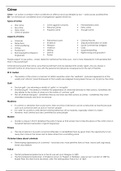
Crime – an action or omission which constitutes an offence and is punishable by law – varies across societies/time
Sin – an immoral act considered to be a transgression against divine law
Types of Crime
• War crime • Crime against humanity • Premeditated crime
• Sex crime • Personal Crimes • Petty crime
• Hate crime • Property Crime • Thought crime
• Crime of passion
Aspects of Crime
• Criminals • Police/law/courts • Criminal Psyche
• Detectives • Evidence • (In)justice/restoration of order
• Victims/suffering • Weapon • Social Commentary (religion)
• Crimes • Violence • Class
• Punishment • Setting • Suspense/plotting
• Remorse/guilt/confession/ • Motive • Right/wrong and good/evil
forgiveness • Power
People expect to see justice – classic detection reinforces the status quo – but is more interested in motives/detection
than in the punishment
Criminals live beyond their crime, serve their punishment and are released into society again. Are you always a
criminal? Victims of crime have to live with the personal and physical consequence for the rest of their life
W.H. Auden
• The solution of the crime is a moment of artistic resolution when the ‘aesthetic’ (outward appearance of the
world) and ‘ethical’ (moral framework of that world) are realigned having been thrown out of joint by the crime
Guilt
• Factual guilt – jury returning a verdict of ‘guilty’ or ‘not guilty’
• Emotional guilt – this relates to whether the perpetrators of crime feel remorse for their actions. Sometimes this
also relates to the victims of crime as in the notion of ‘survivors’ guilt’
• Not all criminals feel guild – sometimes they do not even see their actions as crimes – sometimes they show
shameless bravado and show no remorse
Madness
• If a crime is a deviation from social norms, then any kind of deviance can be constructed as insanity because
such acts cannot be seen as acts of ‘normal’ people
• It is ‘safe’ for society to write deviant criminal behaviour off as madness, especially where it is violent
• However, most criminal acts are committed by sane people
Murder
• Murder is unique in that it abolished the party it injures so that society has to take the place of the victim and on
his behalf demand restoration of grant forgiveness
Prisons
• The role of prisons is to punish convicted offenders, to rehabilitate them by given them the opportunity to turn
away from crime in the future and to deter others from committing crime
Victorian ideas about criminals
• Stereotyping appearance of a criminal – hunched over, more primitive forms of man, heavy built, big heads,
lower class dialects
Police
• The first professional police force in the UK was set up in Glasgow in 1800
• The first professional policemen, in England, known as 'Peelers' or 'Bobbies', were set up in London in 1829 by
Robert Peel, the then Home Secretary, after 'The Metropolitan Police Act' of 1829.
Crime – an action or omission which constitutes an offence and is punishable by law – varies across societies/time
Sin – an immoral act considered to be a transgression against divine law
Types of Crime
• War crime • Crime against humanity • Premeditated crime
• Sex crime • Personal Crimes • Petty crime
• Hate crime • Property Crime • Thought crime
• Crime of passion
Aspects of Crime
• Criminals • Police/law/courts • Criminal Psyche
• Detectives • Evidence • (In)justice/restoration of order
• Victims/suffering • Weapon • Social Commentary (religion)
• Crimes • Violence • Class
• Punishment • Setting • Suspense/plotting
• Remorse/guilt/confession/ • Motive • Right/wrong and good/evil
forgiveness • Power
People expect to see justice – classic detection reinforces the status quo – but is more interested in motives/detection
than in the punishment
Criminals live beyond their crime, serve their punishment and are released into society again. Are you always a
criminal? Victims of crime have to live with the personal and physical consequence for the rest of their life
W.H. Auden
• The solution of the crime is a moment of artistic resolution when the ‘aesthetic’ (outward appearance of the
world) and ‘ethical’ (moral framework of that world) are realigned having been thrown out of joint by the crime
Guilt
• Factual guilt – jury returning a verdict of ‘guilty’ or ‘not guilty’
• Emotional guilt – this relates to whether the perpetrators of crime feel remorse for their actions. Sometimes this
also relates to the victims of crime as in the notion of ‘survivors’ guilt’
• Not all criminals feel guild – sometimes they do not even see their actions as crimes – sometimes they show
shameless bravado and show no remorse
Madness
• If a crime is a deviation from social norms, then any kind of deviance can be constructed as insanity because
such acts cannot be seen as acts of ‘normal’ people
• It is ‘safe’ for society to write deviant criminal behaviour off as madness, especially where it is violent
• However, most criminal acts are committed by sane people
Murder
• Murder is unique in that it abolished the party it injures so that society has to take the place of the victim and on
his behalf demand restoration of grant forgiveness
Prisons
• The role of prisons is to punish convicted offenders, to rehabilitate them by given them the opportunity to turn
away from crime in the future and to deter others from committing crime
Victorian ideas about criminals
• Stereotyping appearance of a criminal – hunched over, more primitive forms of man, heavy built, big heads,
lower class dialects
Police
• The first professional police force in the UK was set up in Glasgow in 1800
• The first professional policemen, in England, known as 'Peelers' or 'Bobbies', were set up in London in 1829 by
Robert Peel, the then Home Secretary, after 'The Metropolitan Police Act' of 1829.