From Revolution to War
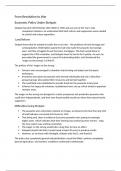
Economic Policy Under Stolypin
Stolypin became Chief Minister after Witte in 1906 and was one of the Tsar’s only
competent ministers. He understood that both reform and suppression were needed
to control and reduce opposition.
Land Reform
Stolypin knew that he needed to tackle the rural crisis – the problems of land shortage and
overpopulation. Redemption payments had only made the peasants increasingly
poor, and they struggled to pay the heavy mortgages. This had caused them to
support the 1905 revolution, and Stolypin knew he had to fix it quickly. As such, he
persuaded the government to cancel all outstanding debts, and introduced the
‘wager on the strong’ in 1906-07.
The policies of the ‘wager on the strong’:
Farmers were encouraged to abandon strip farming and adopt new European
techniques.
Incentives were given to peasants who farmed individually and not in Obschina –
peasant groups who pooled their resources and farmed together.
The Land Bank was established to provide funds for the peasants to buy land.
Schemes for largescale voluntary resettlement were set up, which aimed to populate
remoter areas.
The wager on the strong was designed to create prosperous and productive peasants who
could farm independently, and their new-found wealth would turn them into natural tsarist
supporters.
Difficulties facing Stolypin
The peasants were extremely resistant to change, as shown by the fact that only 16%
of land had been converted into farms by 1914.
That being said, there is evidence that some peasants were paying increasingly
higher taxes, which indicates that their farming was producing more money – ergo,
the new system was working somewhat.
The wager on the strong would take a long time to have an effect.
Stolypin himself said that it would need at least 20 years to produce results.
However, as we know with hindsight, Stolypin only had 5, and Russia 8.
The policy also completely ignored industrialisation, much like Witte’s policies completely
ignored agriculture, and workers’ conditions continued to deteriorate.
Economic Policy Under Stolypin
Stolypin became Chief Minister after Witte in 1906 and was one of the Tsar’s only
competent ministers. He understood that both reform and suppression were needed
to control and reduce opposition.
Land Reform
Stolypin knew that he needed to tackle the rural crisis – the problems of land shortage and
overpopulation. Redemption payments had only made the peasants increasingly
poor, and they struggled to pay the heavy mortgages. This had caused them to
support the 1905 revolution, and Stolypin knew he had to fix it quickly. As such, he
persuaded the government to cancel all outstanding debts, and introduced the
‘wager on the strong’ in 1906-07.
The policies of the ‘wager on the strong’:
Farmers were encouraged to abandon strip farming and adopt new European
techniques.
Incentives were given to peasants who farmed individually and not in Obschina –
peasant groups who pooled their resources and farmed together.
The Land Bank was established to provide funds for the peasants to buy land.
Schemes for largescale voluntary resettlement were set up, which aimed to populate
remoter areas.
The wager on the strong was designed to create prosperous and productive peasants who
could farm independently, and their new-found wealth would turn them into natural tsarist
supporters.
Difficulties facing Stolypin
The peasants were extremely resistant to change, as shown by the fact that only 16%
of land had been converted into farms by 1914.
That being said, there is evidence that some peasants were paying increasingly
higher taxes, which indicates that their farming was producing more money – ergo,
the new system was working somewhat.
The wager on the strong would take a long time to have an effect.
Stolypin himself said that it would need at least 20 years to produce results.
However, as we know with hindsight, Stolypin only had 5, and Russia 8.
The policy also completely ignored industrialisation, much like Witte’s policies completely
ignored agriculture, and workers’ conditions continued to deteriorate.