Hobbes Tulane University Questions And Answers
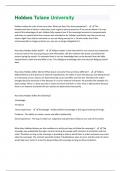
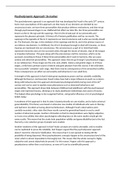
Hobbes makes the rules of war very clear. What are they? Are there exceptions? - The fundamental law of nature is that every man ought to pursue peace but if he cannot obtain it he may seek all the advantages of war. Hobbes fully supports war if the sovereign becomes in compassionate and does not uphold what the contract was intended to do. Hobbes specifically says that you do not have to fight if you did not volunteer or are not taking money for it. He also states that if the commonwealth no longer protects you, you are no longer obligated to it. How does Hobbes define belief? - Hobbes makes it clear that belief is not science but instead the trust you have in the source giving you the information. We don't believe the words, we believe the person saying the words. For example there is no true knowledge that can be derived from the bible. Instead there is faith that the Bible is true. Thus Religious knowledge does not exist but Religious belief does. How does Hobbes define liberty? What about necessity? How are these different? - Hobbes defined liberty as the absence of external impediments. He makes it clear that because everything we do is of necessity, all our actions are determined by cause and effect not free will. Therefore the action brought about by necessity is free because it is not an external constraint. He provides the example of a boat sinking. There is a boat you have a choice to throw stuff over or sink, there is liberty there because there is no external constraint) All our actions are determined necessarily How does Hobbes define the following? -Knowledge -Prudence -Sense experience - Knowledge - Hobbes defines knowledge as the logical ordering of things. Prudence - The ability to create a cause and effect relationship Sense Experience - The way in which our subjective characteristics influence our view of the world. What does Hobbes believe are the conditions in which you have to follow the sovereign? - The sovereign was established through a contract among the people with intention of protection and civil order. Therefore as long as the sovereign is providing a state in which there is order and peace one must obey the sovereign. The contract would be broken if disobedience were to occur and the state of nature would take over, hence it is best to always follow the sovereign as long as there protection.What does Hobbes believe of human nature? - Hobbes acknowledges that human nature emphasizes our animal nature, leaving each of us to live independently of everyone else, acting only in his or her own self-interest without regards for others. The only escape from this human nature is to enter into contracts with one another What is the difference between a commonwealth by institution and commonwealth by acquisition? Are there any similarities between them? - A commonwealth by institution is a covenant made by a group of people that are living in the state of nature. It is a contract between the people of nature to obey a sovereign. A commonwealth by institution is usually created out of a fear of violent death with the hopes that the sovereign will protect the commonwealth. A commonwealth by acquisition is derived by the conquest of a sovereign over people. From Hobbes perspective they have little differences because both commonwealths are defined by fear and entered into freely.
Written for
- Institution
- Hobbes Tulane University
- Course
- Hobbes Tulane University
Document information
- Uploaded on
- June 24, 2024
- Number of pages
- 3
- Written in
- 2023/2024
- Type
- Exam (elaborations)
- Contains
- Questions & answers
Subjects

Also available in package deal