Due Process
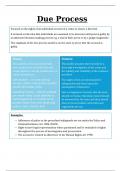
Focused on the rights of an individual accused of a crime to ensure a fair trial.
It is based on the idea that individuals are assumed to be innocent until proven guilty by
an informed decision-making process e.g. a trial of their peers or by a judge/magistrate.
The emphasis of the due process model is on the state to prove that the accused is
guilty.
Theory: Features:
This model is often associated with This model assumes there should be a
more progressive political ideas and thorough investigation of the crime and
closely linked to the left-realism view of the validity and reliability of the evidence
crime and deviance. provided.
Left realism – a more caring The rights of the accused should be
society, police and justice system safeguarded and based upon the
would eliminate crime. assumption of innocence.
Labelling theory – Certain people Sets out legislative barriers that the state
are more likely to be labelled or should overcome. Questions raised should
stereotyped as a criminal so to be answered by the state and they should
protect them from the state and then act in accordance with rules and
police, more checks and regulations set out.
processes are put in place.
Examples:
Adherence of police to the procedural safeguards set out under the Police and
Criminal Evidence Act 1984 (PACE).
Right to have legal representation when questioned and be reminded of rights
throughout the process of investigation and prosecution.
The accused is treated in adherence to the Human Rights Act 1998.
Focused on the rights of an individual accused of a crime to ensure a fair trial.
It is based on the idea that individuals are assumed to be innocent until proven guilty by
an informed decision-making process e.g. a trial of their peers or by a judge/magistrate.
The emphasis of the due process model is on the state to prove that the accused is
guilty.
Theory: Features:
This model is often associated with This model assumes there should be a
more progressive political ideas and thorough investigation of the crime and
closely linked to the left-realism view of the validity and reliability of the evidence
crime and deviance. provided.
Left realism – a more caring The rights of the accused should be
society, police and justice system safeguarded and based upon the
would eliminate crime. assumption of innocence.
Labelling theory – Certain people Sets out legislative barriers that the state
are more likely to be labelled or should overcome. Questions raised should
stereotyped as a criminal so to be answered by the state and they should
protect them from the state and then act in accordance with rules and
police, more checks and regulations set out.
processes are put in place.
Examples:
Adherence of police to the procedural safeguards set out under the Police and
Criminal Evidence Act 1984 (PACE).
Right to have legal representation when questioned and be reminded of rights
throughout the process of investigation and prosecution.
The accused is treated in adherence to the Human Rights Act 1998.