

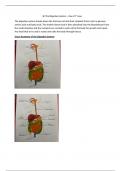
8c The Digestive System – Due 21st June
The digestive system breaks down the food we eat into their simplest forms such as glucose,
amino acids and fatty acids. The broken-down food is then absorbed into the bloodstream from
the small intestine and the nutrients are carried to each cell in the body for growth and repair.
Any food that isn't used is waste and exits the body through faeces.
Gross Anatomy of the Digestive System
, Salivary Glands - Salivary glands secrete saliva,
which is a mixture of water, mucus, antibacterial
substances, and digestive enzymes. These
enzymes are important for breaking down
starches in our food into simpler sugars like
glucose and maltose. When we chew or eat
something with starch or sugar, the salivary
glands activate and release saliva. The ducts
connected to the upper and lower jaw ensure
even coating of saliva in the mouth.
https://image.slidesharecdn.com/lecture1-150315154736-conversion-gate01/95/lecture-1-salivary-glands-3-
1024.jpg?cb=142643449
Tongue - the tongue helps manipulate food within
the mouth, breaking it down into smaller pieces. It
mixes food with saliva, forming a manageable
portion called a bolus. The bolus is then moved into
the pharynx and safely swallowed, passing through
the oesophagus into the stomach.
https://cdn11.bigcommerce.com/s-aw6hetyvsy/images/stencil/1920w/products/33907/39016/tongue-anatomy-free-
poster__74453.1652968172.jpg?c=1
, Oesophagus - The oesophagus is a
hollow, muscular tube that transports
swallowed food and liquids from the
mouth to the stomach. When you
swallow, food and liquid move from
your mouth to your throat (pharynx).
The oesophagus then transports them
downward, using involuntary
contractions called peristalsis.
https://th.bing.com/th/id/OIP.Hzqa5HgS4aOSReIwNBoyeAHaGB?rs=1&pid=ImgDetMain
Stomach - The stomach is a muscular organ in the
digestive system with several essential functions:
The stomach temporarily stores food after it has
been swallowed. This storage allows for
controlled release into the small intestine for
further digestion. The stomach contracts and
relaxes, churning food to mix it with digestive
juices. These actions help break down food into
smaller particles. The stomach produces strong
acid that kills harmful microorganisms ingested
with food. It also contains enzymes that break
down food into absorbable components.
https://cdn4.vectorstock.com/i/1000x1000/70/43/internal-
structure-human-stomach-vector-14527043.jpg
The digestive system breaks down the food we eat into their simplest forms such as glucose,
amino acids and fatty acids. The broken-down food is then absorbed into the bloodstream from
the small intestine and the nutrients are carried to each cell in the body for growth and repair.
Any food that isn't used is waste and exits the body through faeces.
Gross Anatomy of the Digestive System
, Salivary Glands - Salivary glands secrete saliva,
which is a mixture of water, mucus, antibacterial
substances, and digestive enzymes. These
enzymes are important for breaking down
starches in our food into simpler sugars like
glucose and maltose. When we chew or eat
something with starch or sugar, the salivary
glands activate and release saliva. The ducts
connected to the upper and lower jaw ensure
even coating of saliva in the mouth.
https://image.slidesharecdn.com/lecture1-150315154736-conversion-gate01/95/lecture-1-salivary-glands-3-
1024.jpg?cb=142643449
Tongue - the tongue helps manipulate food within
the mouth, breaking it down into smaller pieces. It
mixes food with saliva, forming a manageable
portion called a bolus. The bolus is then moved into
the pharynx and safely swallowed, passing through
the oesophagus into the stomach.
https://cdn11.bigcommerce.com/s-aw6hetyvsy/images/stencil/1920w/products/33907/39016/tongue-anatomy-free-
poster__74453.1652968172.jpg?c=1
, Oesophagus - The oesophagus is a
hollow, muscular tube that transports
swallowed food and liquids from the
mouth to the stomach. When you
swallow, food and liquid move from
your mouth to your throat (pharynx).
The oesophagus then transports them
downward, using involuntary
contractions called peristalsis.
https://th.bing.com/th/id/OIP.Hzqa5HgS4aOSReIwNBoyeAHaGB?rs=1&pid=ImgDetMain
Stomach - The stomach is a muscular organ in the
digestive system with several essential functions:
The stomach temporarily stores food after it has
been swallowed. This storage allows for
controlled release into the small intestine for
further digestion. The stomach contracts and
relaxes, churning food to mix it with digestive
juices. These actions help break down food into
smaller particles. The stomach produces strong
acid that kills harmful microorganisms ingested
with food. It also contains enzymes that break
down food into absorbable components.
https://cdn4.vectorstock.com/i/1000x1000/70/43/internal-
structure-human-stomach-vector-14527043.jpg


