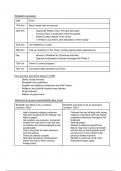
Elizabeth’s Accession
Date Event
17th Nov Mary’s death was announced
20th Nov - Appointed William Cecil, Principal Secretary
- Thomas Parry, Comptroller of the Household
- Robert Dudley, Master of the Horse
- 9 of Mary’s councillors sent deputation of their loyalty
23rd Nov Left Hatfield for London
28th Nov Took up residence in the Tower, making regular public appearances
Dec - Moved to Whitehall for Christmas festivities
- Spanish ambassador brokered marriage with Phillip II
12th Jan Tower of London progress
15th Jan Coronation (date decided by Dr Dee)
How and why were there issues in 1558?
- Series of bad harvests.
- Ravaged by flu epidemics.
- England was fighting a disastrous war with France.
- Religious and political situation was delicate.
- Royal authority.
- Matters of government.
What kind of monarch was Elizabeth likely to be?
Elizabeth was likely to be a cautious Elizabeth was likely to be an innovative
monarch. Why? monarch. Why?
- Had to balance religious extremes - Followed her two siblings with strong
- Had seen example of her siblings’ and religious convictions and had strong
father’s reigns protestant influences throughout her
- Her position was insecure: unmarried childhood
woman who was third in line and had - Well-educated
no children and whose legitimacy was - Wanted to distance herself from
questionable Mary’s reign due to personal beliefs
- Took a long time to make decisions and the way in which people would
and took advice perceive her in the context of the
- Threat of catholic crusade previous female monarch
- High debt caused by predecessors - Wanted to avoid war at all costs
meant she had to have cautious - Exploration began again
foreign policy
, Monarch Aims
Henry VII - Secure throne
- Fight pretenders
- Stabilise economy
- Heir
- Exploration (not as much)
Henry VIII - Heir
- Divorce
- Break from Rome
- Wars
Edward VI - Secure weak position
- Reform England
- Put down rebellions
- Recover economy
Mary I - Marriage
- Heir
- Return catholicism to country
The Elizabethan Religious Settlement
Religion under the early Tudor Monarchs
Henry VIII - Responsibility of Church doctrine passed to King in Parliament
- Between 1536-9 some changes were introduced along moderate
protestant lines, but after 1539 Henry returned to an orthodox catholic
position on doctrine
- Dissolved monastic institutions to seize their land and wealth
- By end of reign many courtiers and his son were protestant
Edward VI - Duke of Somerset introduced a Protestant prayer book and communion
service, ordered the destruction of all images in churches, allowed
priests to marry and decided that services should be in english
- Northumberland went further with the Book of Common Prayer and the
42 Article in 1552 which generally followed the teachings of Ulrich Zwingli
and left no room for catholic belief
- Main influences on religious changes were Cranmer and Edward himself
Mary I - Restored papal authority but couldn’t restore church lands
- Latin mass and catholic doctrine and ritual were enforced
- Cardinal Pole attempted to improve the standard of priests, but his
measures never had time to succeed
- Persecution of protestants
The Act of Supremacy and The Act of Uniformity, 1559
Key Dates:
Date Event
17th Nov Mary’s death was announced
20th Nov - Appointed William Cecil, Principal Secretary
- Thomas Parry, Comptroller of the Household
- Robert Dudley, Master of the Horse
- 9 of Mary’s councillors sent deputation of their loyalty
23rd Nov Left Hatfield for London
28th Nov Took up residence in the Tower, making regular public appearances
Dec - Moved to Whitehall for Christmas festivities
- Spanish ambassador brokered marriage with Phillip II
12th Jan Tower of London progress
15th Jan Coronation (date decided by Dr Dee)
How and why were there issues in 1558?
- Series of bad harvests.
- Ravaged by flu epidemics.
- England was fighting a disastrous war with France.
- Religious and political situation was delicate.
- Royal authority.
- Matters of government.
What kind of monarch was Elizabeth likely to be?
Elizabeth was likely to be a cautious Elizabeth was likely to be an innovative
monarch. Why? monarch. Why?
- Had to balance religious extremes - Followed her two siblings with strong
- Had seen example of her siblings’ and religious convictions and had strong
father’s reigns protestant influences throughout her
- Her position was insecure: unmarried childhood
woman who was third in line and had - Well-educated
no children and whose legitimacy was - Wanted to distance herself from
questionable Mary’s reign due to personal beliefs
- Took a long time to make decisions and the way in which people would
and took advice perceive her in the context of the
- Threat of catholic crusade previous female monarch
- High debt caused by predecessors - Wanted to avoid war at all costs
meant she had to have cautious - Exploration began again
foreign policy
, Monarch Aims
Henry VII - Secure throne
- Fight pretenders
- Stabilise economy
- Heir
- Exploration (not as much)
Henry VIII - Heir
- Divorce
- Break from Rome
- Wars
Edward VI - Secure weak position
- Reform England
- Put down rebellions
- Recover economy
Mary I - Marriage
- Heir
- Return catholicism to country
The Elizabethan Religious Settlement
Religion under the early Tudor Monarchs
Henry VIII - Responsibility of Church doctrine passed to King in Parliament
- Between 1536-9 some changes were introduced along moderate
protestant lines, but after 1539 Henry returned to an orthodox catholic
position on doctrine
- Dissolved monastic institutions to seize their land and wealth
- By end of reign many courtiers and his son were protestant
Edward VI - Duke of Somerset introduced a Protestant prayer book and communion
service, ordered the destruction of all images in churches, allowed
priests to marry and decided that services should be in english
- Northumberland went further with the Book of Common Prayer and the
42 Article in 1552 which generally followed the teachings of Ulrich Zwingli
and left no room for catholic belief
- Main influences on religious changes were Cranmer and Edward himself
Mary I - Restored papal authority but couldn’t restore church lands
- Latin mass and catholic doctrine and ritual were enforced
- Cardinal Pole attempted to improve the standard of priests, but his
measures never had time to succeed
- Persecution of protestants
The Act of Supremacy and The Act of Uniformity, 1559
Key Dates: