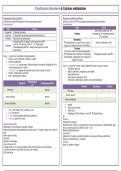
Parathyroid disorders & Calcium metabolism
Hypoparathyroidism Hyperparathyroidism
Definition too little PTH produced from the parathyroid gland Definition too much PTH is produced (stereotypically older females)
Classification Classification
Type Cause
Type Cause
80% solitary adenoma; 15%
Congenital DiGeorge syndrome
Primary hyperplasia; 4% multiple adenoma;
Acquired Complication of parathyroidectomy/thyroidectomy 1% carcinoma
Transient Neonates born prematurely Secondary
PseudohypoPTH targeted cells insensitive to PTH PTH hyperplasia as a result of low calcium, Vitamin D deficiency, CKD
Low IQ, short stature, short 4th + 5th metacarpals always in a setting of chronic renal failure
Inherited
PseudopseudohypoPTH similar phenotype but normal Tertiary
biochemical Occurs as a result of on-going hyperplasia
of PTH glands after correction of underlying Prolonged secondary hyperPTH
Signs + symptoms (secondary to hypocalcaemia) renal disorder, hyperplasia of all 4 glands is
Tetany, muscle twitching, cramping + spasm usually the cause
Perioral anaesthesia
Trousseau’s sign carpal spasm if brachial artery occluded by inflating BP cuff + Signs + symptoms ‘bones, stones, abdominal groans + psychic moans’
maintaining pressure > systolic Polydipsia, polyuria
Chovstek’s sign tapping over parotid causes facial muscles to twitch Peptic ulceration, constipation, pancreatitis
Chronic depression, cataracts Bone pain/fracture
ECG prolonged QT interval Renal stones, depression, HTN
Secondary: osteomalacia, rickets, renal osteodystrophy
PseudohypoP
HypoPTH PseudopseudoPTH
TH
Primary Secondary Tertiary
↓ ↑
PTH level Normal
PTH level ↑ ↑ ↑
↓ ↓ Serum calcium ↑ ↓ ↑
Serum calcium Normal
Serum phosphate ↓ ↑ ↓
↑ ↑
Serum phosphate Normal
Bloods
Urine calcium levels
Bloods FBC, U&Es, LFTs, creatinine, urea DEXA scan
ECG Arrhythmias Radiology: USS of kidneys + neck, XR, PTH gland biopsy
ECHO structural defects (DiGeorge syndrome) Mx
Radiology plain XR of hand Primary
Indications for surgery:
Hypercalcaemia Mx Elevated serum calcium > 1mg/dL above normal, Hypercalciuria, nephrolithiasis, age <
Rehydration w/ normal saline, typically 3-4L/day 50 yrs, neuromuscular Sx, DEXA (T score < -2.5)
Following rehydration bisphosphonates may be used 2-3 days to work; max. seen @ 7 Medical: Bisphosphonates
days Secondary
Other options include: Indications for surgery: persistent pruritus, bone pain, soft tissue calcification
Calcitonin Medical: Calcimimetics e.g. Cincalcet
Steroids in Sarcoidosis Tertiary
Hypocalcaemia Mx Allow 12 months to elapse
IV replacement IV calcium gluconate, 10ml of 10% solution over 10 minutes
IV calcium chloride is more likely to cause local irritation
ECG monitoring
Hypoparathyroidism Hyperparathyroidism
Definition too little PTH produced from the parathyroid gland Definition too much PTH is produced (stereotypically older females)
Classification Classification
Type Cause
Type Cause
80% solitary adenoma; 15%
Congenital DiGeorge syndrome
Primary hyperplasia; 4% multiple adenoma;
Acquired Complication of parathyroidectomy/thyroidectomy 1% carcinoma
Transient Neonates born prematurely Secondary
PseudohypoPTH targeted cells insensitive to PTH PTH hyperplasia as a result of low calcium, Vitamin D deficiency, CKD
Low IQ, short stature, short 4th + 5th metacarpals always in a setting of chronic renal failure
Inherited
PseudopseudohypoPTH similar phenotype but normal Tertiary
biochemical Occurs as a result of on-going hyperplasia
of PTH glands after correction of underlying Prolonged secondary hyperPTH
Signs + symptoms (secondary to hypocalcaemia) renal disorder, hyperplasia of all 4 glands is
Tetany, muscle twitching, cramping + spasm usually the cause
Perioral anaesthesia
Trousseau’s sign carpal spasm if brachial artery occluded by inflating BP cuff + Signs + symptoms ‘bones, stones, abdominal groans + psychic moans’
maintaining pressure > systolic Polydipsia, polyuria
Chovstek’s sign tapping over parotid causes facial muscles to twitch Peptic ulceration, constipation, pancreatitis
Chronic depression, cataracts Bone pain/fracture
ECG prolonged QT interval Renal stones, depression, HTN
Secondary: osteomalacia, rickets, renal osteodystrophy
PseudohypoP
HypoPTH PseudopseudoPTH
TH
Primary Secondary Tertiary
↓ ↑
PTH level Normal
PTH level ↑ ↑ ↑
↓ ↓ Serum calcium ↑ ↓ ↑
Serum calcium Normal
Serum phosphate ↓ ↑ ↓
↑ ↑
Serum phosphate Normal
Bloods
Urine calcium levels
Bloods FBC, U&Es, LFTs, creatinine, urea DEXA scan
ECG Arrhythmias Radiology: USS of kidneys + neck, XR, PTH gland biopsy
ECHO structural defects (DiGeorge syndrome) Mx
Radiology plain XR of hand Primary
Indications for surgery:
Hypercalcaemia Mx Elevated serum calcium > 1mg/dL above normal, Hypercalciuria, nephrolithiasis, age <
Rehydration w/ normal saline, typically 3-4L/day 50 yrs, neuromuscular Sx, DEXA (T score < -2.5)
Following rehydration bisphosphonates may be used 2-3 days to work; max. seen @ 7 Medical: Bisphosphonates
days Secondary
Other options include: Indications for surgery: persistent pruritus, bone pain, soft tissue calcification
Calcitonin Medical: Calcimimetics e.g. Cincalcet
Steroids in Sarcoidosis Tertiary
Hypocalcaemia Mx Allow 12 months to elapse
IV replacement IV calcium gluconate, 10ml of 10% solution over 10 minutes
IV calcium chloride is more likely to cause local irritation
ECG monitoring