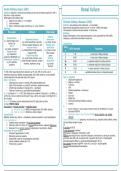
Acute Kidney Injury (AKI)
Definition reduction in renal function following an insult to the kidneys (rapid fall in GFR +
Renal failure
High Urea + High creatinine)
What happens when kidneys fail?
1. Reduced urine output = < 0.5 ml/kg/hr
2. Fluid overloaded
Chronic kidney disease (CKD)
3. Raise in molecules usually excreted e.g. K+, urea, creatinine Definition long-standing renal impairment + is irreversible
Aetiology Renal function progressively worsens w/ time w/o Rx ESKD (end-stage)
CKD presents as biochemical abnormalities clinical later
Pre-renal Intrinsic Post-renal Aetiology
Ureteric Diabetic nephropathy, chronic glomerulonephritis, chronic pyelonephritis, HTN, AKPD,
Hypovolaemia malignancy, anatomical abnormality of renal tract
Glomerular disease obstruction
e.g. haemorrhage, burns,
e.g. glomerulonephritis, vasculitis, e.g. stones, tumour
diuretic use Classification
immune complex disease e.g. SLE Bladder neck
Shock Stag
Vascular lesions obstruction
e.g. sepsis, cardiogenic GFR (ml/min) Features
Hypoperfusion
e.g. bilateral RAS, microangiopathy, e.g. stones, tumour, e
malignant HTN BPH, prostate
e.g. hepatorenal 1 > 90 + some sign of kidney damage
Tubulo-interstitial cancer
syndrome, NSAID/ACEi use 2 60-90 + some sign of kidney damage
e.g. acute tubular necrosis, acute Urethral
Oedematous conditions
tubule-interstitial nephritis, multiple obstruction 3a 45-59 + moderate reduction in kidney function
e.g. HF, nephrotic
myeloma, nephrotoxic drugs e.g. tumour,
syndrome 3b 30-44 + moderate reduction in kidney function
stricture
4 15-29 + severe reduction in kidney function
RF CKD, other organ failure/chronic disease (e.g. HF, liver, DM), Hx of AKI, use of 5 < 15 + established kidney failure dialysis/transplant
nephrotoxic drugs (e.g. NSAIDs, aminoglycosides, ACEi, ARB, diuretics), use of iodinated
contrast agents w/i the past week, Age ≥ 65, oliguria Signs + symptoms
Signs + symptoms Oliguria/anuria/polyuria
Oliguria/anuria, nausea + vomiting, HTN, abdominal/flank pain Nausea + vomiting
Signs of fluid overload: e.g. raise JVP, pulmonary, peripheral oedema Confusion
Arrhythmias (secondary to changes in K+ + acid-base) HTN
Features of uraemia (e.g. pericarditis/encephalopathy) Oedema (peripheral + pulmonary)
Ix GFR (urinalysis) + Bloods FBC, U&Es (High serum creatinine of 26mmol/l / > w/I 48hrs; a Fatigue
≥ 50% rise in serum creatinine w/i the past 7 days; a fall in urine output <0.5ml/kg/hr for > Itchy skin
6hrs in adults Weight loss
Renal USS No known cause for deterioration/risk of UT obstruction w/i 24hrs Kussmaul breathing (metabolic acidosis)
Mx Use of RIFLE criteria Anaemia
Fluid balance + maintain renal flow + medication review Ix
a. Should be stopped NSAIDs, aminoglycosides, ACEi, ARBs, diuretics Serum creatinine = not accurate of renal function due to difference in muscle
b. High risk of toxicity Metformin, Lithium, Digoxin Estimated GFR/GFR
Complications Modification of diet in Renal Disease (MDRD) Serum creatinine, age, gender,
Metabolic acidosis (e.g. High K+ + phosphate), pulmonary oedema give haemodialysis ethnicity
Rx for hyperkalaemia Factors that affect the result pregnancy, muscle mass (e.g. amputees, body builders), eating
1. Stabilise cardiac membrane IV calcium glucoronate red meat before sample is taken
2. Short term shift of K+ (EC IC) Insulin/dextrose infusion, nebulised Salbutamol Mx
3. Removal of K+ calcium resonium (orally/enema), loop diuretics, dialysis Rx acidosis w/ HCO3
Indications for acute dialysis Rx high phosphate w/ binders
Persistent hyperkalaemia (>7mM) HTN require 2 medication: Furosemide + ACEi
Refractory pulmonary oedema Anaemia reduced EpO levels, reduced Fe absorption, normochromic, normocytic anaemia,
Symptomatic uraemia: encephalopathy, pericarditis prominent when GFR <35, can lead to LVH target Hb 10-12 g/dL Erythropoietin
Severe metabolic acidosis (pH <7.2) Stimulating Agents (ESAs) e.g. Erythropoietin/Darbepoietin/ IV iron
Poisoning (e.g. aspirin) Bone disease secondary hyperPTH Low Vit D, Low Ca2+, high phosphate
Surgical haemodialysis/peritoneal dialysis
Definition reduction in renal function following an insult to the kidneys (rapid fall in GFR +
Renal failure
High Urea + High creatinine)
What happens when kidneys fail?
1. Reduced urine output = < 0.5 ml/kg/hr
2. Fluid overloaded
Chronic kidney disease (CKD)
3. Raise in molecules usually excreted e.g. K+, urea, creatinine Definition long-standing renal impairment + is irreversible
Aetiology Renal function progressively worsens w/ time w/o Rx ESKD (end-stage)
CKD presents as biochemical abnormalities clinical later
Pre-renal Intrinsic Post-renal Aetiology
Ureteric Diabetic nephropathy, chronic glomerulonephritis, chronic pyelonephritis, HTN, AKPD,
Hypovolaemia malignancy, anatomical abnormality of renal tract
Glomerular disease obstruction
e.g. haemorrhage, burns,
e.g. glomerulonephritis, vasculitis, e.g. stones, tumour
diuretic use Classification
immune complex disease e.g. SLE Bladder neck
Shock Stag
Vascular lesions obstruction
e.g. sepsis, cardiogenic GFR (ml/min) Features
Hypoperfusion
e.g. bilateral RAS, microangiopathy, e.g. stones, tumour, e
malignant HTN BPH, prostate
e.g. hepatorenal 1 > 90 + some sign of kidney damage
Tubulo-interstitial cancer
syndrome, NSAID/ACEi use 2 60-90 + some sign of kidney damage
e.g. acute tubular necrosis, acute Urethral
Oedematous conditions
tubule-interstitial nephritis, multiple obstruction 3a 45-59 + moderate reduction in kidney function
e.g. HF, nephrotic
myeloma, nephrotoxic drugs e.g. tumour,
syndrome 3b 30-44 + moderate reduction in kidney function
stricture
4 15-29 + severe reduction in kidney function
RF CKD, other organ failure/chronic disease (e.g. HF, liver, DM), Hx of AKI, use of 5 < 15 + established kidney failure dialysis/transplant
nephrotoxic drugs (e.g. NSAIDs, aminoglycosides, ACEi, ARB, diuretics), use of iodinated
contrast agents w/i the past week, Age ≥ 65, oliguria Signs + symptoms
Signs + symptoms Oliguria/anuria/polyuria
Oliguria/anuria, nausea + vomiting, HTN, abdominal/flank pain Nausea + vomiting
Signs of fluid overload: e.g. raise JVP, pulmonary, peripheral oedema Confusion
Arrhythmias (secondary to changes in K+ + acid-base) HTN
Features of uraemia (e.g. pericarditis/encephalopathy) Oedema (peripheral + pulmonary)
Ix GFR (urinalysis) + Bloods FBC, U&Es (High serum creatinine of 26mmol/l / > w/I 48hrs; a Fatigue
≥ 50% rise in serum creatinine w/i the past 7 days; a fall in urine output <0.5ml/kg/hr for > Itchy skin
6hrs in adults Weight loss
Renal USS No known cause for deterioration/risk of UT obstruction w/i 24hrs Kussmaul breathing (metabolic acidosis)
Mx Use of RIFLE criteria Anaemia
Fluid balance + maintain renal flow + medication review Ix
a. Should be stopped NSAIDs, aminoglycosides, ACEi, ARBs, diuretics Serum creatinine = not accurate of renal function due to difference in muscle
b. High risk of toxicity Metformin, Lithium, Digoxin Estimated GFR/GFR
Complications Modification of diet in Renal Disease (MDRD) Serum creatinine, age, gender,
Metabolic acidosis (e.g. High K+ + phosphate), pulmonary oedema give haemodialysis ethnicity
Rx for hyperkalaemia Factors that affect the result pregnancy, muscle mass (e.g. amputees, body builders), eating
1. Stabilise cardiac membrane IV calcium glucoronate red meat before sample is taken
2. Short term shift of K+ (EC IC) Insulin/dextrose infusion, nebulised Salbutamol Mx
3. Removal of K+ calcium resonium (orally/enema), loop diuretics, dialysis Rx acidosis w/ HCO3
Indications for acute dialysis Rx high phosphate w/ binders
Persistent hyperkalaemia (>7mM) HTN require 2 medication: Furosemide + ACEi
Refractory pulmonary oedema Anaemia reduced EpO levels, reduced Fe absorption, normochromic, normocytic anaemia,
Symptomatic uraemia: encephalopathy, pericarditis prominent when GFR <35, can lead to LVH target Hb 10-12 g/dL Erythropoietin
Severe metabolic acidosis (pH <7.2) Stimulating Agents (ESAs) e.g. Erythropoietin/Darbepoietin/ IV iron
Poisoning (e.g. aspirin) Bone disease secondary hyperPTH Low Vit D, Low Ca2+, high phosphate
Surgical haemodialysis/peritoneal dialysis