Lecture 2
Neural Circuits
The importance of understanding principles of circuit organisation and the
ingredients of circuit function
In order to understand how behaviour is generated by the nervous system, we
need to understand how neural circuits work
Ingredients of circuit function
1. Electrical activity of individual neurons
2. Synaptic connections
3. Intrinsic/endogenous properties
4. Simple ‘building blocks’ of larger circuits based on different types of
synaptic connectivity
5. Different postsynaptic receptor types in different neurons for the same
neurotransmitter
Electrical activity of individual neurons
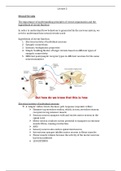
A ‘simple’ reflex circuit, the knee-jerk response (myotatic reflex)
Hammer tap stretches tendon, which, in turn, stretches sensory
receptors in leg extensor muscle
Sensory neuron synapses with and excites motor neuron in the
spinal cord.
Motor neuron conducts action potential to synapses on extensor
muscle fibres, causing contraction.
AND
Sensory neuron also excites spinal interneuron
Interneuron synapse inhibits motor neuron to flexor muscles
Flexor muscle relaxes because the activity of the motor neurons
has been inhibited
LEG EXTENDS
Neural Circuits
The importance of understanding principles of circuit organisation and the
ingredients of circuit function
In order to understand how behaviour is generated by the nervous system, we
need to understand how neural circuits work
Ingredients of circuit function
1. Electrical activity of individual neurons
2. Synaptic connections
3. Intrinsic/endogenous properties
4. Simple ‘building blocks’ of larger circuits based on different types of
synaptic connectivity
5. Different postsynaptic receptor types in different neurons for the same
neurotransmitter
Electrical activity of individual neurons
A ‘simple’ reflex circuit, the knee-jerk response (myotatic reflex)
Hammer tap stretches tendon, which, in turn, stretches sensory
receptors in leg extensor muscle
Sensory neuron synapses with and excites motor neuron in the
spinal cord.
Motor neuron conducts action potential to synapses on extensor
muscle fibres, causing contraction.
AND
Sensory neuron also excites spinal interneuron
Interneuron synapse inhibits motor neuron to flexor muscles
Flexor muscle relaxes because the activity of the motor neurons
has been inhibited
LEG EXTENDS