Strategic Innovation Management
I. Introduction
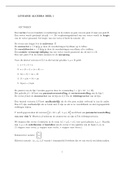
Innovation = theoretical conception + technical invention + commercial exploitation
- Innovation is bringing ideas to the market and being successful in that
Example of disruptive product innovation:
smartphone, it disrupted the business so new business
models, commerce etc on the market
Process innovation: eg Fordism, the production of cars
completely reorganised allowing him to produce cars
at a relative low cost as a result also the middle class
could afford cars; eg 3D printing; eg digital twin
technology; the way you organise the processes
Organisational innovation: traditional is functionally organised departments but innovation means
that eg engineers can come from all different departments
Doing, using and interacting (DUI) mode of innovation
- In low and medium technology (LMT) intensive industries the traditional science and
technology model of innovation is not applicable and cannot explain continued product and
process innovations
- In LMT environments innovation can be explained through learning by doing and the use of
networks of interactions and extensive tacit knowledge
Value of debt (VOD)
- Creating a prototype
- Bringing it to the market (VOD): between having a successful technology and bringing it to
the market successfully, difficult bcs you need a lot of money to do so
Study of innovation
Innovation process: the managing of the innovation in an
organisation; need to see it in the context of an organisation;
external linkages eg collaboration w other firms etc (4 steps)
- Search
- Select
- Implement
- Capture
Models of innovation
Science and technology base: creation of new knowledge, dominated by universities and large
science-based organisations; where ideas can come from
Technological developments: technology development, dominated by organisations;
turning/applying the ideas into things that the market needs
, Needs of the market: consumers express their needs and wants through the consumption of
products
Open innovation: the use of purposive inflows and outflows of knowledge to accelerate internal
innovation, and expand the markets for external use of innovation; ideas should not be necessarily
your own, can also be from outside of your organisation so also setting in place processes etc to
closely monitor ideas outside of organisation; some of the ideas you don’t use, you can sell them to
others so that others can also take advantage of that; during the whole process, ideas come in and
go out; mainly from business perspective
- Eg Microsoft: have licences and copyrights for software but at some point china noticed that
ppl were using them without paying, but Microsoft didn’t stop that bcs then maybe other
companies would make better software
User innovation: models of innovation where economically important innovations are developed by
users and other agents who divide up the tasks and cost of innovation development and then freely
reveal their results; starting from customer perspective, customer saying that they have a specific
need so they will come up with a model that fits their needs and in the end the business picks up on
these ideas and produces advanced solutions
- Distributed innovation: contracting the producer model of innovation to the openly-shared
user innovation model
- More attention to bottom-up grassroots communities which focus on the sharing of
knowledge for non-profit purposes
- Contrasts the revenue-generating focus and the firm-centric perspective of open innovation
- Users: firms or individuals that expect to benefit from using a product or a service; users who
contribute to the development of the innovative product or service (users-innovators) will
adapt the innovation to their specific needs; they receive greater utility from the use of the
innovation than free-riders
Innovation as a management process
Cycle of change: the entrepreneurship is often the person that believes in ad idea and then pushes it
forward, sb w vision on that specific idea
I. Introduction
Innovation = theoretical conception + technical invention + commercial exploitation
- Innovation is bringing ideas to the market and being successful in that
Example of disruptive product innovation:
smartphone, it disrupted the business so new business
models, commerce etc on the market
Process innovation: eg Fordism, the production of cars
completely reorganised allowing him to produce cars
at a relative low cost as a result also the middle class
could afford cars; eg 3D printing; eg digital twin
technology; the way you organise the processes
Organisational innovation: traditional is functionally organised departments but innovation means
that eg engineers can come from all different departments
Doing, using and interacting (DUI) mode of innovation
- In low and medium technology (LMT) intensive industries the traditional science and
technology model of innovation is not applicable and cannot explain continued product and
process innovations
- In LMT environments innovation can be explained through learning by doing and the use of
networks of interactions and extensive tacit knowledge
Value of debt (VOD)
- Creating a prototype
- Bringing it to the market (VOD): between having a successful technology and bringing it to
the market successfully, difficult bcs you need a lot of money to do so
Study of innovation
Innovation process: the managing of the innovation in an
organisation; need to see it in the context of an organisation;
external linkages eg collaboration w other firms etc (4 steps)
- Search
- Select
- Implement
- Capture
Models of innovation
Science and technology base: creation of new knowledge, dominated by universities and large
science-based organisations; where ideas can come from
Technological developments: technology development, dominated by organisations;
turning/applying the ideas into things that the market needs
, Needs of the market: consumers express their needs and wants through the consumption of
products
Open innovation: the use of purposive inflows and outflows of knowledge to accelerate internal
innovation, and expand the markets for external use of innovation; ideas should not be necessarily
your own, can also be from outside of your organisation so also setting in place processes etc to
closely monitor ideas outside of organisation; some of the ideas you don’t use, you can sell them to
others so that others can also take advantage of that; during the whole process, ideas come in and
go out; mainly from business perspective
- Eg Microsoft: have licences and copyrights for software but at some point china noticed that
ppl were using them without paying, but Microsoft didn’t stop that bcs then maybe other
companies would make better software
User innovation: models of innovation where economically important innovations are developed by
users and other agents who divide up the tasks and cost of innovation development and then freely
reveal their results; starting from customer perspective, customer saying that they have a specific
need so they will come up with a model that fits their needs and in the end the business picks up on
these ideas and produces advanced solutions
- Distributed innovation: contracting the producer model of innovation to the openly-shared
user innovation model
- More attention to bottom-up grassroots communities which focus on the sharing of
knowledge for non-profit purposes
- Contrasts the revenue-generating focus and the firm-centric perspective of open innovation
- Users: firms or individuals that expect to benefit from using a product or a service; users who
contribute to the development of the innovative product or service (users-innovators) will
adapt the innovation to their specific needs; they receive greater utility from the use of the
innovation than free-riders
Innovation as a management process
Cycle of change: the entrepreneurship is often the person that believes in ad idea and then pushes it
forward, sb w vision on that specific idea