AC1.3 Describe the models of Criminal Justice
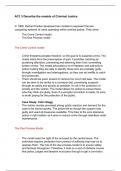
In 1968, Herbert Packer developed two models to represent the two
competing systems of value operating within criminal justice. They were:
- The Crime Control model
- The Due Process model
The Crime Control model:
- Crime threatens peoples freedom, so the goal is to suppress crime. The
model starts from the presumption of guilt. It priorities catching ad
punishing offenders, preventing and deterring them from committing
further crimes. The model advocates a lot of freedom and authority to
police trusting they are able to identify those who are probably guilty
through investigation and interrogations, so they can act swiftly to catch
and prosecute.
- There should be given powers to remove too much red tape. The model
can be seen to be similar to a conveyer belt, processing suspects
through as easily and quickly as possible. It’s all in the protection of
society and the victims. The model allows for police to pursue those
who they think are guilty. Even if a wrongful conviction is made, its price
is worth paying for the protection of the public.
Case Study: Colin Stagg
- The victims murder provoked strong public reaction and demand for the
case to be solved quickly. The police felt as though the suspect was
guilty and used all measures available. This links to the zero tolerance
police in right realism as it aims to reduce crime through relentless order
maintenance.
The Due Process Model
- The model sees the right of the accused as the central issue. The
individual requires protection from powers of authority that may try to
oppress them. The role of the due process model is to ensure safety
and fairness throughout. Therefore, it sets us a sort of obstacle course
that police, judges and lawyers must pass through to get a conviction.
In 1968, Herbert Packer developed two models to represent the two
competing systems of value operating within criminal justice. They were:
- The Crime Control model
- The Due Process model
The Crime Control model:
- Crime threatens peoples freedom, so the goal is to suppress crime. The
model starts from the presumption of guilt. It priorities catching ad
punishing offenders, preventing and deterring them from committing
further crimes. The model advocates a lot of freedom and authority to
police trusting they are able to identify those who are probably guilty
through investigation and interrogations, so they can act swiftly to catch
and prosecute.
- There should be given powers to remove too much red tape. The model
can be seen to be similar to a conveyer belt, processing suspects
through as easily and quickly as possible. It’s all in the protection of
society and the victims. The model allows for police to pursue those
who they think are guilty. Even if a wrongful conviction is made, its price
is worth paying for the protection of the public.
Case Study: Colin Stagg
- The victims murder provoked strong public reaction and demand for the
case to be solved quickly. The police felt as though the suspect was
guilty and used all measures available. This links to the zero tolerance
police in right realism as it aims to reduce crime through relentless order
maintenance.
The Due Process Model
- The model sees the right of the accused as the central issue. The
individual requires protection from powers of authority that may try to
oppress them. The role of the due process model is to ensure safety
and fairness throughout. Therefore, it sets us a sort of obstacle course
that police, judges and lawyers must pass through to get a conviction.