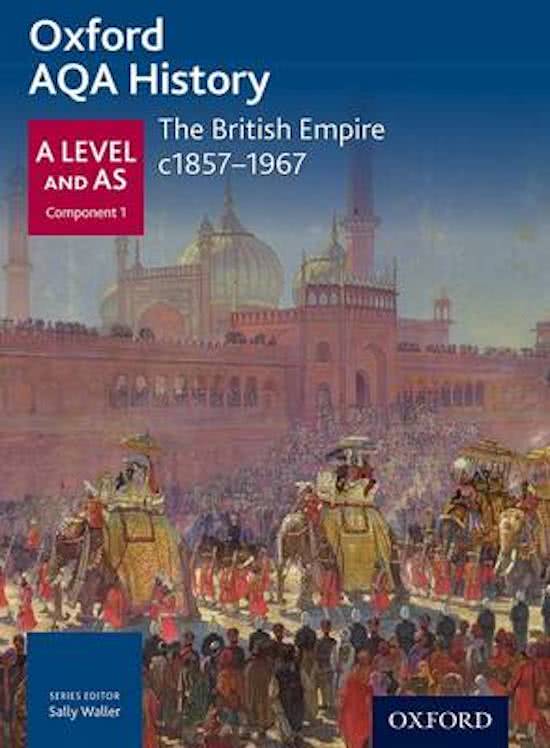
Section 2 Imperial Consolidation and Liberal Rule c1890-1914 Chapter 8 Imperial and Colonial Policy
Chapter 8: Imperial and Colonial Policy
The Colonial Office
Why did the Colonial Office have difficulty keeping full control of the Empire?
• The office's resources were tiny: about 30 senior staff by 1914, and they were expected to control a vast area
• Free trade, however, lessened their burden because is led to them abandoning the attempt to control colonial
economies
Why did the governors (men on the spot) have to be fairly careful but still exercised considerable
power?
• Governors could be rebuked or dismissed if they exceeded their powers
• Governors requests for new laws, more money, fresh troops of frontier advance could be approved, but it was
more likely the be rejected
• Governors with friends in high places were hard to control and still harder to remove
• It was the colonial office’s main concern to select the governors, draw up their instructions and watch them
carefully in case of infringements
What other department had an influence on colonial policy?
• The Colonial office had overall responsibility for the Empire
• The Foreign office’s responsibilities grew as new African protectorates were placed under its jurisdiction
• The India office also expanded
• The Admiralty and the War Office were responsible for external defence
• The Treasury controlled the finances
• If there were disputes between the departments, the cabinet had to be consulted, making decision making
difficult or impossible
• This meant that governors were generally left to their discretion
Administration of India
How was the Raj administered?
• British officials appointed in London enjoyed unrestrained power – until 1909 when an element of
representative government was introduced at a provincial level
• In charge was the Viceroy, backed by the almost all white, Oxbridge, Indian Civil Service. It was their job to
ensure the regime was secure, the natives were acquiescent and India was profitable
• There were strict limitations on the size of the Civil Service because of the costly pay and pensions, so there
were often no more than 3 or 4 officers per district
• Therefore, rule required the collaboration of the native – even more so with the expansion of railways and the
spread of education which had increase English literacy rates
• British intervened in economic and social development both physically as cities grew and in terms of raising
more money through taxation
• The India Civil Service used the policy of ‘divide and rule’ by emphasising the divisions of race, language,
religion, caste, occupation, and region and asserted Britain’s moral authority to bring enlightened reform
• They acknowledged some degree of educated Indian representatives of provincial councils in reform in 1892
and 1909 – this further exploited the division between the educated Indian and the illiterate rural masses to
create an ‘Anglo-Indian’ administrative elite. Many educated Indians still saw British rule as the best route to
the future despite some strings of nationalism emerging
Explain how Viceroy Curzon (1899-1905) introduced reforms to respond to Indian demands
• He was mindful of the growing criticisms of British rule which emanated from professional ‘middle-class’
Indians and their representative body, the Indian National Congress which had been established in 1885 to
campaign for home rule
Chapter 8: Imperial and Colonial Policy
The Colonial Office
Why did the Colonial Office have difficulty keeping full control of the Empire?
• The office's resources were tiny: about 30 senior staff by 1914, and they were expected to control a vast area
• Free trade, however, lessened their burden because is led to them abandoning the attempt to control colonial
economies
Why did the governors (men on the spot) have to be fairly careful but still exercised considerable
power?
• Governors could be rebuked or dismissed if they exceeded their powers
• Governors requests for new laws, more money, fresh troops of frontier advance could be approved, but it was
more likely the be rejected
• Governors with friends in high places were hard to control and still harder to remove
• It was the colonial office’s main concern to select the governors, draw up their instructions and watch them
carefully in case of infringements
What other department had an influence on colonial policy?
• The Colonial office had overall responsibility for the Empire
• The Foreign office’s responsibilities grew as new African protectorates were placed under its jurisdiction
• The India office also expanded
• The Admiralty and the War Office were responsible for external defence
• The Treasury controlled the finances
• If there were disputes between the departments, the cabinet had to be consulted, making decision making
difficult or impossible
• This meant that governors were generally left to their discretion
Administration of India
How was the Raj administered?
• British officials appointed in London enjoyed unrestrained power – until 1909 when an element of
representative government was introduced at a provincial level
• In charge was the Viceroy, backed by the almost all white, Oxbridge, Indian Civil Service. It was their job to
ensure the regime was secure, the natives were acquiescent and India was profitable
• There were strict limitations on the size of the Civil Service because of the costly pay and pensions, so there
were often no more than 3 or 4 officers per district
• Therefore, rule required the collaboration of the native – even more so with the expansion of railways and the
spread of education which had increase English literacy rates
• British intervened in economic and social development both physically as cities grew and in terms of raising
more money through taxation
• The India Civil Service used the policy of ‘divide and rule’ by emphasising the divisions of race, language,
religion, caste, occupation, and region and asserted Britain’s moral authority to bring enlightened reform
• They acknowledged some degree of educated Indian representatives of provincial councils in reform in 1892
and 1909 – this further exploited the division between the educated Indian and the illiterate rural masses to
create an ‘Anglo-Indian’ administrative elite. Many educated Indians still saw British rule as the best route to
the future despite some strings of nationalism emerging
Explain how Viceroy Curzon (1899-1905) introduced reforms to respond to Indian demands
• He was mindful of the growing criticisms of British rule which emanated from professional ‘middle-class’
Indians and their representative body, the Indian National Congress which had been established in 1885 to
campaign for home rule