Rossetti – Goblin Market
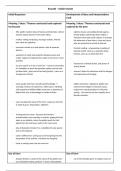
Initial Responses Development of ideas and interpretations
(red)
Meaning / Ideas / Themes constructed and explored Meaning / Ideas / Themes constructed and
by the poet explored by the poet
- title- goblin market- ideas of fantasy and fairytales- able to - explores issues surrounding female agency,
subvert taboos (Grimm’s Fairy Tales 1812) female bodies and female desire within a
Victorian moral and social context. It contrasts
- market- selling and buying, marriage markets, Marxist the behaviour of two sisters, Lizzie and Laura,
lens- ideas of capitalism who are presented as a kind of split self
- economic-market as a male sphere- idea of separate - feminist reading - empowering rereading of
spheres fairytale motifs- Lizzie as a powerful active
heroine, Laura as an alternative Eve
- seduction of maids and seduction between poem and
reader- begins to implicate the reader in the story’s moral -
question
- importance of female bonds, and power of
- is Laura raped? or is she a new Eve? → Laura is aware that sisterly bonds
it is forbidden to leave the domestic sphere and eat fruit
yet does both - gives part of her body (purity) - Laura as a - women’s desire for adventure and the dangers
transgressive female accompanying such longing
- -
- Lizzie speaks only from second-hand knowledge → - Gilbert and Gubar- allegorical- goblin men
warnings not born of experience, whilst Laura- vibrating represent the danger to innocent young
with experience (William Blake Innocence vs Experience)- virgins from sexual predators in Victorian
biblical link- tree of knowledge in Garden of Eden society - ‘one she has lost her virginity she is
literally valueless’
-
- Laura has kept the stone of the fruit- crying over the fruit
to make it grow- desperation, addiction
-
- Turning point for Lizzie - becomes the heroine -
transformation from passivity to activity- getting the fruit
again as an antidote- when the goblins push the fruit
against her skin and Laura sucks it off- saves Laura
- idea of being the trickster hro- established in epic poems
such as the Odyssey
- Lizzie’s selflessness- saving Laura and not giving into the
temptation of the Goblins- maintains her integirity
- Lizzie as saving Laura from her own sins
Use of form Use of form
- dactylic dimeter is used for the voices of the goblin men- - use of the fairytale genre to explore issues of
use of feminine rhyme, plosives → sense of incantation
, power, desire and social mobility
- narrative poem
Use of structural devices (include key terms) Use of structural devices
- opening list- heterglossia- Goblin’s voices - most written in loose iambic tetrameter -
numerous variations throughout the poem
- long sentences, staccato rhythm, intensely visual, dividing
a single though between two lines, forces the reader to - Lizzie disrupts the beat with ‘No, no, no’ (64)-
hurry voraciously‘Come buy our orchard fruits…’ implication of danger
- feminine rhyme ‘cherries’/ ‘raspberries’- playful, - spondees (stanza 15) ‘fetched honey’ ‘brought
otherworldly water’ ‘sat down’- verbally indicate how the
illness is affecting Laura- a stiffness
- enjambement ‘You cannot think what figs/ My teeth have
met’- anticipation followed by satisfaction
- - irregular yet insistent rhyme - numerous
couplets (rushed and breathless)
- Jeanie’s story- moral warning, an example of a fallen
woman → structurally- Laura’s story mirrors that of - framing the goblin’s cry using couplets and
Jeanie’s but has a different ending- shows the power of triplets - emphasises its speed, seems
sisterhood, Lizzie saves Laura (allows for her resurrection - overwhelming
through a Christian lens?)
- Sisterhood- use of anaphora ‘Like two’ (anaphoric lines-
shows connection) - omniscient third person narrator - describes
the goblin market objectively, leaves it to
- Aphorism- ‘for there is no friend like a sister’ followed by a reader to make a moral judgement
litany of good qualities- sisterhood
- BUT- occasional break in objective tone -
- FREYTAG’S PYRAMID- exposition, climax, denoument- Lizzie’s advice as ‘wise’, Laura’s silence as
normality is restored at the end of the poem, fairy-tale ‘sullen, Laura a ‘fool’ for choosing to eat the
like ending- hair returns to youthful glow → return to fruit
status quo, being wives and mothers, return to the
domestic sphere- fallen woman has survived
Use of language features (include key terms) Use of language features
- ‘maids’- virgin’s= tempted, loss of purity and innocence - ‘She heard a voice like voices of doves/ Cooing
that is valuable to Victorian society all together’ (77-78)- doves represent
- ‘all ripe together’- suggests that the fruit is unnatural → reconciliation and peace → tricked by Goblin
danger/sex?
men into associating their cry with doves-
- ‘sweet to tongue and sound to eye’- Laura and Lizzie
Laura fails to recognise the danger of their
entering a liminal space- sensous
- opening litany- aural pleasure, appeals to the senses, presents
colour (pre-raphaelite - ‘jewel-like’)
- language of goblins, litany of enchanted fruits- sensual
and indulgent
- use of language- aural and oral in nature ‘plump unpecked - Kathryn Burlinson - Lizzie’s self sacrifice -
cherries’- plosives- almost mimetic of consuming the fruit equates her with Christ ‘When Laura is reborn,
- goblins compared to animals to establish their amorality her narrative is transformed into an orally
- transmitted myth of sisterhood, presented less
- presentation of Laura and Lizzie- idea of split selves- as a cautionary tale than as a story of female
‘golden head’ ‘glossy head’- female beauty as a currency heroism’ -Laura as a feminist hero
- ‘Laura stretched her gleaming neck’ ‘she turned home
alone’- verb ‘stretched’ alludes to curiosity- Laura as a - Gilbert and Gubar- Laura’s return to
Initial Responses Development of ideas and interpretations
(red)
Meaning / Ideas / Themes constructed and explored Meaning / Ideas / Themes constructed and
by the poet explored by the poet
- title- goblin market- ideas of fantasy and fairytales- able to - explores issues surrounding female agency,
subvert taboos (Grimm’s Fairy Tales 1812) female bodies and female desire within a
Victorian moral and social context. It contrasts
- market- selling and buying, marriage markets, Marxist the behaviour of two sisters, Lizzie and Laura,
lens- ideas of capitalism who are presented as a kind of split self
- economic-market as a male sphere- idea of separate - feminist reading - empowering rereading of
spheres fairytale motifs- Lizzie as a powerful active
heroine, Laura as an alternative Eve
- seduction of maids and seduction between poem and
reader- begins to implicate the reader in the story’s moral -
question
- importance of female bonds, and power of
- is Laura raped? or is she a new Eve? → Laura is aware that sisterly bonds
it is forbidden to leave the domestic sphere and eat fruit
yet does both - gives part of her body (purity) - Laura as a - women’s desire for adventure and the dangers
transgressive female accompanying such longing
- -
- Lizzie speaks only from second-hand knowledge → - Gilbert and Gubar- allegorical- goblin men
warnings not born of experience, whilst Laura- vibrating represent the danger to innocent young
with experience (William Blake Innocence vs Experience)- virgins from sexual predators in Victorian
biblical link- tree of knowledge in Garden of Eden society - ‘one she has lost her virginity she is
literally valueless’
-
- Laura has kept the stone of the fruit- crying over the fruit
to make it grow- desperation, addiction
-
- Turning point for Lizzie - becomes the heroine -
transformation from passivity to activity- getting the fruit
again as an antidote- when the goblins push the fruit
against her skin and Laura sucks it off- saves Laura
- idea of being the trickster hro- established in epic poems
such as the Odyssey
- Lizzie’s selflessness- saving Laura and not giving into the
temptation of the Goblins- maintains her integirity
- Lizzie as saving Laura from her own sins
Use of form Use of form
- dactylic dimeter is used for the voices of the goblin men- - use of the fairytale genre to explore issues of
use of feminine rhyme, plosives → sense of incantation
, power, desire and social mobility
- narrative poem
Use of structural devices (include key terms) Use of structural devices
- opening list- heterglossia- Goblin’s voices - most written in loose iambic tetrameter -
numerous variations throughout the poem
- long sentences, staccato rhythm, intensely visual, dividing
a single though between two lines, forces the reader to - Lizzie disrupts the beat with ‘No, no, no’ (64)-
hurry voraciously‘Come buy our orchard fruits…’ implication of danger
- feminine rhyme ‘cherries’/ ‘raspberries’- playful, - spondees (stanza 15) ‘fetched honey’ ‘brought
otherworldly water’ ‘sat down’- verbally indicate how the
illness is affecting Laura- a stiffness
- enjambement ‘You cannot think what figs/ My teeth have
met’- anticipation followed by satisfaction
- - irregular yet insistent rhyme - numerous
couplets (rushed and breathless)
- Jeanie’s story- moral warning, an example of a fallen
woman → structurally- Laura’s story mirrors that of - framing the goblin’s cry using couplets and
Jeanie’s but has a different ending- shows the power of triplets - emphasises its speed, seems
sisterhood, Lizzie saves Laura (allows for her resurrection - overwhelming
through a Christian lens?)
- Sisterhood- use of anaphora ‘Like two’ (anaphoric lines-
shows connection) - omniscient third person narrator - describes
the goblin market objectively, leaves it to
- Aphorism- ‘for there is no friend like a sister’ followed by a reader to make a moral judgement
litany of good qualities- sisterhood
- BUT- occasional break in objective tone -
- FREYTAG’S PYRAMID- exposition, climax, denoument- Lizzie’s advice as ‘wise’, Laura’s silence as
normality is restored at the end of the poem, fairy-tale ‘sullen, Laura a ‘fool’ for choosing to eat the
like ending- hair returns to youthful glow → return to fruit
status quo, being wives and mothers, return to the
domestic sphere- fallen woman has survived
Use of language features (include key terms) Use of language features
- ‘maids’- virgin’s= tempted, loss of purity and innocence - ‘She heard a voice like voices of doves/ Cooing
that is valuable to Victorian society all together’ (77-78)- doves represent
- ‘all ripe together’- suggests that the fruit is unnatural → reconciliation and peace → tricked by Goblin
danger/sex?
men into associating their cry with doves-
- ‘sweet to tongue and sound to eye’- Laura and Lizzie
Laura fails to recognise the danger of their
entering a liminal space- sensous
- opening litany- aural pleasure, appeals to the senses, presents
colour (pre-raphaelite - ‘jewel-like’)
- language of goblins, litany of enchanted fruits- sensual
and indulgent
- use of language- aural and oral in nature ‘plump unpecked - Kathryn Burlinson - Lizzie’s self sacrifice -
cherries’- plosives- almost mimetic of consuming the fruit equates her with Christ ‘When Laura is reborn,
- goblins compared to animals to establish their amorality her narrative is transformed into an orally
- transmitted myth of sisterhood, presented less
- presentation of Laura and Lizzie- idea of split selves- as a cautionary tale than as a story of female
‘golden head’ ‘glossy head’- female beauty as a currency heroism’ -Laura as a feminist hero
- ‘Laura stretched her gleaming neck’ ‘she turned home
alone’- verb ‘stretched’ alludes to curiosity- Laura as a - Gilbert and Gubar- Laura’s return to