Plant Tropisms
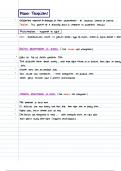
organisms respond tochangesintheir environment to increase chanceof survival
Tropism The growth of a floweringplantin response to awediond snnulus
Phototropism response to light
IAA Indoleacetic acid growthfactor typeofauxin madein hpofshoots root
positive phototropism in shoots IAA causes cell elongation
Cells in tip of shootproduce IAA
IAA diffusesdownshootevenly andthenlightcauses it to diffusefromlight toshady
side
Greater conc IAA onshaded side
IAA causes cell elonsation moreelongation onshaded side
shoot grows towards light positivephototropism
Negative phototropism in roots IAAinhibits cellelongation
IAA produced in tipof root
It diffuses into rootevenly andthendiff fromlightside toshadyside
HigherconeIAAinshadedside of root
IAAinhibitscellelongation in roots cellselongatemore on lightside
root grows awayfromlight negativephototropism
, againstgravity
y
Negative Gravotropism in shoots IAA causes cell elongation
cells in tip of shoot produce IAA
IAA diffuserintoshootdeny thengravitycauses diffusiontolowerside
HigherconeIAAon lowerside
IAA causes cen elongation morecellelongation onlower side
shootgrowsupwards negativegravonopism
Positive gravonopism in roots IAA inhibits cell elongation
Cells in lipof root produce IAA
IAA diffuses intorootevenly and thendiffuses to lower side due to gravity
Higher cone IAA on lowerside of root
IAAinhibits cell elongation less onlowerside more onupper side
rootgrowsdownwards positivegravowopism
, Simple responses
Reflex are
Importance advantages
Only 3 neurons rapid
innate not learnt
protects against damage totissues helps
escape from predators
Involuntary
ater
rear
Iigsopogy
Effector
muscleou sad
intermediate
steps
Receptordetectsstimulus
Receptorsends electricalimpulses to spendcord ens via sensory neuron
impulse moves fromsensory synapse intermediates synapses motor
Impulse moves to effector through motor neuron
effectorbringsaboutresponse
, In's reflex
circular
antagonistic
radial
Bright Light pupilconstricts
circular muscles contract
radid musclesrelax
Dimlight pupil dilates
Ciraulo muscles relax
radiomuscles contract
organisms respond tochangesintheir environment to increase chanceof survival
Tropism The growth of a floweringplantin response to awediond snnulus
Phototropism response to light
IAA Indoleacetic acid growthfactor typeofauxin madein hpofshoots root
positive phototropism in shoots IAA causes cell elongation
Cells in tip of shootproduce IAA
IAA diffusesdownshootevenly andthenlightcauses it to diffusefromlight toshady
side
Greater conc IAA onshaded side
IAA causes cell elonsation moreelongation onshaded side
shoot grows towards light positivephototropism
Negative phototropism in roots IAAinhibits cellelongation
IAA produced in tipof root
It diffuses into rootevenly andthendiff fromlightside toshadyside
HigherconeIAAinshadedside of root
IAAinhibitscellelongation in roots cellselongatemore on lightside
root grows awayfromlight negativephototropism
, againstgravity
y
Negative Gravotropism in shoots IAA causes cell elongation
cells in tip of shoot produce IAA
IAA diffuserintoshootdeny thengravitycauses diffusiontolowerside
HigherconeIAAon lowerside
IAA causes cen elongation morecellelongation onlower side
shootgrowsupwards negativegravonopism
Positive gravonopism in roots IAA inhibits cell elongation
Cells in lipof root produce IAA
IAA diffuses intorootevenly and thendiffuses to lower side due to gravity
Higher cone IAA on lowerside of root
IAAinhibits cell elongation less onlowerside more onupper side
rootgrowsdownwards positivegravowopism
, Simple responses
Reflex are
Importance advantages
Only 3 neurons rapid
innate not learnt
protects against damage totissues helps
escape from predators
Involuntary
ater
rear
Iigsopogy
Effector
muscleou sad
intermediate
steps
Receptordetectsstimulus
Receptorsends electricalimpulses to spendcord ens via sensory neuron
impulse moves fromsensory synapse intermediates synapses motor
Impulse moves to effector through motor neuron
effectorbringsaboutresponse
, In's reflex
circular
antagonistic
radial
Bright Light pupilconstricts
circular muscles contract
radid musclesrelax
Dimlight pupil dilates
Ciraulo muscles relax
radiomuscles contract