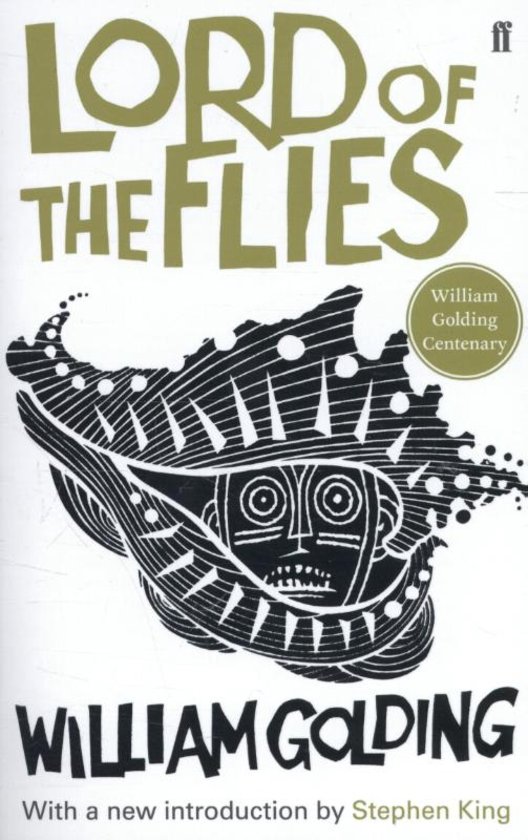
With reference to how Golding presents “the beast” in “Lord of the Flies”, show
how far you agree with the idea that it’s “just us”.
William Golding published “Lord of the Flies” after witnessing two world
wars and seeing “humanity fighting itself”. He portrays this violence in his
novel through the symbol of the beast. Throughout “Lord of the Flies”, Golding
makes it undeniably obvious that the beast is merely a representation of the
violence and evil that already resides in humanity’s heart, and that it is internal
flaws, rather than external threats like a murderous beast, that pose the
greatest danger to the boys on the island e the human race by extension.
From early on in the novel, the boys exhibit animalistic tendencies.
Hunting, Jack is described as “dog-like… less a hunter than a furtive thing”.
Golding believed that humanity’s violence sprang from its primitive nature. He
communicates his belief in the novel by comparing the boys to less intelligent
creatures, such as dogs and cats. The simile dehumanises Jack, causing the
reader to view him as a wild creature instead of a boy. In this way, Golding
shapes an image of Jack and the other boys that is closer to the animalistic
beast making it simple for the reader to recognise their shared characteristics
and realise that the beast was only humanity all along.
Golding presents the beast as the “Lord of the Flies”, a decapitated pig’s
head symbolic of Beelzebub, which has several things in common with the
boys. Speaking to Simon, the pig asks “I’m the reason it’s no go?”. The poor
grammar conveys a type of slang like that used by young boys at the time of
the novel’ publication. By choosing to have the beast speak as the boys do,
Golding implies that they are one and the same.
The beast is a symbol of evil and iniquity. Golding displays this infection
inside humanity through the corpse of the airman, referring to him in “the
beast had teeth… and big black eyes”. The colour black has negative
connotations of sin and evil. The alliterative phrase expresses the airman’s
decaying corpse, which symbolises the corruption and immorality of mankind.
The beast embodies this immorality, proving that it exists within man.
, It’s not only the boys who display this immorality, as even the allegedly
civilised outside world is full of primitive violence. Golding signifies this in the
quotation “stark naked, save for paint and a belt, was Jack”. The adjective
“naked” symbolises how Jack has cast aside all tokens of civilisation except
one- a knife belt which represents violence. From this the reader can infer that
the outside world, the origin of the knife, is as infected with brutality as the
boys on the island. The airman and the navy man who appears at the novel’s
conclusion represent the war raging in the adult world, establishing the island
as a microcosm and clarifying that humanity is the problem behind all of the
world’s evil, rather than any beast or island.
This isn’t limited to the visibly evil or immoral, as Golding indicates that
even the allegedly fair are subject to the inherent cruelty of humanity. Ralph,
presented as the leader for civil values, found that “the desire to squeeze and
hurt was overwhelming” when faced with attacking another boy. The noun
“desire”, supported by the adjective “overwhelming”, highlights how Ralph too
has primal impulses. William Golding deduced that humanity is a crude
species, and he shares this concept with the reader through the boys acting
upon their basic and primitive urges. This lack of self-control and civility
implies that humanity isn’t as developed as it appears to be, with the boys’
primitive behaviour and violent urges emphasising that man is the problematic
beast of the novel.
Golding illustrates how man is the beast though the boys’ relationship
with the island and the destruction they cause. Initially the island was a utopia,
having a “strange glamour… but the island was scorched up like dead wood”.
The simile expresses the obliteration of the island, with the adjective “dead”
demonstrating how the island has lost the life and vigour it had at the
beginning of the novel underlining the sense of ruination. This is in stark
juxtaposition with the illusion of beauty the noun “glamour” creates in the mind
of the reader. This highlights the demolition caused by the boys. The beast is
a source of wickedness and the boys prove themselves to be the beast when
they become a corrupting, polluting force of evil on the island.
Throughout the novel, the beast is proven to be a monstrous,
fear-inducing creation. In the novel’s final pages, Ralph realises that the actual
beast is humanity itself. He “wept… for the darkness of man’s heart”. The
how far you agree with the idea that it’s “just us”.
William Golding published “Lord of the Flies” after witnessing two world
wars and seeing “humanity fighting itself”. He portrays this violence in his
novel through the symbol of the beast. Throughout “Lord of the Flies”, Golding
makes it undeniably obvious that the beast is merely a representation of the
violence and evil that already resides in humanity’s heart, and that it is internal
flaws, rather than external threats like a murderous beast, that pose the
greatest danger to the boys on the island e the human race by extension.
From early on in the novel, the boys exhibit animalistic tendencies.
Hunting, Jack is described as “dog-like… less a hunter than a furtive thing”.
Golding believed that humanity’s violence sprang from its primitive nature. He
communicates his belief in the novel by comparing the boys to less intelligent
creatures, such as dogs and cats. The simile dehumanises Jack, causing the
reader to view him as a wild creature instead of a boy. In this way, Golding
shapes an image of Jack and the other boys that is closer to the animalistic
beast making it simple for the reader to recognise their shared characteristics
and realise that the beast was only humanity all along.
Golding presents the beast as the “Lord of the Flies”, a decapitated pig’s
head symbolic of Beelzebub, which has several things in common with the
boys. Speaking to Simon, the pig asks “I’m the reason it’s no go?”. The poor
grammar conveys a type of slang like that used by young boys at the time of
the novel’ publication. By choosing to have the beast speak as the boys do,
Golding implies that they are one and the same.
The beast is a symbol of evil and iniquity. Golding displays this infection
inside humanity through the corpse of the airman, referring to him in “the
beast had teeth… and big black eyes”. The colour black has negative
connotations of sin and evil. The alliterative phrase expresses the airman’s
decaying corpse, which symbolises the corruption and immorality of mankind.
The beast embodies this immorality, proving that it exists within man.
, It’s not only the boys who display this immorality, as even the allegedly
civilised outside world is full of primitive violence. Golding signifies this in the
quotation “stark naked, save for paint and a belt, was Jack”. The adjective
“naked” symbolises how Jack has cast aside all tokens of civilisation except
one- a knife belt which represents violence. From this the reader can infer that
the outside world, the origin of the knife, is as infected with brutality as the
boys on the island. The airman and the navy man who appears at the novel’s
conclusion represent the war raging in the adult world, establishing the island
as a microcosm and clarifying that humanity is the problem behind all of the
world’s evil, rather than any beast or island.
This isn’t limited to the visibly evil or immoral, as Golding indicates that
even the allegedly fair are subject to the inherent cruelty of humanity. Ralph,
presented as the leader for civil values, found that “the desire to squeeze and
hurt was overwhelming” when faced with attacking another boy. The noun
“desire”, supported by the adjective “overwhelming”, highlights how Ralph too
has primal impulses. William Golding deduced that humanity is a crude
species, and he shares this concept with the reader through the boys acting
upon their basic and primitive urges. This lack of self-control and civility
implies that humanity isn’t as developed as it appears to be, with the boys’
primitive behaviour and violent urges emphasising that man is the problematic
beast of the novel.
Golding illustrates how man is the beast though the boys’ relationship
with the island and the destruction they cause. Initially the island was a utopia,
having a “strange glamour… but the island was scorched up like dead wood”.
The simile expresses the obliteration of the island, with the adjective “dead”
demonstrating how the island has lost the life and vigour it had at the
beginning of the novel underlining the sense of ruination. This is in stark
juxtaposition with the illusion of beauty the noun “glamour” creates in the mind
of the reader. This highlights the demolition caused by the boys. The beast is
a source of wickedness and the boys prove themselves to be the beast when
they become a corrupting, polluting force of evil on the island.
Throughout the novel, the beast is proven to be a monstrous,
fear-inducing creation. In the novel’s final pages, Ralph realises that the actual
beast is humanity itself. He “wept… for the darkness of man’s heart”. The