Good conduct and key moral principles
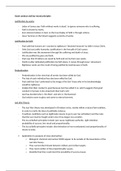
Justification by works
- Letter of James says ‘faith without works is dead’; to ignore someone who is suffering.
- Faith is shown by works.
- Even demons believe in God, so the true display of faith is through actions.
- Jesus’ Sermon on the Mount suggests a priority of works.
Justification by faith
- Paul said that humans are ‘counted as righteous’/’declared innocent’ by faith in Jesus Christ.
- Only God can justify humanity, justification is the free gift of God’s grace.
- Justification was the atonement through the suffering and death of Jesus.
- We are justified by grace and faith.
- Paul says that Christians are saved by faith and not by their own works.
- Martin Luther defended justification by faith alone, it comes through Jesus’ atonement.
- Righteous works are the result of being justified by God because of faith.
Predestination
- Predestination is the view that all events has been willed by God.
- The fate of each individual has also been willed by God.
- Paul said that God ‘conformed to the image of his Son’ those who in his foreknowledge
would be righteous.
- Implies that their conduct is good because God has willed it so, which suggests that good
conduct in humans is less important than God’s will.
- God has decided who is ‘the Elect’ and who is ‘the Damned’.
- God ordains some to glory and some to eternal torment.
Just War Theory
- The Just War theory was developed in Christian circles, mainly within a natural law tradition,
in order to clarify the idea of justifiable violence.
- It outlines conditions such as legitimate reasons to go to war (Ius ad bellum) and the rules
that the war must be fought under once it has begun (Ius as bello).
- The Ius ad bellum principles include: just cause, legitimate authority, right intention,
probability of success, lest result and proportionality.
- The Ius ad bello principles include: discrimination (of non-combatants) and proportionality of
means to ends.
Application to weapons of mass destruction:
o Biological, chemical and nuclear WMD appear to lie outside of the boundaries of the
Just War theory.
o They cannot discriminate between military and civilian targets.
o They meet neither of the proportionality causes.
o Doubtful that they could meet the possibility of success clause.
Justification by works
- Letter of James says ‘faith without works is dead’; to ignore someone who is suffering.
- Faith is shown by works.
- Even demons believe in God, so the true display of faith is through actions.
- Jesus’ Sermon on the Mount suggests a priority of works.
Justification by faith
- Paul said that humans are ‘counted as righteous’/’declared innocent’ by faith in Jesus Christ.
- Only God can justify humanity, justification is the free gift of God’s grace.
- Justification was the atonement through the suffering and death of Jesus.
- We are justified by grace and faith.
- Paul says that Christians are saved by faith and not by their own works.
- Martin Luther defended justification by faith alone, it comes through Jesus’ atonement.
- Righteous works are the result of being justified by God because of faith.
Predestination
- Predestination is the view that all events has been willed by God.
- The fate of each individual has also been willed by God.
- Paul said that God ‘conformed to the image of his Son’ those who in his foreknowledge
would be righteous.
- Implies that their conduct is good because God has willed it so, which suggests that good
conduct in humans is less important than God’s will.
- God has decided who is ‘the Elect’ and who is ‘the Damned’.
- God ordains some to glory and some to eternal torment.
Just War Theory
- The Just War theory was developed in Christian circles, mainly within a natural law tradition,
in order to clarify the idea of justifiable violence.
- It outlines conditions such as legitimate reasons to go to war (Ius ad bellum) and the rules
that the war must be fought under once it has begun (Ius as bello).
- The Ius ad bellum principles include: just cause, legitimate authority, right intention,
probability of success, lest result and proportionality.
- The Ius ad bello principles include: discrimination (of non-combatants) and proportionality of
means to ends.
Application to weapons of mass destruction:
o Biological, chemical and nuclear WMD appear to lie outside of the boundaries of the
Just War theory.
o They cannot discriminate between military and civilian targets.
o They meet neither of the proportionality causes.
o Doubtful that they could meet the possibility of success clause.