PEBC Final Exam Review [Question and Answer] 100% Correct
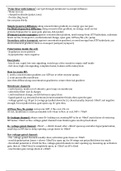
PEBC Updated STUDY GUIDE!!! [2024/2025] 100% Correct Answers What are the criteria for urate lowering therapy in gout *Ans* diagnosis of gout plus 1 of: Tophi 2 or more attacks per yer CKD stage 2 or worse (GFR <90) past urolithiasis Drugs that increase uric acid *Ans* EtOH cyclosporin Tacrolimus thiazide and loop diuretics levodopa, Ethambutol Cytotoxic chemo low dose salicylate pyrazinamide teriperatide interferon +ribavirin niacin First line therapy for fibromyalgia *Ans* Pregabalin or duloxetine Duration of Prophylaxis in Gout when starting urate lowering therapy? *Ans* at least 6m 3m after urate at target if no tophi 6m after urate at target if tophi (may get away with 2-3 weeks for febuxstat) NSAIDS with the worst CV risk (3) *Ans* diclofenac, celcoxib, high dose ibuprofen NSAID with the least CV risk (1) *Ans* naproxen Risk factors for development of upper GI adverse effects with NSAIDs *Ans* Age >64 comorbid medical conditions high dose NSAIDs Hx of UGIB presence of H. pylori Multiple NSAID use (including low dose ASA) Drugs that decrease seziure threshold (please continue to add if you come across them) *Ans* tramadol baclofen buproprion carbapenems TCAs Stimulants isoniazid clozapine penicillins cephalosporins amphotericin Osteoarthritis diagram: Low GI risk and Low CV risk *Ans* low dose nonselective NSAID Osteoarthritis diagram: Mod GI risk and Low CV risk *Ans* low dose celocoxib OR low-dose NSAID + GI protection Osteoarthritis diagram: Mod GI risk and High CV risk OR Low GI risk and High CV risk *Ans* low dose nonselective NSAID + GI protection Low dose Celecoxib OR: if ASA required --> low dose celecoxib +GI protection Osteoarthritis diagram: High GI Risk *Ans* low dose celecoxib + GI protection consider alt therapy Medications that increase fracture Risk *Ans* Aromatase inhibitors Anticoagulants (unfractionated and low molecular weight heparins) Antiretroviral therapy, Cyclosporine, Corticosteroid therapy (at least 3 months' cumulative therapy in the previous year at a prednisone-equivalent dose ≥7.5 mg daily), Loop diuretics, PPIs SSRIs thiazolidinediones chemotherapy and high doses of vitamin A. Depot medroxyprogesterone acetate Valproate and AED that induce CYPs What are the Risk factors prompting Measurement of BMD in patients >50. *Ans* Older Adults (≥50 y) Age ≥65 y Clinical risk factors for fracture (men age 50-64 y, menopausal women): Vertebral compression fracture Fragility fracture after age 40 Prolonged use of corticosteroids Use of other high-risk medications, e.g., aromatase inhibitors, androgen deprivation therapy Parent with hip fracture Osteopenia identified on x-ray Current smoking High alcohol intake
Written for
- Institution
- PEBEC
- Course
- PEBEC
Document information
- Uploaded on
- June 4, 2024
- Number of pages
- 172
- Written in
- 2023/2024
- Type
- Exam (elaborations)
- Contains
- Questions & answers
Subjects
-
pebc final exam review question and answer 100

Also available in package deal