AS Computing
Unit 1.3 Data Transmission
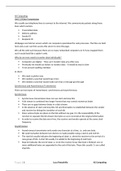
We usually use telephone lines to connect to the internet. We communicate packets along these
lines which contain:
Transmitted data
Delivery address
Sender ID
Recipient ID
Webpages are held on servers which are computers specialised for web processes. The files are held
here and a user can then access this server to view the page.
We call the web such because there are so many networked computers on it if you mapped them
out it would look like a spider’s web.
Why do we even need to transfer data individually?
Computers are digital – They can’t transfer data any other way
Previously we would use letters to transfer data – It would be way to slow
It can prevent spelling mistakes
In short:
We need a quicker way
We needed a way that would trap errors
We needed a way that would make sure that a message got through
Synchronous and Asynchronous Transmission
There are two types of transmission, synchronous and asynchronous.
Synchronous
Synchronous transmission does not use start and stop bits
A bit stream is combined into longer frames that may contain numerous bytes
There are no gaps between bytes in a data stream
In the absence of start and stop bits, bit synchronisation is established between the sender
and receiver by timing the transition of each bit
Since various bytes are place on the link without any gap, it is the responsibility of the
receiver to separate the bit stream into bytes so as to reconstruct the original information
In order to receive the data error free, the receiver and sender operate at the same clock
frequency
Asynchronous
Asynchronous transmission only sends one character at a time, i.e. only one byte.
Bit synchronisation between two devices is made possible using a start & and end bit
The start bit usually indicates the beginning of data i.e. alerts the receiver to the arrival of a
new group of bits. A start bit usually 0 is added to the beginning of each byte
Stop bit indicates the end of data i.e. to let the receiver know that byte is finished, one or
more additional bytes are appended to the end of the byte. These bits usually 1’s are called
stop bits.
Page |1 Luca Passariello AS Computing
Unit 1.3 Data Transmission
We usually use telephone lines to connect to the internet. We communicate packets along these
lines which contain:
Transmitted data
Delivery address
Sender ID
Recipient ID
Webpages are held on servers which are computers specialised for web processes. The files are held
here and a user can then access this server to view the page.
We call the web such because there are so many networked computers on it if you mapped them
out it would look like a spider’s web.
Why do we even need to transfer data individually?
Computers are digital – They can’t transfer data any other way
Previously we would use letters to transfer data – It would be way to slow
It can prevent spelling mistakes
In short:
We need a quicker way
We needed a way that would trap errors
We needed a way that would make sure that a message got through
Synchronous and Asynchronous Transmission
There are two types of transmission, synchronous and asynchronous.
Synchronous
Synchronous transmission does not use start and stop bits
A bit stream is combined into longer frames that may contain numerous bytes
There are no gaps between bytes in a data stream
In the absence of start and stop bits, bit synchronisation is established between the sender
and receiver by timing the transition of each bit
Since various bytes are place on the link without any gap, it is the responsibility of the
receiver to separate the bit stream into bytes so as to reconstruct the original information
In order to receive the data error free, the receiver and sender operate at the same clock
frequency
Asynchronous
Asynchronous transmission only sends one character at a time, i.e. only one byte.
Bit synchronisation between two devices is made possible using a start & and end bit
The start bit usually indicates the beginning of data i.e. alerts the receiver to the arrival of a
new group of bits. A start bit usually 0 is added to the beginning of each byte
Stop bit indicates the end of data i.e. to let the receiver know that byte is finished, one or
more additional bytes are appended to the end of the byte. These bits usually 1’s are called
stop bits.
Page |1 Luca Passariello AS Computing