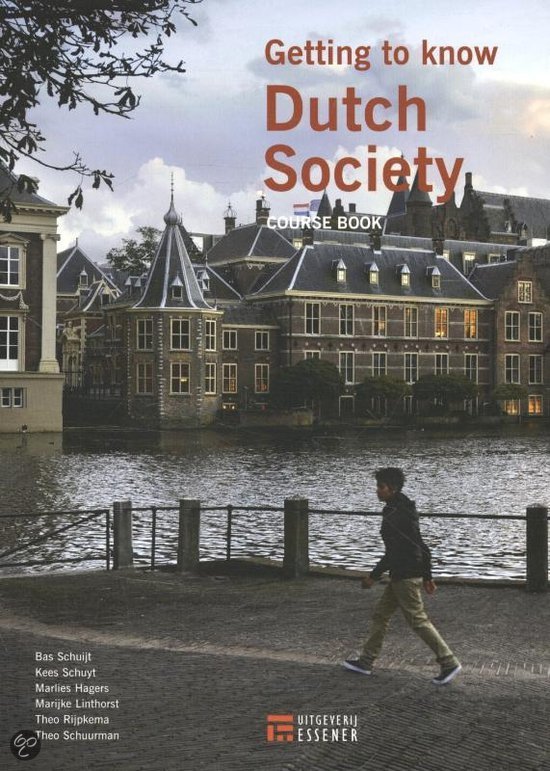
Social Studies – Pluralist Society 5VB
§1 Culture and identity
Culture: all the values, norms and other acquired characteristics that the members of
a group or society share and consider natural.
Frame of reference: ensures that people understand each other.
Regulates their behavior: culture helps people to behave in an orderly way.
Role behavior: what behavior is accepted in certain roles and situations.
Presentation of the self: the way we show ourselves in a role.
Impression management: how you behave with a group of people
Dominant culture: the body of values, norms and characteristics that are accepted
by people within a society.
Subculture: a specific group develops values, norms and other characteristics that
deviate from the dominant culture.
Ethnic subculture: being a member of a particular group or originating from a certain
country.
Counter culture: opposes the dominant culture or become a threat to it.
Socialization: the process by which someone, consciously or subconsciously, is
taught the values, norms and other cultural features of his group.
Socializing institutions: institutions and organizations where the transfer of culture
takes place in a society
Social control: the way in which people encourage or even force others to comply
with the prevailing norms.
Enculturation: you learn the cultural characteristics from birth > for example learning
the Dutch norms and values.
Acculturation: learning the characteristics of a culture that you were not originally a
member of > when you move to a different country.
Internalization: certain aspects of the culture or community you belong to become
so much a part of you that you automatically behave in the way that is expected of
you.
Group identification: a mixture of inherited characteristics and learned cultural
characteristics forms who we are.
Dutch culture is individualistic and African countries have a collectivist culture.
§3 The Netherlands is an immigration country
Push factors: the reason why you need to leave your country
Pull factors: the reason why you come to a certain country
Allochtoon: he or she has at least one parent who was born in another country
Autochtoon: everyone who was born in the Netherlands and whose parents and
grandparents were also born and bred here.
Since the 1960’s we have work migrants/guest workers because of the booming
Dutch economy. The first in Italy, Spain, Greece, then later in Morocco and Turkey.
Work migrants now can be classified:
People from less prosperous EU-states, like Bulgaria end Poland
Knowledge migrants > high education
People from pour countries outside the EU
Illegal immigrants: people who have no legal permissions to work and live
here.
§1 Culture and identity
Culture: all the values, norms and other acquired characteristics that the members of
a group or society share and consider natural.
Frame of reference: ensures that people understand each other.
Regulates their behavior: culture helps people to behave in an orderly way.
Role behavior: what behavior is accepted in certain roles and situations.
Presentation of the self: the way we show ourselves in a role.
Impression management: how you behave with a group of people
Dominant culture: the body of values, norms and characteristics that are accepted
by people within a society.
Subculture: a specific group develops values, norms and other characteristics that
deviate from the dominant culture.
Ethnic subculture: being a member of a particular group or originating from a certain
country.
Counter culture: opposes the dominant culture or become a threat to it.
Socialization: the process by which someone, consciously or subconsciously, is
taught the values, norms and other cultural features of his group.
Socializing institutions: institutions and organizations where the transfer of culture
takes place in a society
Social control: the way in which people encourage or even force others to comply
with the prevailing norms.
Enculturation: you learn the cultural characteristics from birth > for example learning
the Dutch norms and values.
Acculturation: learning the characteristics of a culture that you were not originally a
member of > when you move to a different country.
Internalization: certain aspects of the culture or community you belong to become
so much a part of you that you automatically behave in the way that is expected of
you.
Group identification: a mixture of inherited characteristics and learned cultural
characteristics forms who we are.
Dutch culture is individualistic and African countries have a collectivist culture.
§3 The Netherlands is an immigration country
Push factors: the reason why you need to leave your country
Pull factors: the reason why you come to a certain country
Allochtoon: he or she has at least one parent who was born in another country
Autochtoon: everyone who was born in the Netherlands and whose parents and
grandparents were also born and bred here.
Since the 1960’s we have work migrants/guest workers because of the booming
Dutch economy. The first in Italy, Spain, Greece, then later in Morocco and Turkey.
Work migrants now can be classified:
People from less prosperous EU-states, like Bulgaria end Poland
Knowledge migrants > high education
People from pour countries outside the EU
Illegal immigrants: people who have no legal permissions to work and live
here.