Rasmussen Pathophysiology Final Exam latest update with 100% correct answers already graded A+
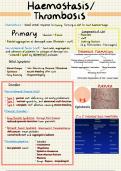
Peripheral Edema Which of the following would be a sign of right-sided Heart Failure? - Increased Urination - Peripheral Edema - Pulmonary Edema - Immunosuppression - Cough with Frothy Sputum - Crackles auscultated in lungs - Dyspnea Which of the following are clinical manifestations of left-sided heart failure? (Select all that apply) - Jugular Vein Distention - Cough with Frothy Sputum - Crackles Auscultated in Lungs - Dyspnea ACE inhibitors and Beta-Blockers Which medications would be used to treat a patient with heart failure? - Antibiotics and Steroids - Vitamin D and Calcium - Calcium Channel Blockers and Zafron - ACE Inhibitors and Beta-Blockers - A venous blood clot from lower extremity Which of the following is often the cause of pulmonary embolism? - An autoimmune disorder - A venous blood clot from lower extremity - An increase in intracranial pressure - Hypotension Venous blood hypermobility Virchow's Triad contributes to pulmonary embolism formation. Virchow's Triad factors include all of the following except: - Venous Blood Stasis - Damage to the venous wall - Venous blood hypermobility - Increased blood coagulability Not relieved by periods of rest How does unstable angina pectoris differ from stable angina pectoris? - Can only be diagnosed by changes in cardiac biomarkers - manifests in ECG changes only - Is not relieved by periods of rest - Not as serious as stable angina Heart and Kidneys Which of the following organs are primarily affected by poorly managed hypertension? - Bladder and Urethra - Brain and Skin - Heart and Kidneys - Stomach and Intestines All of the above Management of hypertension involves multiple approaches including which of the following? - Dietary Modifications - Engaging in regular exercise routines - Prescribing diuretics and/or anti-hypertensives - All of the above Renin When arterial blood pressure declines, the cells of the kidneys secrete a hormone called ___ to increase blood pressure and peripheral resistance. - Renin - Antidiuretic Hormone - Atrial Natriuretic - Erythropoietin - Multiple Organ Dysfunction - Acute renal failure - Clotting and Bleeding disorders Which of the following are examples of complications of shock? (Select all that apply) - Multiple Organ Dysfunction - Acute Renal Failure - Clotting and Bleeding Disorders - Increased Cardiac Output Bronchoconstriction, Peripheral Dilation, Increased Capillary Permeability What pathophysiological responses would you expect to find in a client who has anaphylactic shock? - Bronchodilation, Peripheral constriction, Decreased capillary permeability - Asthma, Deep vein thrombosis, hepatic encephalopathy - Bronchoconstriction, peripheral dilation, increased capillary permeability - Left-sided heart failure, pulmonary embolism, UTI Severe ventricular dysfunction What is the cause of Cardiogenic Shock? - Severe Ventricular Dysfunction - Acute Blood Loss - Severe Atrial Dysfunction - Suppression of the Sympathetic Nervous System Insufficient circulating blood volume What is occurring in the body of clients with hypovolemic shock? - Inadequate stomach acid - Insufficient circulating blood volume - Insect bite or snake bites - Not taking enough diuretics Spinal Cord Injury Obstructive shock is due to a mechanical obstruction impeding blood flow. Cause of obstructive shock include all of the following except? - Spinal Cord Injury - Pulmonary Embolism - Cardiac Tamponade - Tension Pneumothorax Mental Clarity Presentation of shock includes all of the following clinical findings except: - Altered level of consciousness - Hypotension - Mental Clarity - Tachycardia Severe inflammatory response to a pathogen Septic shock is a common cause of death in the ICU. What causes sepsis? - An overwhelming allergic reaction - Severe inflammatory response to pathogens - Unknown causes resulting in Hypertension - Poor nursing and health care provider interventions Distributive Shock Which of the following is a type of septic shock? - Cardiogenic Shock - Distributive Shock - Obstructive Shock - Hypovolemic Shock Duchenne Muscular Dystrophy A disease where the client often has shortened (genetic mutation) dystrophin strand resulting in small tears in the muscles as they are used resulted in muscle degeneration is called what? - Gower's Disease - Duchenne's Muscular Dystrophy - Multiple Sclerosis - Fibromyalgia The maintenance of a constant, internal state. Homeostasis The process where the body response to stressors in or to maintain homeostasis Allostasis When chronic exposure exceeds the body's ability to cope Allostatic Overload Potassium less than 3.5 mEq/L Hypokalemia is Potassium greater than 5.5 mEq/L Hyperkalemia is A decrease in blood volume throughout the body Hypovolemia is The pressure within a blood vessel that tends to push the water out of the vessel Hydrostatic Pressure The organelle where most of the body's ATP (Energy) is made. Mitochondria
Written for
- Institution
- NUR2063 Pathophysiology
- Course
- NUR2063 Pathophysiology
Document information
- Uploaded on
- June 1, 2024
- Number of pages
- 32
- Written in
- 2023/2024
- Type
- Exam (elaborations)
- Contains
- Questions & answers
Subjects
-
rasmussen pathophysiology final exam

Also available in package deal