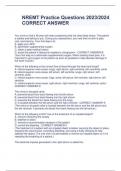
TNCC ENA 9th Edition Pre Test
TNCC ENA 9th Edition Pre Test Questions And Detailed Answers A patient arrives at the emergency department by private vehicle after sustaining an injury to the right lower extremity while using a saw. There is a large gaping wound to the right thigh area with significant bleeding. What is the priority intervention? A. Elevate the extremity to the level of the heart B. Initiate direct pressure C. Apply a tourniquet D. Cover the open wound with sterile saline dressings - B. Initiate direct pressure Rationale: The first step inn controlling any bleeding is application of direct pressure. A patient fell two weeks ago, striking their head. Today, the patient presented with a persistent headache and nausea and was diagnosed with a small subdural hematoma. The patient has been in the ED for 24 hours awaiting an inpatient bed. The night shift nurse reports the patient has been anxious, restless, shaky, and vomited twice during the night. The patient states they couldn't sleep because a young child kept coming into the room. What is the most likely cause for these signs and symptoms? A. Increased intracranial pressure B. Alcohol withdrawal C. Rhabdomyolysis D. Pulmonary embolus - B. Alcohol withdrawal Rationale: Alcohol withdrawal is a common delayed condition because symptoms are difficult to identify early. Signs include autonomic hyperactivity, hand tremors, nausea or vomiting, psychomotor agitation, anxiety, insomnia, transient hallucinations, or seizures. A patient involved in a MVC has sustained a fracture to the second rib of the anterior left chest. Which concurrent injury is most commonly associated with this fracture? A. Blunt cardiac injury B. Brachial plexus injury C. Pneumothorax D. Hemothorax - B. Brachial plexus injury Rationale: First and second rib fractures are most commonly associated with great vessel, head and spinal cord, and brachial plexus injuries. A patient with a spinal cord injury at C5 is being cared for in the emergency department while awaiting transport to a trauma center. Which of the following represents the highest priority for ongoing assessment and management for this patient? A. Maintain adequate respiratory status B. Administer balanced resuscitation fluid C. Perform serial assessments of neurologic function D. Maintain core temperature - A. Maintain adequate respiratory status Rationale: Spinal cord injuries at C3 to C5 can cause the loss of phrenic nerve function, resulting in a paralyzed diaphragm and inability to breathe. Maintenance of respiratory function is the highest priority. A trauma nurse cared for a child with devastating burns two weeks ago. The nurse called in sick for a couple of days and is now back working on the te
Written for
- Institution
- TNCC ENA 9th
- Course
- TNCC ENA 9th
Document information
- Uploaded on
- June 1, 2024
- Number of pages
- 6
- Written in
- 2023/2024
- Type
- Exam (elaborations)
- Contains
- Questions & answers
Subjects
-
tncc ena 9th edition pre test